If you’ve ever purchased land, built a home, or even walked a property with a Realtor, you’ve probably heard the terms “survey” and “staking.” They’re often used together, and sometimes even interchangeably—but they’re actually two very different things. Understanding the difference can help buyers, sellers, and property owners avoid expensive misunderstandings.
A little bit of personal experience…
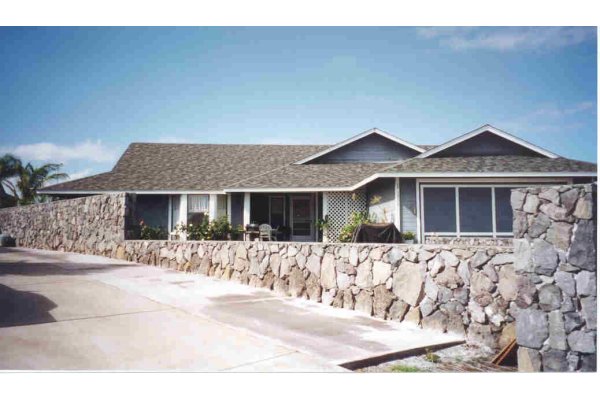
When we moved here in 2006, our agent suggested that we have a survey done. To be honest, we were so excited about moving here, we were borderline a little reckless. We almost waived the Survey/ Staking contingency. Thankfully, we were working with an amazing and seasoned Realtor and she explained the importance to us. We decided to move forward and have a survey done. It turned out that a rock wall that was built by the sellers was constructed six feet onto our property. Again, we were excited and thought the next door neighbors seemed nice and what’s the big deal? Well.. even though the neighbors were very nice and we ultimately became friends with them it did matter.
We talked about trying to deed the six foot swath to them but that was not a possibility for many reasons, one of which was it would have created an encroachment of the corner of our home onto what would have become their property. The other issue was more of a long term question. Who is responsible for taking care of the driveway on the neighbors side and also, what if either of us sold? We ended up having an easement drafted between ourselves and the neighbors. Happy ending…
Fast forward 18 years. Our daughter Elissa is buying a home. As her agent, I “suggested“ she have a survey. It was almost as if history was repeating itself. The neighbor behind her house had been using about 10 feet of property all along the back, which is about 90 feet, for her garden. She had installed irrigation and fruit trees as well as a kale garden.
After we closed on the property, we went over and introduced ourselves and let the backyard neighbors know that we had plans to install a fence in one to two years. Two years went by and we were ready to put up the fence. Long story short, they ended up doing their own survey, which matched what ours showed, and they had to move their irrigation, garden, and plants. Ten feet doesn’t seem like a lot but when it runs along the entire back of your lot that is 900 sf of a 11,000 sf lot. One more point for consideration: a little thing called Adverse Possession, where someone can claim ownership after a certain amount of time. I believe in Hawai’i, is 20 years. There are many facets and it is rare but it does happen.
A very broad explanation of the terms for Adverse Possession:
Actual – They physically used the property.
Open and notorious – Their use was obvious, not hidden, so the owner had an opportunity to notice.
Exclusive – They possessed the property as if they were the owner, not sharing control with the true owner or the public.
Continuous – They occupied or used it without significant interruption for the required statutory period.
Hostile – They used the property without the owner’s permission. “Hostile” doesn’t mean angry or confrontational—it just means the use was without the owner’s consent.
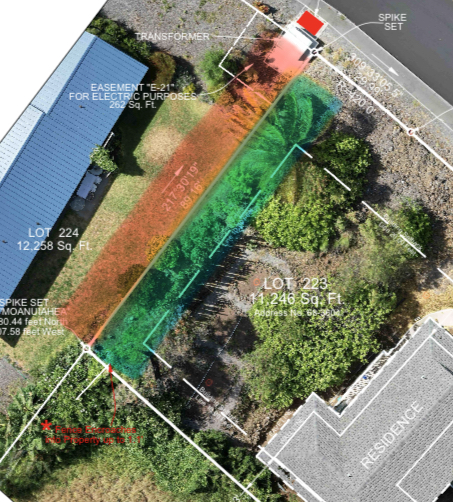
Below the red line is the property line. The green hi-lighted area is the area with the neighbors garden.
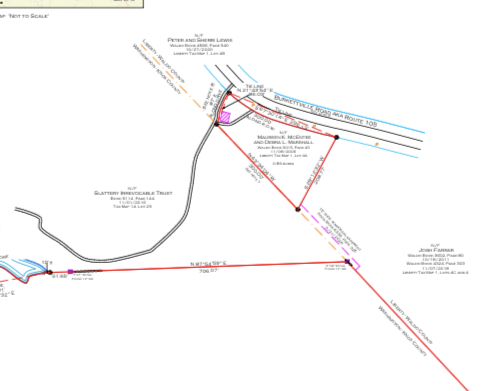
Everything happens in 3’s it seems. We recently looked into purchasing a piece of property in my husband’s hometown in Maine. At first glance it looked great. Lakefront with 34 acres and a small 1960’s cabin priced well below market value, how much better can it get? Well… it turned out that it had been in and out of escrow several times. The sellers had inherited it and never came to see it and knew little about it. They ended up doing a survey and talk about a can of worms! It ended up being two separate parcels, 1 acre with the cabin and a separate 33 acres of land on the lake. They were both on the town line so one is in one county and the other is in another county.
The sellers ended up getting a five year easement with one of the abutting owners for access to the large parcel. No one wanted to take the risk of the temporary easement. We ended up making a very low offer considering the high risk. It was accepted and part of our due diligence period was used to connect with the abutting owner and discuss how we would move forward with a more permanent easement. There were also other abutters that we could approach. Big risk, absolutely but with the knowledge about the situation we went for it.
With all of that being said, let’s talk about the differences between staking and surveys.
What Exactly Is a Survey?
A survey is the process of determining and documenting the legal boundaries of a property. In Hawaiʻi, surveys are done by a licensed Professional Land Surveyor who researches deeds, subdivision maps, easements, and historical records before taking precise field measurements.
A survey can include:
- Confirming property boundary lines
- Identifying easements and rights-of-way
- Locating existing improvements (homes, fences, walls, driveways, etc.)
- Preparing an official survey map or plat
- Determining whether improvements encroach onto neighboring property
Think of a survey as the legal and technical work that determines where your property begins and ends. Surveys are generally more money as they require a lot more detail and research.
What exactly is Staking? Staking is the physical placement of markers on the property to identify locations determined by a survey, usually the corner points. Once the surveyor has established the corners or other important points, they place stakes, flagging, or other markers in the field so they can be easily identified.
Staking can be used for:
- Property corners
- Building locations
- Foundation layout
- Setback lines
- Driveways
- Utilities
- Future improvements
Basically, a survey determines where something belongs and staking shows you where it is on the ground.
Why does this matter when purchasing or selling in Hawai’i? Hawaiʻi tends to have unique surveying challenges that aren’t always found anywhere else.
Many properties here have:
- Dense vegetation that can hide boundary markers
- Lava rock
- Steep slopes
- Older subdivisions with important historical and cultural spaces
- Irregular parcel shapes
- Coastal erosion or changing shorelines
It can also be common for long-time owners to assume fences represent the true property line. Unfortunately, fences are not always legal boundary markers. They could have been installed for convenience, livestock, landscaping, or privacy and can be several feet away from the actual property line.
That’s one reason I often suggest a professional survey when representing a Buyer. Before building a fence, installing a retaining wall, or beginning any major construction you want to make sure you are clear on boundaries.
Do you always need a survey? Not necessarily. I have had many residential sales close without ordering a survey. However, a survey can be very valuable when:
- You’re purchasing vacant land.
- Boundary lines are unclear.
- You’re planning new construction.
- You’re installing fencing or walls.
- A neighbor questions a property line.
- You’re concerned about possible encroachments.
As a Seller, if you already have a recent survey, your surveyor may be able to perform staking without completing a full boundary survey again. This can be really helpful and a great selling point that can save you as the seller or the potential buyers.
One of the biggest misconceptions is that staking and surveying are the same service but that is not the case. Another misunderstanding is assuming that visible pins or old stakes are still accurate. Property markers can be disturbed, buried, damaged, or removed over time. A licensed surveyor may need to verify their location before relying on them.
Whether you’re buying your first home, purchasing vacant land, or preparing to build your dream home, knowing if and when a survey or staking is needed is another step toward making an informed real estate decision.
Do you have a staking or survey story to share? I would love to hear about it.

Leave your opinion here. Please be nice. Your Email address will be kept private, this form is secure and we never spam you.