Yes — You Should Absolutely Get a Septic Inspection When Buying a Home on Kauaʻi
If you’re purchasing a home on Kauaʻi, you’ll quickly notice that most properties are not connected to a municipal sewer system. Instead, they rely on individual septic systems — or in some older homes, cesspools — for wastewater treatment.
While Hawaiʻi does not require a seller to pump or inspect their system before selling, buyers absolutely should order a septic inspection during the J-1 inspection period. It is one of the smartest and most protective steps you can take when buying property on Kauaʻi.
Below is everything you need to know about septic systems, inspection types, and why this is a crucial part of your due diligence.
How a Septic System Works
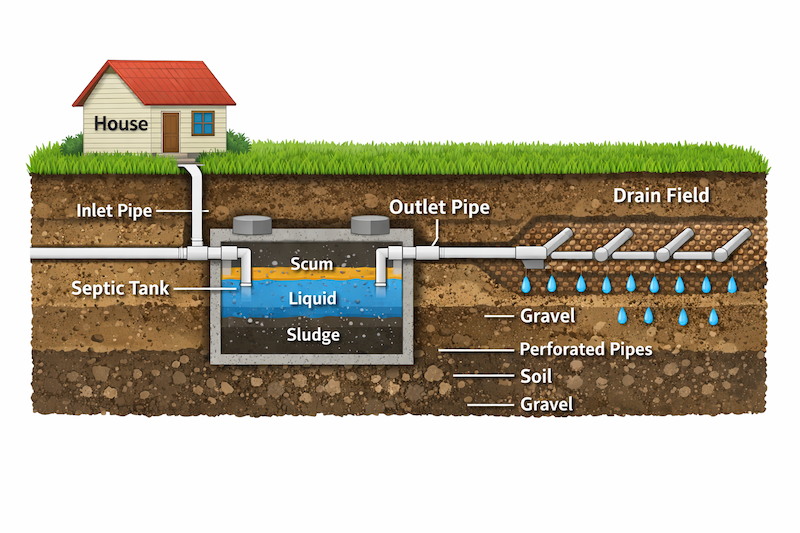
A septic system is an on-site wastewater treatment system. Instead of waste traveling through a city sewer line, everything from your showers, sinks, toilets, and laundry drains into your own buried septic tank.
Inside the tank:
- Solids settle at the bottom and are broken down by natural bacteria
- Scum (oils and lighter waste) floats to the top
- Liquid effluent flows out of the tank into a drainfield, where it naturally filters back into the soil
A properly maintained system can last 25–30 years or more, but like any major system, issues can develop — clogged drainfields, cracked tanks, root intrusion, or aging components.
What Is a Cesspool — and Why It Matters on Kauaʻi
Many older homes on Kauaʻi were built with cesspools, which are not septic systems.
A cesspool is essentially a pit in the ground that holds raw sewage and allows it to leach directly into the surrounding soil — without treatment. Because of this, cesspools pose serious risks to:
- Groundwater
- Nearshore reefs and streams
- Drinking water
- Public health
Hawaiʻi Cesspool Phase-Out Law
Hawaiʻi passed a statewide law requiring that all cesspools be upgraded to septic or other approved wastewater systems by the year 2050.
Important Permit Trigger Rule
Even if the 2050 deadline is years away, you may be forced to upgrade much sooner:
If a property has a cesspool and you apply for a building permit (for additions, major renovations, or new plumbing), the County will require you to upgrade the cesspool to a septic system at that time.
A cesspool to septic conversion can be a $25,000–$60,000+ expense, depending on location, soil conditions, and system type.
For buyers, this means:
- A home with a cesspool carries future mandatory costs
- Financing, insurance, and resale may be affected
- A septic/cesspool inspection is critical to understanding your exposure
What Is a Septic Inspection?
A septic inspection is a formal evaluation of the condition, function, and safety of the wastewater system.
Because most Kauaʻi properties rely on on-site wastewater systems, this inspection is just as important as your general home inspection.
Common problems an inspection can reveal:
- Blocked plumbing lines
- Root intrusion
- Damaged or deteriorating tanks
- Drainfield failure
- Improper installation
- Systems near the end of their life
These issues can be extremely expensive to correct, so identifying them early is essential.
What Happens During a Septic Inspection?
The scope depends on the level of inspection you order. At a minimum, I strongly encourage buyers to start with a Visual-Only Inspection, with the option to upgrade if concerns arise.
Visual-Only Septic Inspection (Level 0)
Performed by a licensed home inspector.
Includes:
- Opening the septic tank manhole
- Visual assessment of interior conditions
- High-resolution photos
- Evaluation of sludge/scum levels
- Recommendation on whether pumping is needed
Some inspectors may also perform a dye test, if permitted.
This level can identify major red flags but does not test components below the surface.
More In-Depth Septic Inspection Levels
If the system appears older or concerns arise, a licensed septic contractor can perform more detailed inspections. These levels are cumulative.
Level 1
- Manhole access
- Inspection of effluent filters and waste pipes
- Electrical component review (if present)
Level 2
- Measurement of scum and sludge layers
- Internal baffle inspection
- Distribution box evaluation
- Flow testing from the house (Tank is typically pumped first)
Level 3
Includes all of the above plus:
- Soil condition assessment
- Leach field saturation testing
- Site grading and drainage review
This provides the most accurate picture of system health and remaining lifespan.
How Often Should a System Be Inspected?
- Every 5 years
- More often with high occupancy, heavy water use, or older systems
Routine pumping and maintenance dramatically extend system life.
Why Septic (and Cesspool) Inspections Matter on Kauaʻi
A failing system can cost tens of thousands of dollars to replace.
For buyers, an inspection:
- Protects your investment
- Reveals hidden liabilities
- Helps with negotiation
- Prevents future surprises
- Ensures compliance with state and county regulations
With the statewide cesspool phase-out underway, understanding what system you’re buying is more important than ever.
Final Thoughts
Septic systems are safe, reliable, and long-lasting when properly maintained. But cesspools and failing systems can create serious financial and environmental risk. Having the system inspected during escrow is essential due diligence for any Kauaʻi home purchase.
This information is for general education only. Always consult a licensed septic professional for system-specific advice.
If you have questions about septic systems, cesspools, inspections, or the J-1 process, I’m always here to help.

Leave your opinion here. Please be nice. Your Email address will be kept private, this form is secure and we never spam you.