Add Native Plants to Your Garden
We’ve been working toward creating an ocean-friendly garden with more native plants (Native plants being plants that arrived in Hawaii without human help) that will take no mowing and less watering. Our first objective was actually to create a welcoming habitat for the ‘U’au Kani / Wedge tailed shearwater which make their nests in the Naupaka hedge (behind the lilikoi in the below photo).
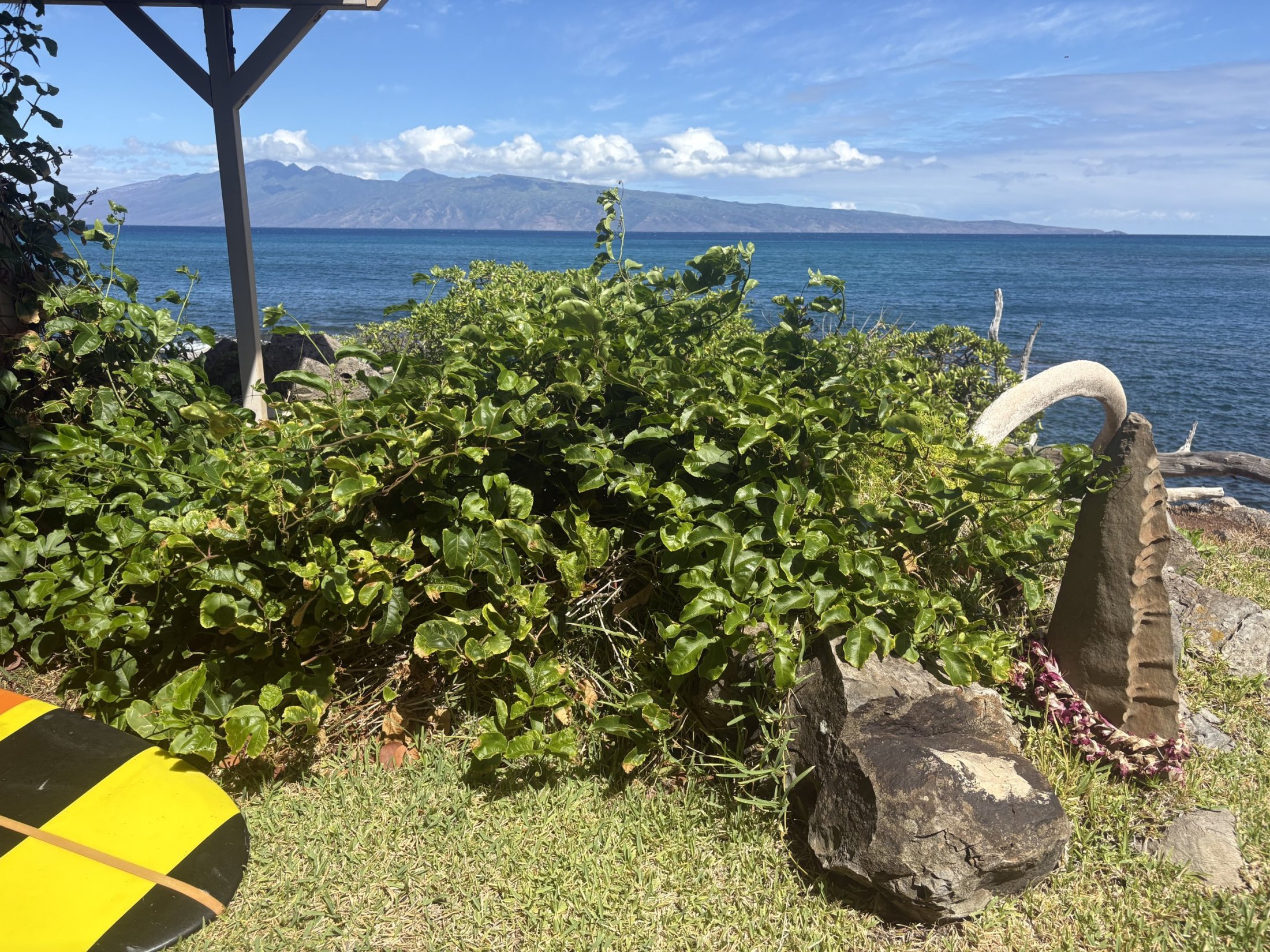
The more I learned about native birds, I realized our green lawn –with the constant mowing, chemicals, sprinklers, and weed blowing — is not ocean or Hawaii-friendly. We are now aiming for the watershed approach. Lawns are not only detrimental to the planet but repel the local critters and thwart the natural ecosystem. Big Ironwood trees that volunteer in the salty windy areas are invasive and deter the Hawaiian birds. Hardly anything will grow under the ironwood needles. I was imagining the future of our islands with only Mynah birds, Ironwood trees, and Kikuyu grass…
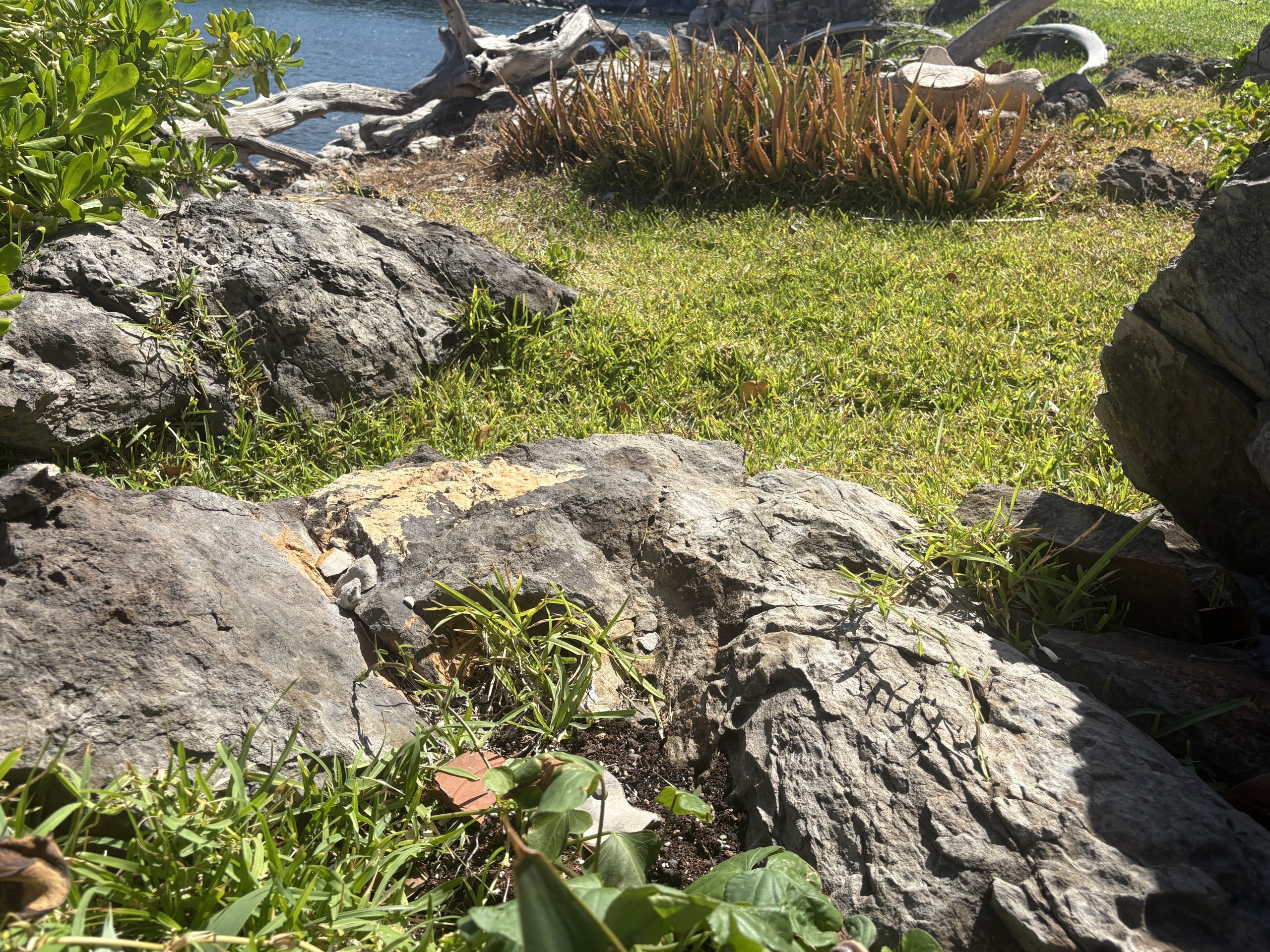
Above: Uala, Hawaiian sweet potato in the foreground – looks like a morning glory plant.
When I visited the Kaka’ako ocean friendly garden and the Bishop Museum gardens in Honolulu recently, I was inspired by the bushy grasses, wild plants, and rocky pathways — no topiaries or expansive greens there. So I’m trying to create a yard with paths, rock gardens, succulents and Hawaiian grasses that can be managed with clippers, some raking, and a little water.
Look for a Native Plant Nursery
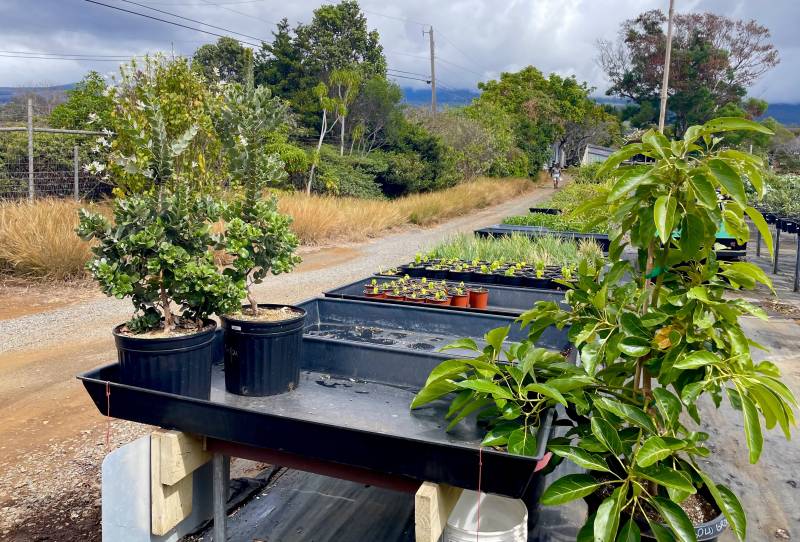
We started by contacting a native nursery for guidance — if you’re on Maui, I suggest the Maui Native Nursery in Kula – they can make suggestions for plants based on your geographical zone. Then we went holoholo to their nursery to pick up some plants (above photo). Here is the website Maui Native Nursery.
Landscaping with Native Hawaiian Grasses and Wild Plants
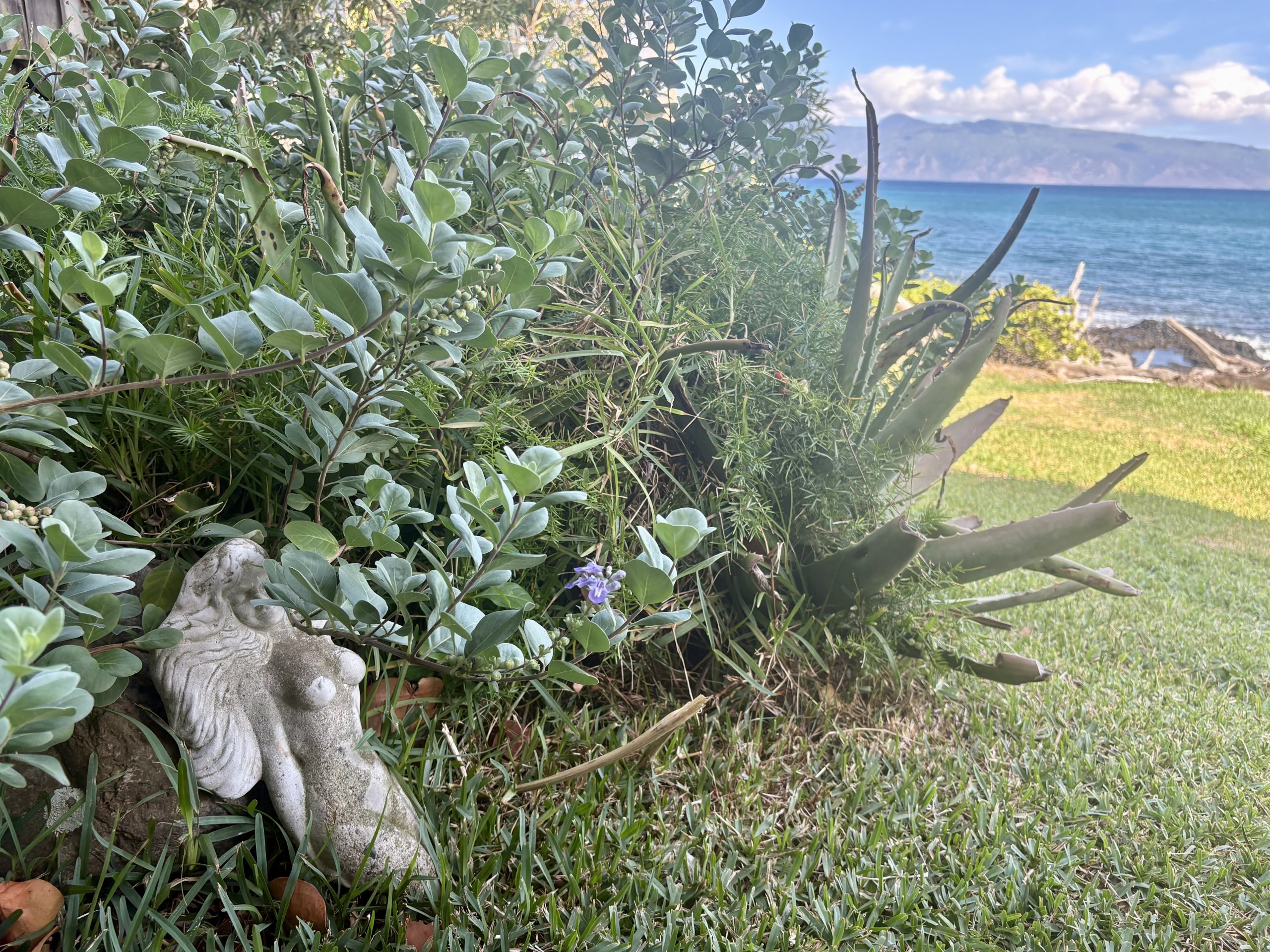
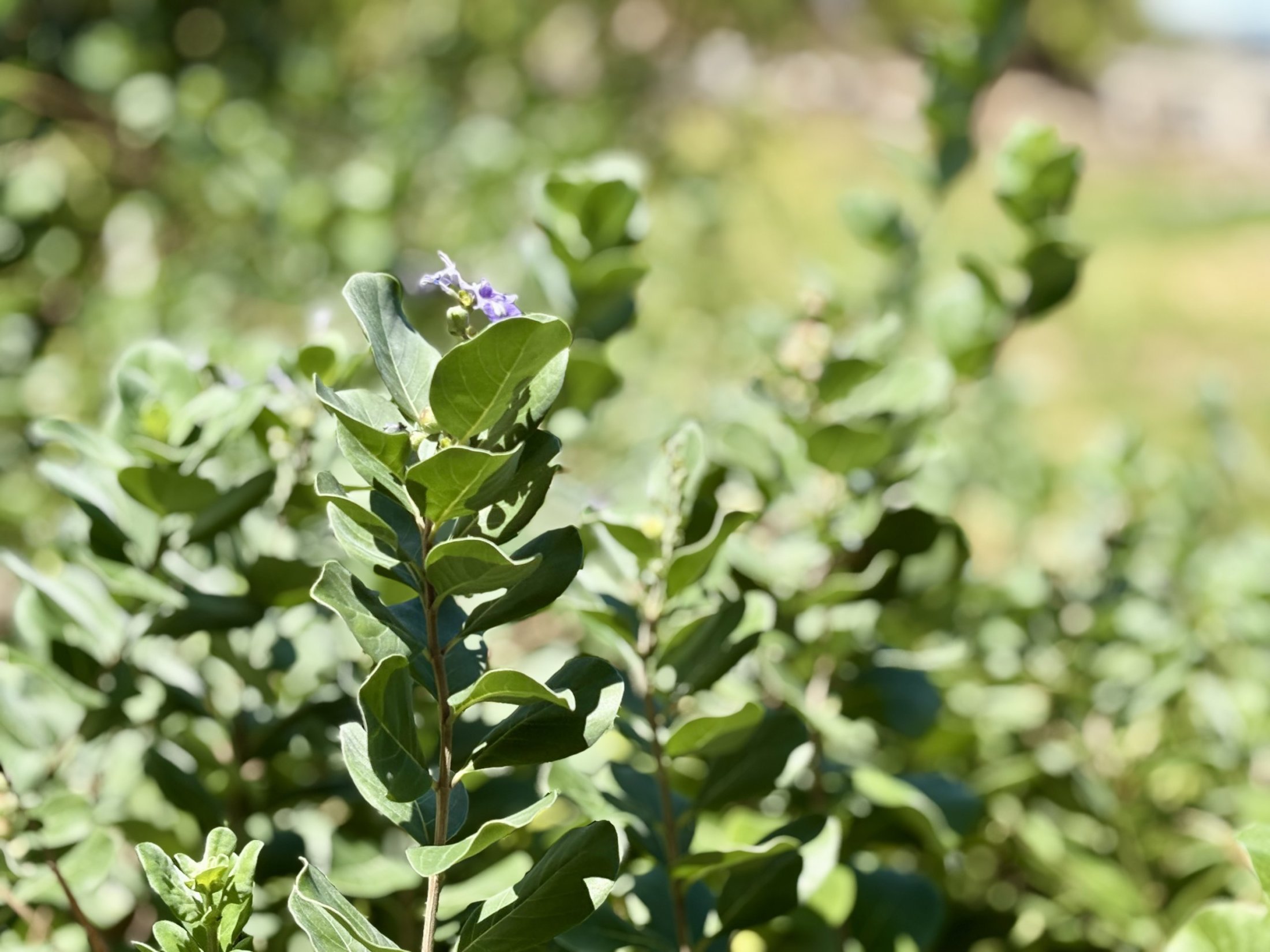
Then we planted some Hawaiian grasses and are currently trying to cut back the Kikuyu grass and Ironwoods… we didn’t realize Bouganvillia is not a recommended plant in Hawaii — we see it flowering everywhere but I have noticed it being replaced by Pohinahina, for instance, at Fleming’s Bay and in Puamana and in the highway medians around the island. Pohinahina can be trimmed back and makes a nice shrub (below). Some Hawaiian grasses that are good for lowland, sandy areas are Aki Aki and Kawelu — their roots anchor the soil and protect the shore from erosion.
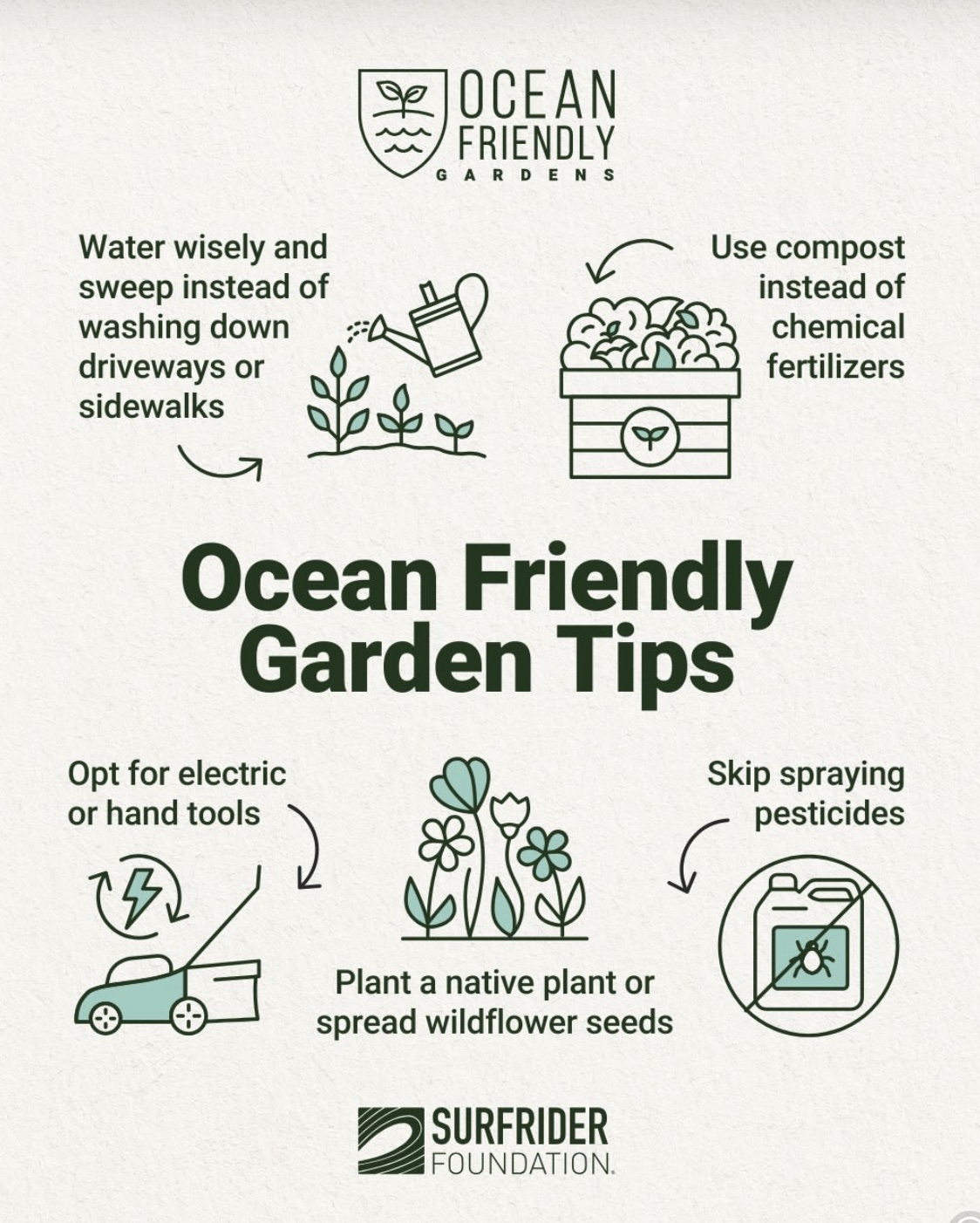
Sweep instead of washing down driveways or sidewalks!
According to Surfrider, 10 trillion gallons of untreated stormwater runoff, rife with any number of toxins, nitrate-and-phosphate-rich fertilizers, sewage overflow—you name it—wends its way into U.S. waterways and out to sea each year. The more we continue to allow, the worse havoc these things wreak as they compound in that final resting place where our beloved waves break.
Ocean friendly gardens – OFGs – ”restore the natural functions of healthy watersheds by contouring landscapes for rainwater retention, directing water back into the ground instead of storm drains” according to the Surfrider Foundation.
The red or green Ti Plant is a hearty plant, grows in the salt and wind, easy to make cuttings — read about the Ti Leaf in my blog here.
I’ll post more photos when the grasses and ground cover grow! In the meantime, hope this inspires you to choose native plants and let those grasses grow without chemicals and absorb the water and let the birds and the bees go free… keep our oceans clean!

Georgie Hunter
September 4, 2025
Great info! Have you tried growing the Hawaiian cotton plant – Ma’o? It loves the coastal areas and has pretty yellow flowers (related to hibiscus). They have them up at that nursery.
Anna Severson
September 4, 2025
HI Georgie, I did get a Ma’o and it was happy for a while but didn’t survive. I’ll have to look into it next time. Didn’t know anyone read my blogs, haha!