A solar-powered home in Hawaiʻi can be a smart investment, but only when the system, roof, ownership terms, and location make sense together. In a state where electricity costs are high, solar can reduce monthly expenses, support energy independence, and make a home more attractive to future buyers.
This is especially important in Big Island real estate, where properties range from resort-area homes and ocean-view estates to rural, off-grid, and acreage-based living. Buyers comparing homes for sale Big Island Hawaii should look at solar as part of the full property picture, not just as a nice feature on the roof.
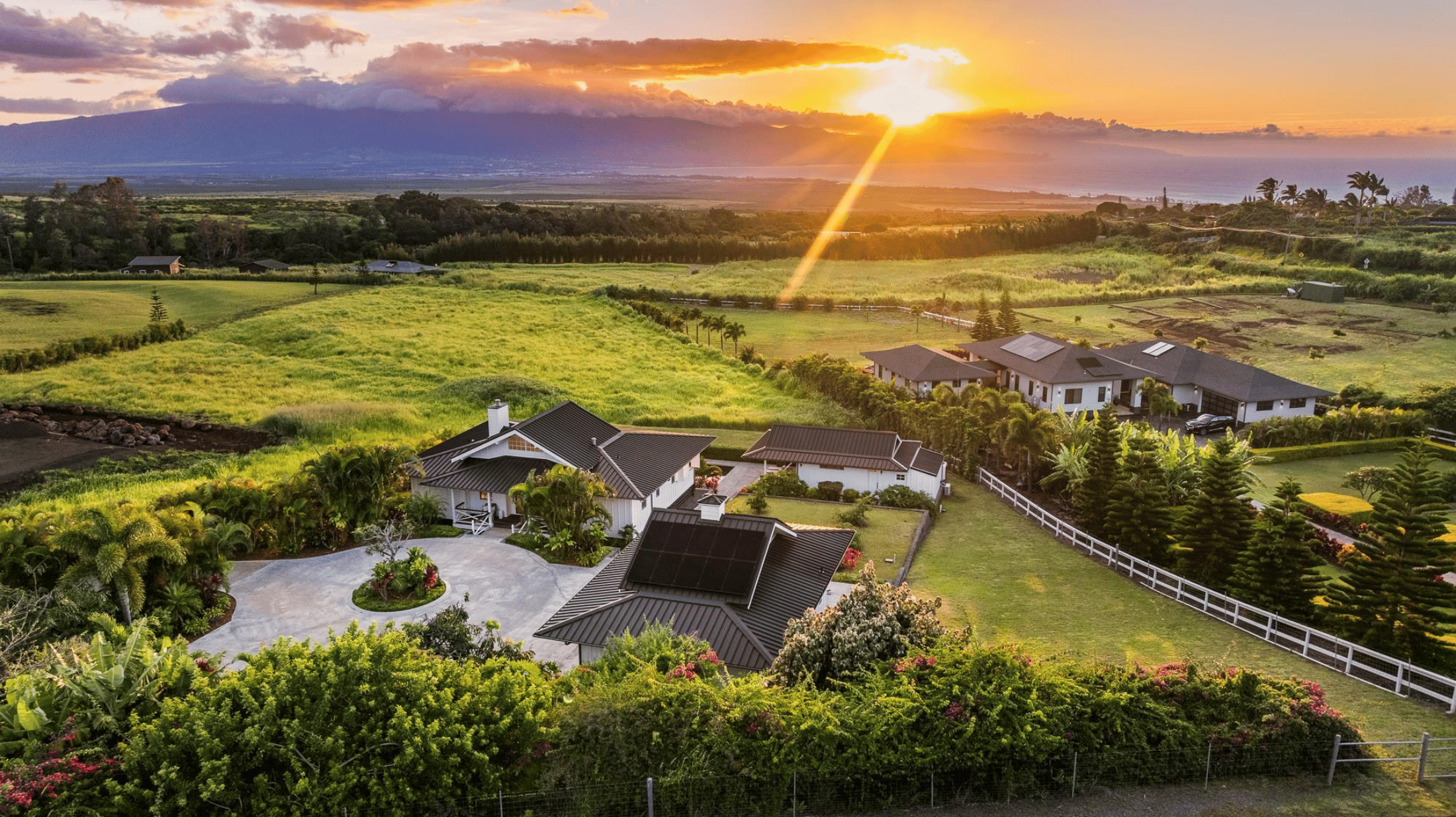
Why solar matters in Hawaiʻi
Hawaiʻi’s energy market is different from most mainland states. The islands have separate electric grids, and electricity has historically depended heavily on imported fuel. Because of that, residential electric bills can be a major monthly cost for homeowners.
Solar power helps reduce that pressure by allowing a home to produce some of its own electricity. In sunny areas, a properly designed solar system can offset a large share of daytime energy use. When paired with battery storage, it may also help homeowners use stored solar power in the evening, when many households use the most electricity.
This is one reason solar homes often stand out in Hawaiʻi real estate listings. Buyers are not only looking at square footage, views, and finishes. They are also asking what the home costs to operate. A property with lower monthly electricity costs can feel more practical, especially for full-time residents, remote workers, retirees, and families with high energy use.
Why the Big Island is different
Solar can be especially important in Big Island real estate because the island offers many different property types and living conditions. A home in sunny Kona may have very different solar production potential than a property in a wetter or cloudier part of the island. A rural property may also have different energy needs than a home in a planned community.
The Big Island has strong appeal for buyers who want space, privacy, outdoor living, and a closer connection to nature. Many homes have larger roofs, open land, and fewer shading issues compared with dense urban areas. These features can make solar more practical. At the same time, buyers need to pay close attention to microclimates. Rainfall, cloud cover, vog exposure, tree growth, and roof orientation can all influence how well a system performs.
If you are reviewing big island property for sale, ask for actual energy production records, utility bills, and solar system details. The property’s microclimate, roof condition, and energy use matter as much as the system size.
The biggest benefit: lower operating costs
The main reason solar can be a smart investment in Hawaiʻi is simple: it can reduce the cost of owning the home.
A solar-powered home may be especially valuable if it has:
- Air conditioning
- Pool equipment
- Electric vehicle charging
- Large appliances
- Home office use
- High guest or family occupancy
- Battery storage for evening use
Still, buyers should be realistic. Solar does not always mean a zero-dollar electric bill. Most grid-connected homes still pay utility charges, and savings depend on system size, usage habits, export credits, and battery storage.
Battery storage makes solar more useful
In Hawaiʻi, battery storage can make a major difference. Solar panels produce the most power during the day, but many households use more electricity in the evening. A battery allows the home to store solar energy and use it later.
This can help reduce grid dependence during higher-use hours. It can also provide backup power during outages, depending on how the system is designed.
Battery storage is especially useful for rural homes, off-grid homes, and properties where reliability matters. Hawaiʻi Life’s feature on off-grid living with coastline views shows how solar can support a more independent Big Island lifestyle when the system is built around real daily needs.
Owned solar is usually better than leased solar
Solar ownership is one of the most important details in a real estate transaction.
An owned solar system is usually the cleanest option because the buyer receives the system without taking over a separate payment. If the system is paid off, well maintained, and properly documented, it can support resale value.
A leased solar system or power purchase agreement needs closer review. It may still reduce energy costs, but buyers must understand the contract, monthly payments, transfer rules, rate increases, maintenance terms, and buyout options.
Before making an offer, buyers should ask for:
- Solar ownership documents
- Permits and interconnection approval
- Warranty details
- Utility bills
- Production history
- Loan or lease terms
- Battery information
- Roof inspection details
Do not ignore the roof
Solar panels are only as good as the roof under them. If the roof is old or damaged, the buyer may face added costs later. Removing and reinstalling panels for roof work can be expensive.
A strong solar investment usually has both a healthy system and a roof with many useful years left. Buyers should ask when the roof was installed, whether the solar installation was permitted, and whether any roof penetrations have caused leaks.
This is especially important in Hawaiʻi, where salt air, moisture, wind, and sun exposure can affect building materials over time.
Solar may improve resale appeal
While money is a major factor, solar also supports a different way of living. Many buyers in Hawaiʻi want a home that feels more self-sufficient, efficient, and connected to the environment. Solar can support that goal.
For full-time residents, solar may bring more predictable energy costs. For second-home owners, it may help manage costs when the home is occupied seasonally. For investors, solar may improve the property’s appeal to renters who care about comfort and utility expenses.
That said, buyers should be careful with rental properties. Tax treatment, utility billing, tenant agreements, and system ownership can be more complex when the owner is not living in the home. Short-term rental rules, county regulations, and homeowner association rules should also be reviewed before assuming solar will improve investment performance.
When solar is a smart investment
A solar-powered home in Hawaiʻi is more likely to be a smart investment when:
- The system is owned or has clear transfer terms
- The roof is in good condition
- The home has strong sun exposure
- The system has production records
- Battery storage matches the home’s usage
- Utility bills show real savings
- Warranties are active and transferable
- The system was properly permitted
For buyers exploring Big Island real estate, solar can be a strong advantage when the system fits the property and the owner’s lifestyle.
When buyers should be careful
Solar may be less valuable if the system is old, poorly maintained, leased under unfavorable terms, installed on a weak roof, or too small for the home’s energy demand.
Buyers should also be careful with broad claims like “low electric bill” or “fully solar powered” unless the seller can provide records. A smart buyer should review actual utility bills, system output, and battery performance before assigning value to the solar setup.
For current solar programs, buyers can review Hawaiʻi’s energy incentive information through the Hawaiʻi State Energy Office, federal tax credit details through the IRS Residential Clean Energy Credit, and export credit programs through Hawaiian Electric.
Final thoughts
A solar-powered home in Hawaiʻi can be a smart investment when the numbers, system condition, roof, and location all support the purchase. It can lower operating costs, improve daily comfort, and make the home more attractive to future buyers.
For anyone comparing homes for sale Big Island Hawaii, solar should be reviewed carefully, not casually. The best solar home is not just the one with panels. It is the one with clear ownership, strong documentation, useful battery storage, good roof condition, and proven savings.
When those pieces line up, solar can add both financial value and lifestyle value to a Hawaiʻi home.

Leave your opinion here. Please be nice. Your Email address will be kept private, this form is secure and we never spam you.