A house on the west side of Kauaʻi, and the water it has faced since 1912.
Some houses are built to take in a view. Pākalā Estate was built to live with one, and it has done so for more than a century. Stand on the lānai and the whole arrangement is laid out in front of you. A broad lawn runs out to a low wall of stacked lava rock. Past the wall is the shoreline, and past that a long left-hand wave peels along the reef. Niʻihau sits low on the horizon beyond it all.
Late in the day the sun goes down into the water between the reef and the island. The light comes back across the grass, slips in under the eaves and runs along the dark floors inside. It has been doing that since 1912.
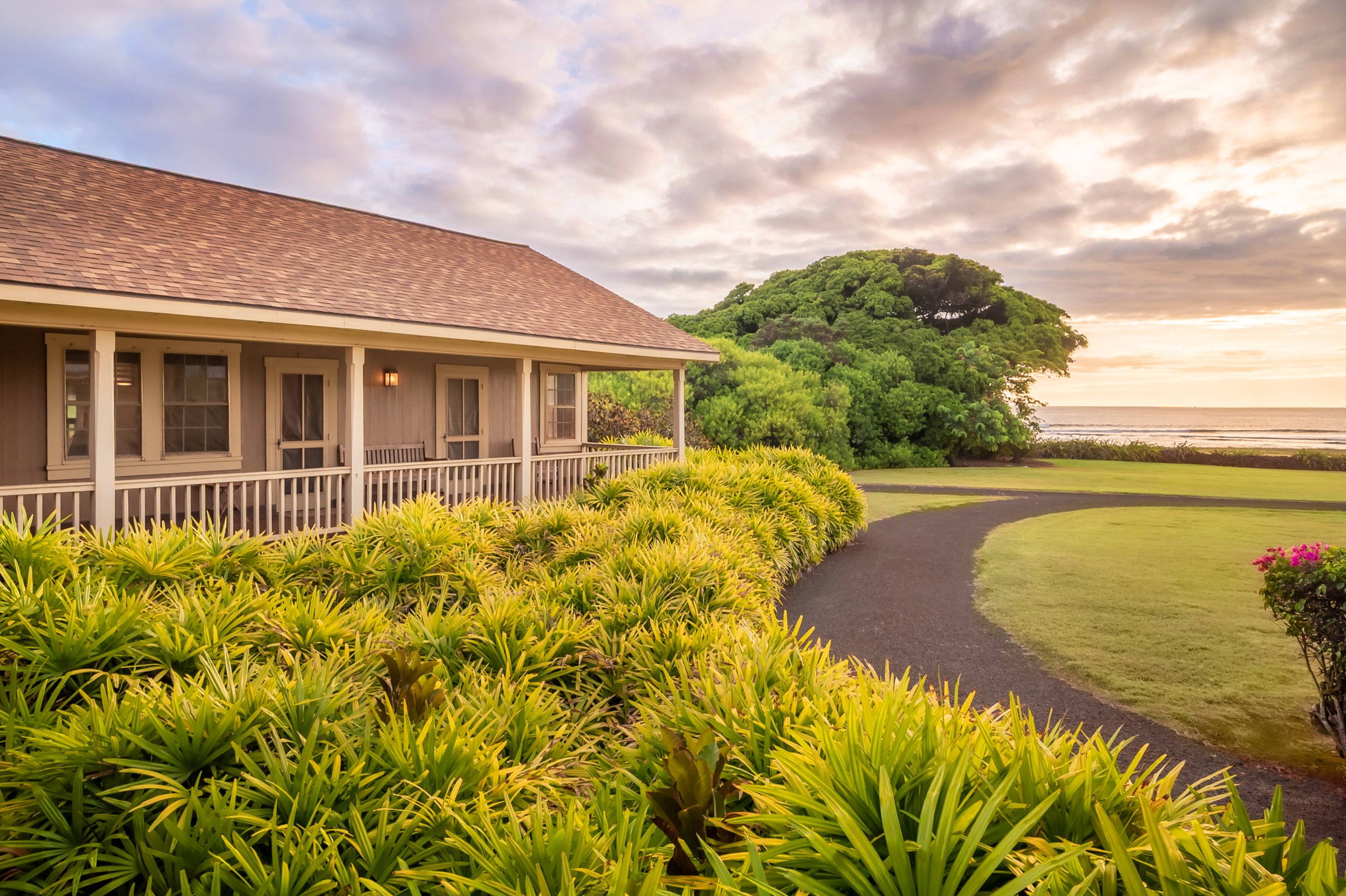
The story begins half a century before the house. In 1865 Eliza Sinclair acquired Makaweli, more than 21,000 acres running from this shoreline into the agricultural and ranch country inland, the year after the family acquired Niʻihau. Her great-grandson, Sinclair Robinson, was born on that land in 1886. In 1912, at twenty-six, he took over Gay & Robinson, a role he would hold for fifty-two years. The house went up the same year, and it went up on the beach.
Sugar cane ran inland from behind it, across the flats and into the foothills. The fields drew water from valleys you can’t see from the lawn, through ditches cut a generation before the house existed. In front lay sand, a low shelf of basalt, and that long left breaking on the reef in the afternoons. The arrangement still holds. The family’s land runs inland behind the property, Niʻihau still sits across the channel, and the house stands on the shoreline between them.
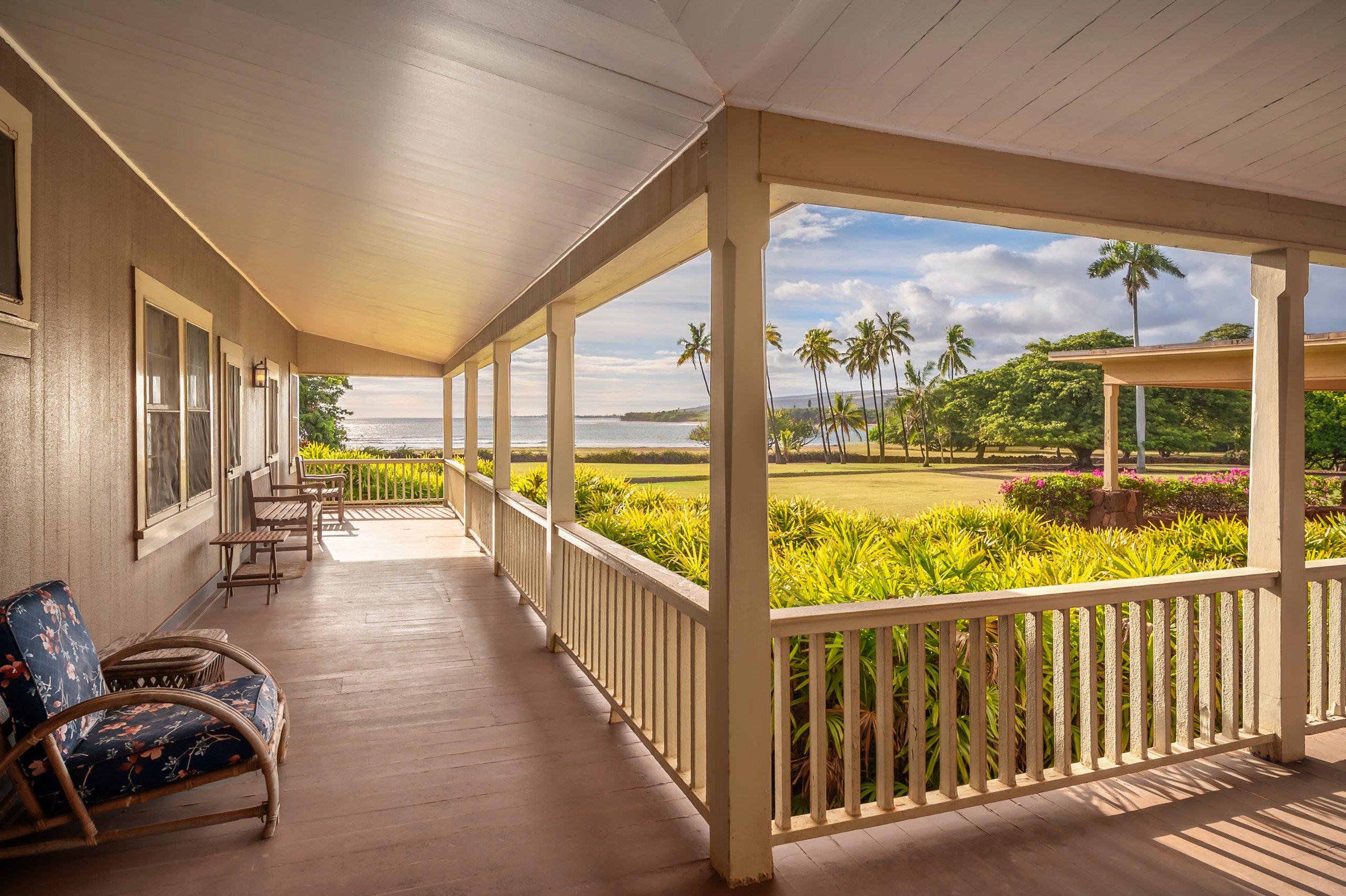
The house is a single storey laid out in an L, broad and low under a shallow hipped roof. The eaves reach well past the walls. A lānai runs the full length of the ocean side and wraps the corner at the end, with dark polished boards underfoot and tongue-and-groove overhead. It is deep enough to feel like a room rather than a passage, and French doors open onto it from the rooms behind.
The deep eaves keep the sun off the doors and windows, and the high ceilings lift warm air above where people stand. Most rooms draw light and air from more than one side. Louvered pass-throughs let the breeze carry from one room into the next instead of stopping at a wall. Inside, the rooms keep turning your attention back outdoors. The living room has a wide bank of windows facing the lawn and the water. The dining room looks to the ocean on one side and the green of the grounds on the other. Bedrooms open outward, with French doors back to the lānai.
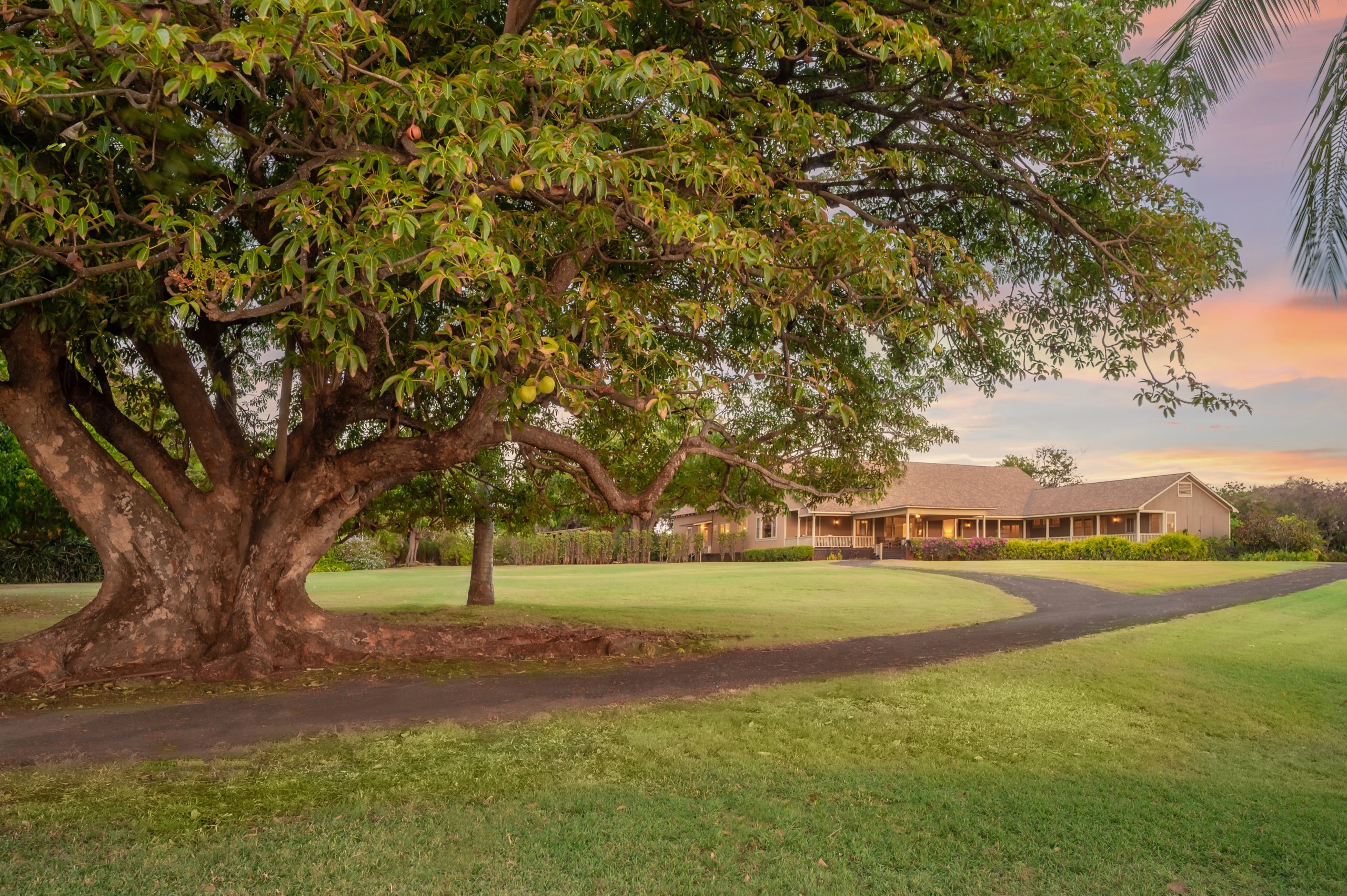
The property runs from the highway to the water, and the house sits well inside it. The entry is narrow where it leaves the road and travels deep into the grounds before anything opens up. Mature trees and palms close in around the drive. The house reveals itself in pieces, first a roofline, then a run of white railing through the leaves, then its whole low length.
On the ocean side the ground opens again. Lawn stretches from the lānai to the rock wall and the shoreline beyond, while the trees provide shade and frame the house without blocking the view west. No road runs between the grounds and the water. Walk toward the shore and look back, and the house changes. What feels generous from the lānai becomes a long, low building standing among trees. From there, the land is the main event.
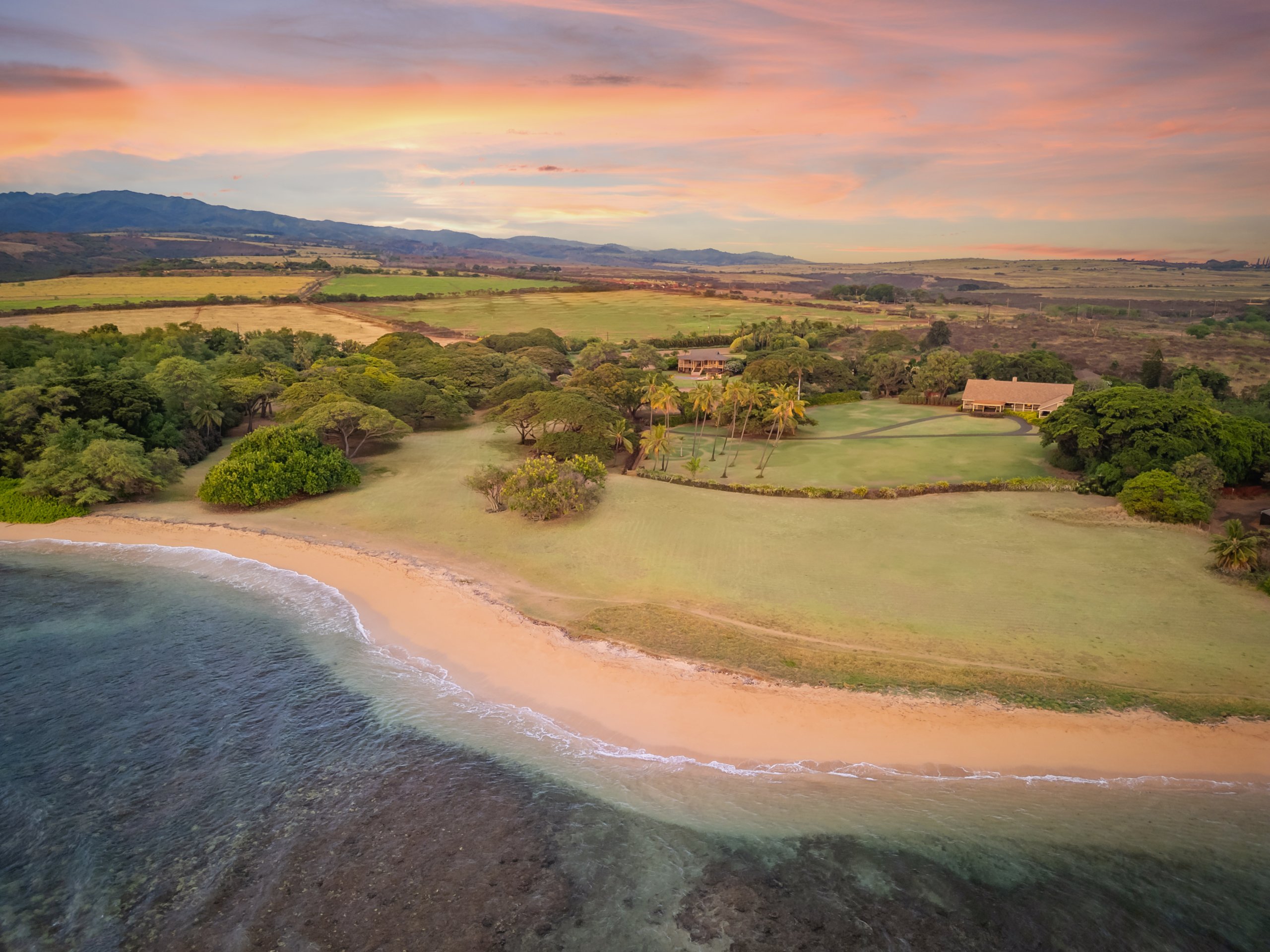
Pākalā is commonly translated as “the sun shines,” and the name fits. This is the drier, more open side of Kauaʻi. The mountains stand well back from the road, the ocean comes close to it, and the land between is open enough to see a long way down the coast in both directions. The shoreline here is natural and changeable, shared by reef, rock and sand. The beach is public, and the surf carries its own history and its own community, entirely separate from the house behind it.
The trade winds still come in off the water, pass through the house and out the other side, just as they did in 1912. In the afternoon, shadows stretch across the lawn and the hardwood on the lānai picks up the lower light. Offshore, the wave keeps breaking along the reef, with Niʻihau holding the horizon behind it.
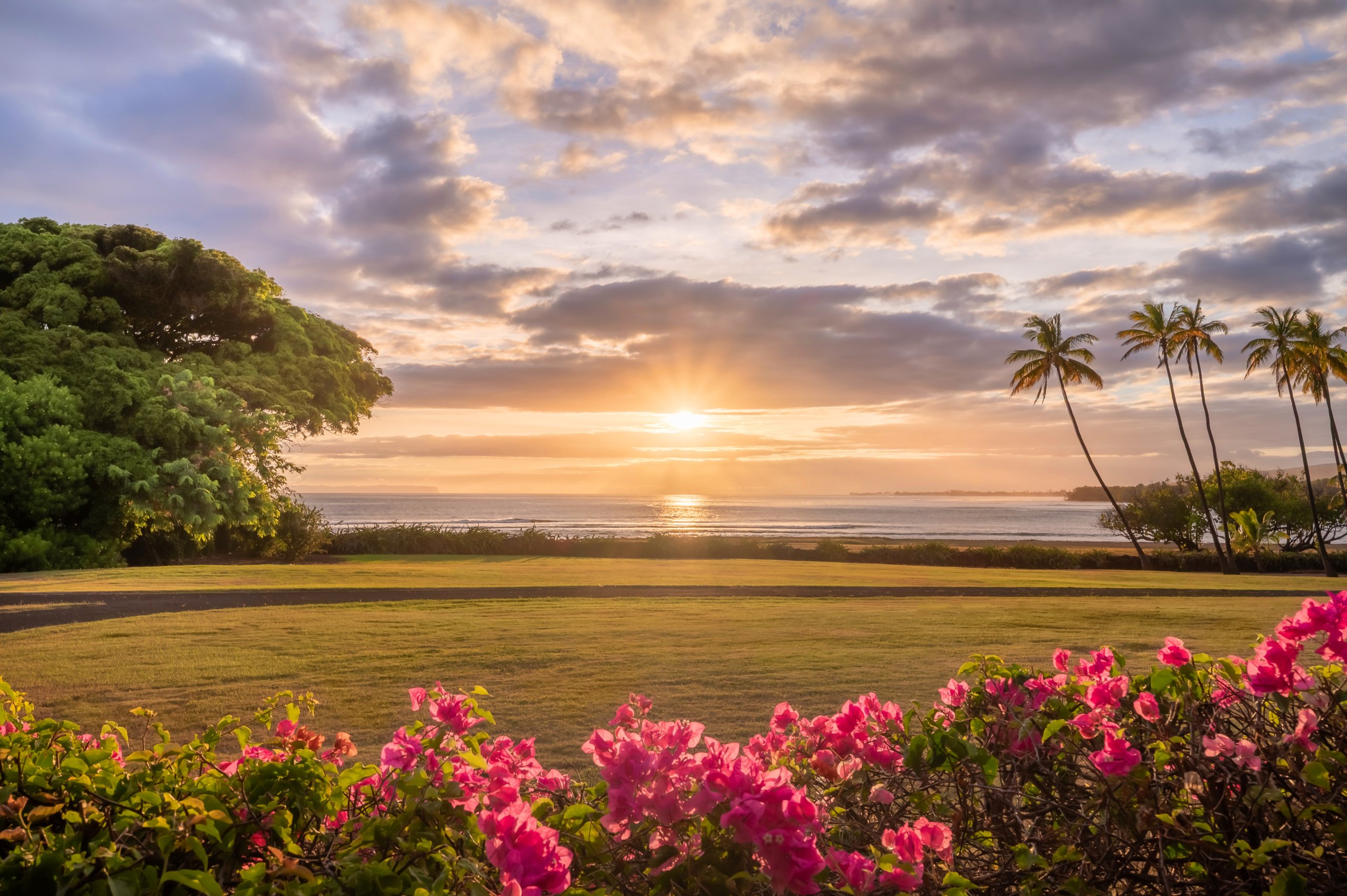
At Pākalā, the sunset isn’t an event you go out to see, it’s simply the direction the house faces. The sun drops between the reef and Niʻihau, the lawn falls into shadow, and under the deep eaves the house keeps looking west, as it has for more than a hundred years.
For more information or to schedule a tour, please reach out to Neal Norman.

Leave your opinion here. Please be nice. Your Email address will be kept private, this form is secure and we never spam you.