I can honestly say that I know this neighborhood like the back of my hand because I’ve lived and worked in Puako, Hawaii for decades. Puako is more than simply a site; it’s a living narrative. Every tide, every old tree, and every stone on the shore has stories to tell from long ago.
If you want to learn more about Puako’s interesting background, you should read the book “Puako: An Affectionate History.” It has a lot of old pictures, stories, and legends about the people who lived here long before it became the beachfront village we know and love today. You can get a copy at the Puako General Store or even order one online.
This post is a short story of how Puako came to be, based on that history of love.

Ancient Pathways and the First Settlers
The first people to live in Puako came over a thousand years ago. The earliest people to live on the Kohala Coast came between AD 750 and AD 1000. They were families who had sailed from the windward side of the island, where older Polynesian populations had already settled. Puako’s shoreline looked very different back then than it does now. Sea level was lower, and many of the freshwater springs that now flow beneath the ocean once flowed freely on land.
Even though Puako’s terrain was dry and barren, these early Hawaiians saw more than just the harsh lava fields. They found the beauty of the shoreline, the many kinds of marine life, and the shimmering salt ponds, all important to their everyday lives. They made salt, or pa’akai, in natural basins that formed when lava flowed out. They used it to preserve fish, as a flavoring, and as medicine.
The lava structures just offshore supported thick patches of limu (seaweed), which was a favorite food. The neighboring anchialine ponds were used to keep saltwater fish, mollusks, and even turtles. The ocean gave us almost everything: food, trade, and a strong spiritual connection to the land and water.

A Village by the Sea
In the Paniau area, families started to settle down permanently between 900 and 1200 AD. This is how the first Puako settlement came to be. The first homes were very modest. Families lived in lava tubes and built curved, C-shaped stone walls to keep the wind out. Over time, these simple huts were replaced by formal kauhale (family compounds), where extended families lived and worked together.
The terrain wasn’t suitable for farming, but the water gave them a lot. The people in the village learned how to fish, carve, and produce salt. Women grew pandanus trees to make lauhala mats, a craft for which Puako subsequently became famous.
The community got bigger and more attractive as it did so. Families planted trees and flowers around their homes, which added color and shade to the rough shoreline. Life was basic, but it was full of the things that mattered most: family, tradition, and a great reverence for nature.

The Petroglyph Legacy
One of Puako’s most important contributions to Hawaiian prehistory is the amazing petroglyph field carved near the old town and along the King’s Trail (Ala Kahakai). These carvings, which include human figures, canoes, animals, and strange symbols, are among the oldest on the island.
The picture of a long line of soldiers marching on the stone at Paniau is probably the most mysterious of these. These pictures are like silent storytellers, keeping alive the memories of people who walked these routes, fished the ocean, and enjoyed the same sunsets we do now. The book doesn’t say exactly where the petroglyphs are, but it does provide some interesting stories about them.
Legends and Royal Ties
In Hawaiian legends, Puako is also very important. People say that when the goddess Pele came from Kauai, she landed her canoe here and started her fiery trip through the islands. There were also famous fights and important events involving early Hawaiian chiefs that took place in the area.
The people of Puako played a big part in King Kamehameha I’s building of Pu‘ukoholā Heiau at Kawaihae in the late 18th century. They gave personnel and food, mainly coconuts, for the huge project. It was a big sacrifice for a small seaside town, but back then, the ali’i (chiefs) were the law. Their gift tied Puako to one of the most important events in Hawaiian history.

Missionaries and Change
European ships began arriving on Hawaii’s coasts by the early 1800s, bringing trade and change. Puako’s salt was a valuable commodity. At the same time, the first missionaries arrived and built the first church and school in Puako by the 1830s.
Reverend Lorenzo Lyons, who spoke Hawaiian fluently and was well-liked by the inhabitants, said that Puako was “a village on the shore, very much like Kawaihae, but bigger…” Coconut groves make it look green. The people fish and create salt.
But life in Puako was still hard. The community’s fortunes began to decline due to heavy taxation under the kingdom’s system. Everything — from unborn children to pigs and fish — could be taxed. Coupled with the natural hazards of fishing life and rising dependency on inland goods, many families began to leave.
Epidemics struck as well. Influenza, measles, and whooping cough took their toll. But the smallpox epidemic of 1853 marked a turning point. Determined to protect themselves, the people of Puako closed off their village entirely — no canoes came ashore, and travelers were turned away. Their isolation strategy worked; the village survived unscathed, though it earned Puako a lasting reputation for being “clannish” and private — something locals still joke about today.
A Church and a Spirit of Resilience
Reverend Lyons led the building of the Hokuloa Church during these tough years. It says a lot about the strength and faith of the people of Puako that they were able to establish a place of worship even in challenging circumstances. The church is still a well-loved landmark today, a peaceful reminder of the village’s resilience that will last forever.
The Rise and Fall of Sugar Cane
The discovery of wild sugarcane in 1895 led to the establishment of a small plantation in Puako. The mill was near what is now the boat ramp and went inland toward the Kiawe Forest.
But the plantation had problems almost right away. The soil was poor, there wasn’t enough water, and it was hard to reach, which made success difficult. Only about seven families stayed after the mill was closed. The rest of them walked away, leaving Puako almost empty.
The few people who stayed behind lived modest lifestyles. They fished, made salt, raised pigs, made charcoal, brewed beer at home, and kept bees. They connected the old Puako to the new one that will ultimately come along.
The Beginning of a New Community
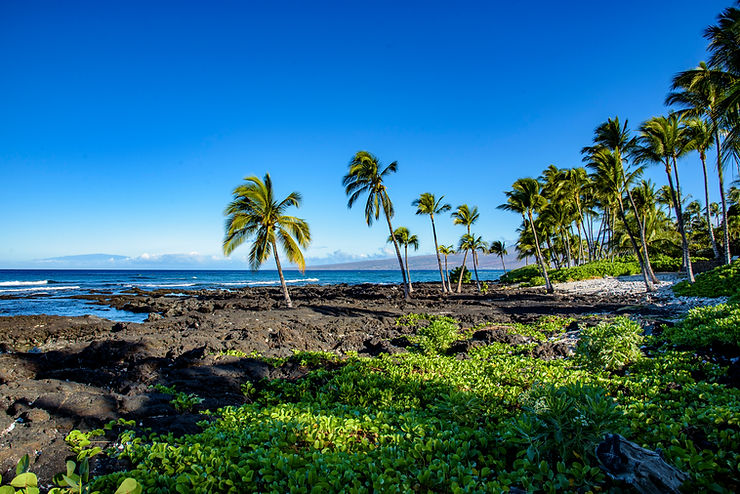
A land survey in 1950 split Puako into 163 lots along what is now Puako Beach Drive. At the time, it was far from the utopia it would become. There was only a rough kiawe forest, one water line, and a single, faulty phone line. It wasn’t until 1957 that electricity came.
People, on the other hand, saw promise where others saw adversity, as has always been the case in Puako. They built homes, cleared the land, and created a real village by the ocean.
From 1960 onward, Puako slowly evolved into the site we know today, home to longtime residents, ocean enthusiasts, and newcomers drawn to the area’s natural beauty and calm pace of life. The village survived two tsunamis and a big fire in 1987. Each time, they rebuilt stronger and better.

A Legacy That Lives On
When I walk along Puako Beach Drive today, I often think about the first settlers and how they must have felt looking out at the same blue horizon. The tale of Puako is one of never giving up, working together, and deeply loving the land and the ocean. From its old salt pans and petroglyphs to the friendly waves of neighbors sipping coffee in the morning, this town still lives up to its loving past.
If you’re in Puako, spend some time walking along the shore, go to the Hokuloa Church, and get a copy of “Puako: An Affectionate History” from the Puako General Store. It’s not just a book; it’s a love letter to this amazing tiny seaside place.

robert louis hudson
November 13, 2025
We love Puako. stayed there many times. If we win Mega Millions you will be the first person we call .