Kauaʻi is facing a very real and increasingly urgent challenge that doesn’t get talked about enough: our landfill capacity. The existing Kekaha Landfill is nearing the end of its usable life. The County is pursuing a vertical expansion to extend it, but that is a temporary measure—likely buying only a few more years. It does not solve the long-term need for a new, permanent landfill site.
Kauaʻi’s Growing Waste Problem
This is ultimately a community issue, not just a government one. It affects all of us—residents, homeowners, businesses, visitors and the future of the island. The more informed we are, the better positioned we are to ask thoughtful questions, support responsible solutions, and be part of the conversation.
Identifying and approving a new landfill location is not simple. Kauaʻi has very few viable sites due to environmental constraints, zoning, infrastructure limitations, and community impacts. Even factors like bird strike risk near the airport have eliminated potential locations. The process has been slow, and to date, no new landfill site has been fully identified, approved, and permitted.
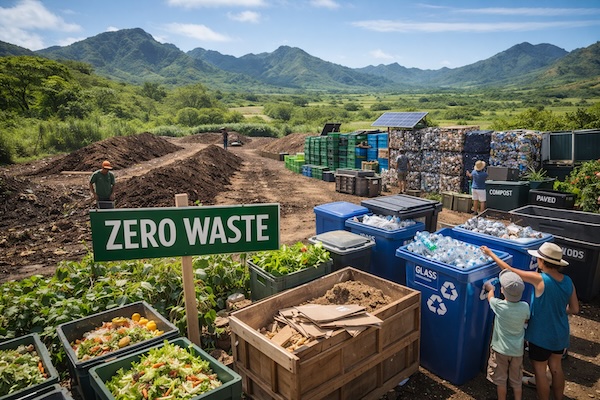
Kauai needs to be better about moving toward “zero waste” policies.
What makes this more concerning is how long it actually takes to bring a new landfill online. From site selection to environmental review, permitting, land use approvals, design, and construction, the timeline is typically 7 to 15 years. Given that we are not well into that process already, it’s fair to say we are well behind.
What Happens If We Don’t Act
If the current landfill reaches capacity before a new one is ready, the alternatives are not good. The most likely fallback is shipping waste off-island to the mainland. While possible, it is significantly more expensive and those costs would ultimately be borne by residents and businesses. It also introduces logistical risks tied to shipping and long-term contracts.
Other options include emergency extensions of the existing landfill, which are temporary and subject to regulatory limits, or rapid implementation of stricter waste diversion measures. These could include limits on certain types of waste, expanded food waste diversion, increased disposal costs, and potential impacts on construction and development activity. Many of these are steps we should be moving toward regardless, but they are not a complete solution on their own.
Why Zero Waste Starts with All of Us
We should also be having a more direct conversation about legislating / accelerating alternatives such as large-scale composting, expanded recycling, and even waste-to-energy solutions. None of these are simple or inexpensive to implement at scale on Kauaʻi, but they could meaningfully reduce the volume of waste going into the landfill. Alongside that, there is a strong argument to be made for increasing the cost of waste disposal to better reflect the true cost of managing it on an island.
The reality is, of course, that Kauaʻi will always need some form of landfill. The goal is not to eliminate it, but to manage it responsibly, extend its life through better waste practices, and ensure that a long-term solution is in place before we reach a crisis point.

Leave your opinion here. Please be nice. Your Email address will be kept private, this form is secure and we never spam you.