Kahuina (Lamakū & Māmalu) – New Kakaʻako Condo With 396 HHFDC Affordable Units & 341 Market Units | Full Guide
Kahuina Overview & Location
Aloha, there’s a new condo development in the heart of Kakaʻako offering 396 HHFDC affordable residence units for sale along with 341 market for-sale residences with one-, two-, and three-bedroom units.
This community is called Kahuina, which includes two towers called Lamakū and Māmalu. There will be ground-floor retail spaces of about 35,000 to 42,000 square feet, and a nine-level parking garage with over 1,200 parking stalls and eight EV charging stations to support both residential and commercial uses.
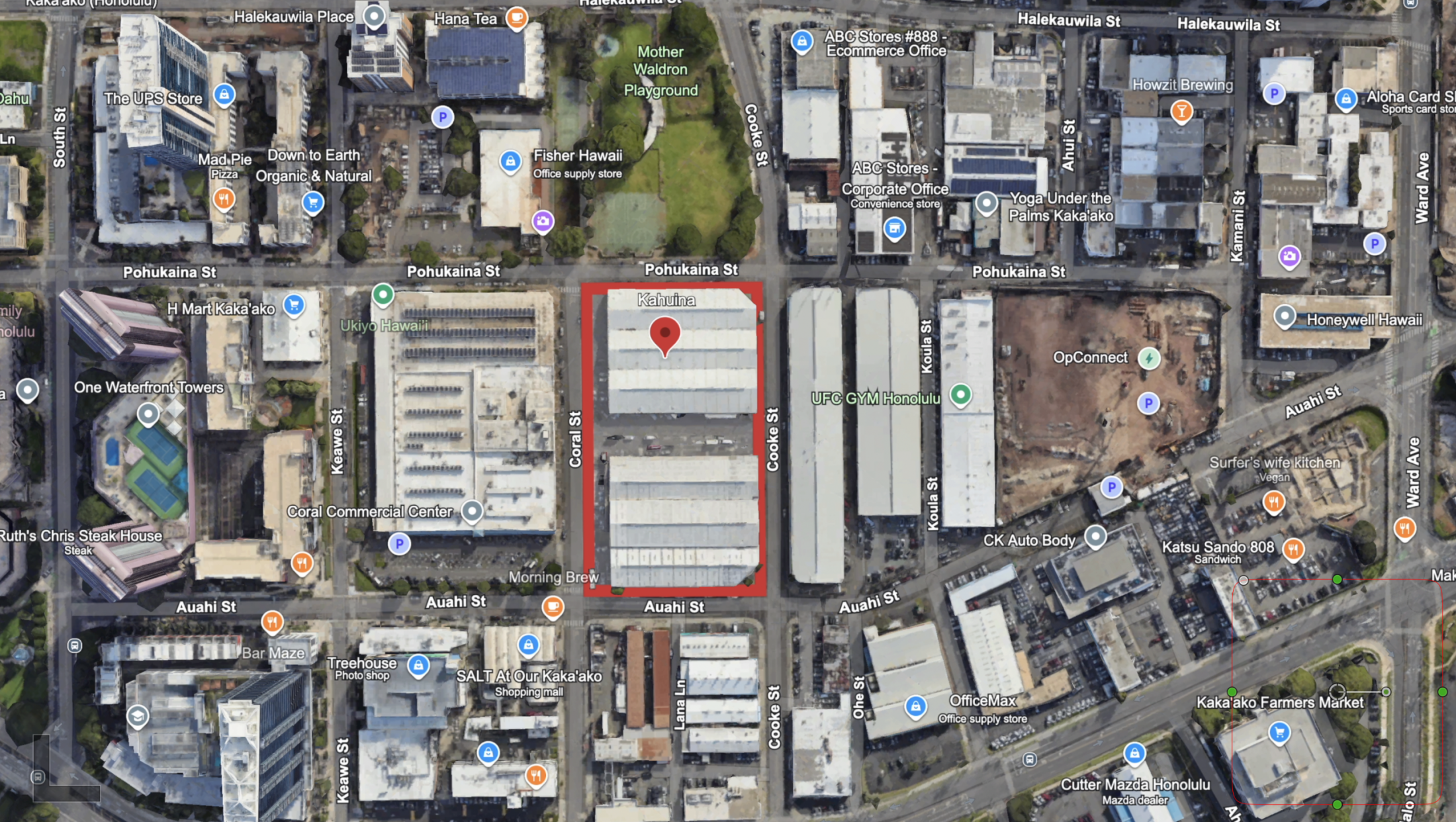
The address of the Kahuina project is 450 Cooke Street, Honolulu HI 96813. It is situated on a full-block site fronting Mother Waldron Neighborhood Park, bordered by Pohukaina Street on the mauka side ( meaning toward the mountain side), Cooke Street on the Diamond Head side, Coral Street on the ʻewa side, and Auahi Street on the makai side meaning toward the ocean side.
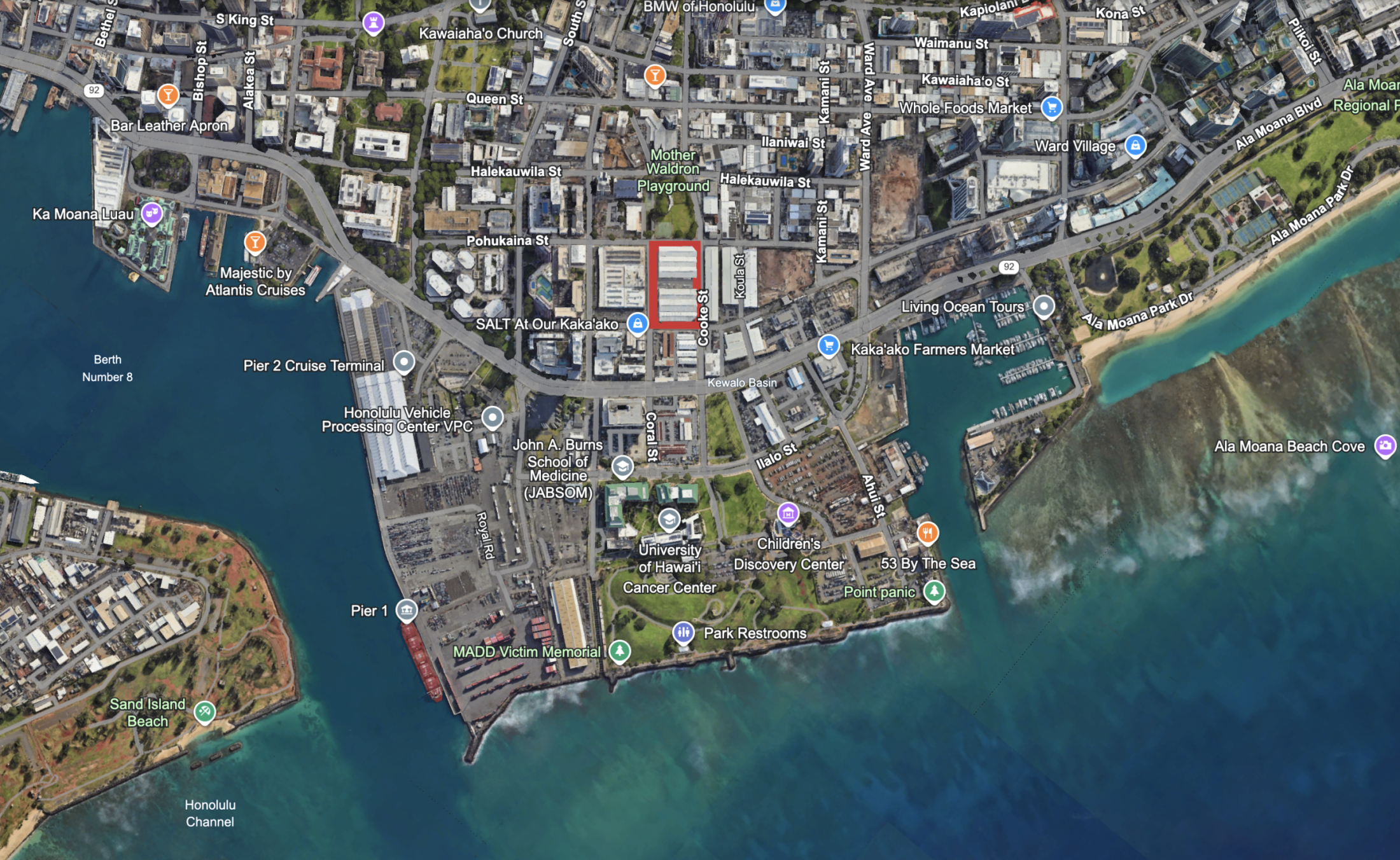
3D Shot of Kahuina’s Location on Google Earth
What makes this spot special is that it is literally one block behind the ‘oceanfront row’ where Oʻahu’s most expensive condos line up. And we’re talking serious prices here—three-bedroom units in the oceanfront row sold in the past six months ranged from $2.6M to $13M.
Kahuina is located on the second oceanfront row, and the way Ala Moana Blvd. curves will really help facilitate ocean views for the majority of the neighborhood at more affordable prices.
Lamakū Tower – Floor Plans, Prices & Interior Options
Starting with Lamakū, Lamakū is the taller building at 400 feet, which is the typical maximum height allowed in Kakaʻako under the Hawaii Community Development Authority (HCDA).
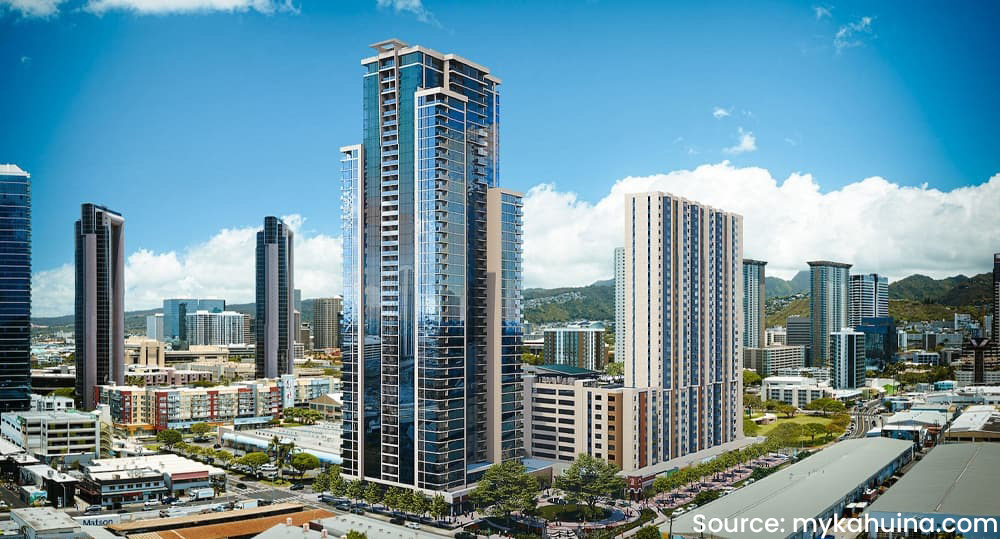
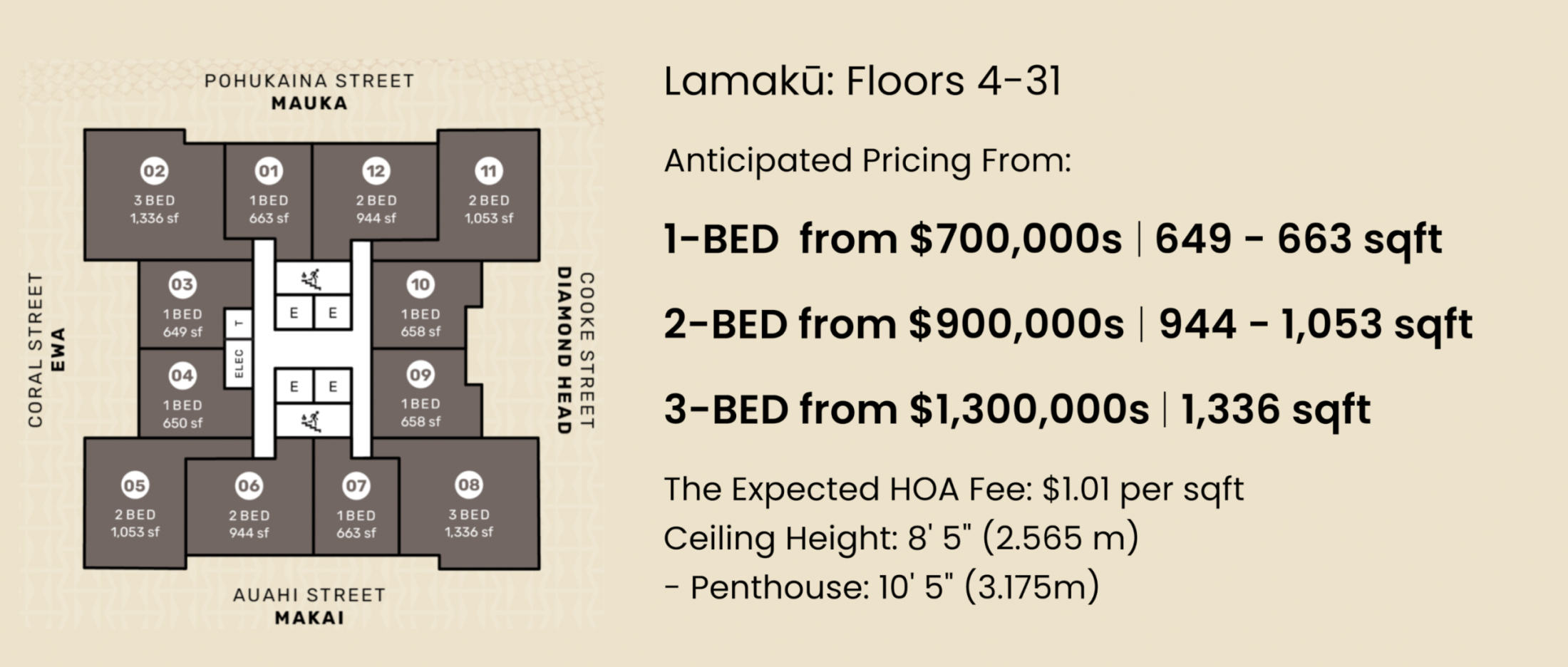
Lamakū has 43 stories, offering 329 market for-sale residences, all of which come with a balcony, and 120 HHFDC for-sale residences which do not come with a balcony.
The 1-bedroom units start from $700,000s, and sizes are from 649 to 663 sqft.
The 2-bedroom units start from $900,000s, and sizes are from 944 to 1,053 sqft.
The 3-bedroom units start from $1.3Ms with 1,336 sqft.
The expected HOA fee for Lamakū Tower is $1.01 per square foot. Generally speaking, square feet of lanai don’t count when calculating the maintenance fee. Only the living square feet are counted.
The ceiling height will be 8 feet 5 inches, which is 2.565 meters tall. However, the penthouse unit will have a higher ceiling: 10 feet 5 inches tall, which equals 3.175 meters.
Please note that this Lamakū floor plan is from floors 4 to 31. Levels above 31 will have different floor plans.
Lastly, this price range does not apply to the 120 HHFDC for-sale residences in Lamakū. The affordable housing units are definitely more affordable than this, which will be covered when we go over the Māmalu building.
Lamakū Interiors
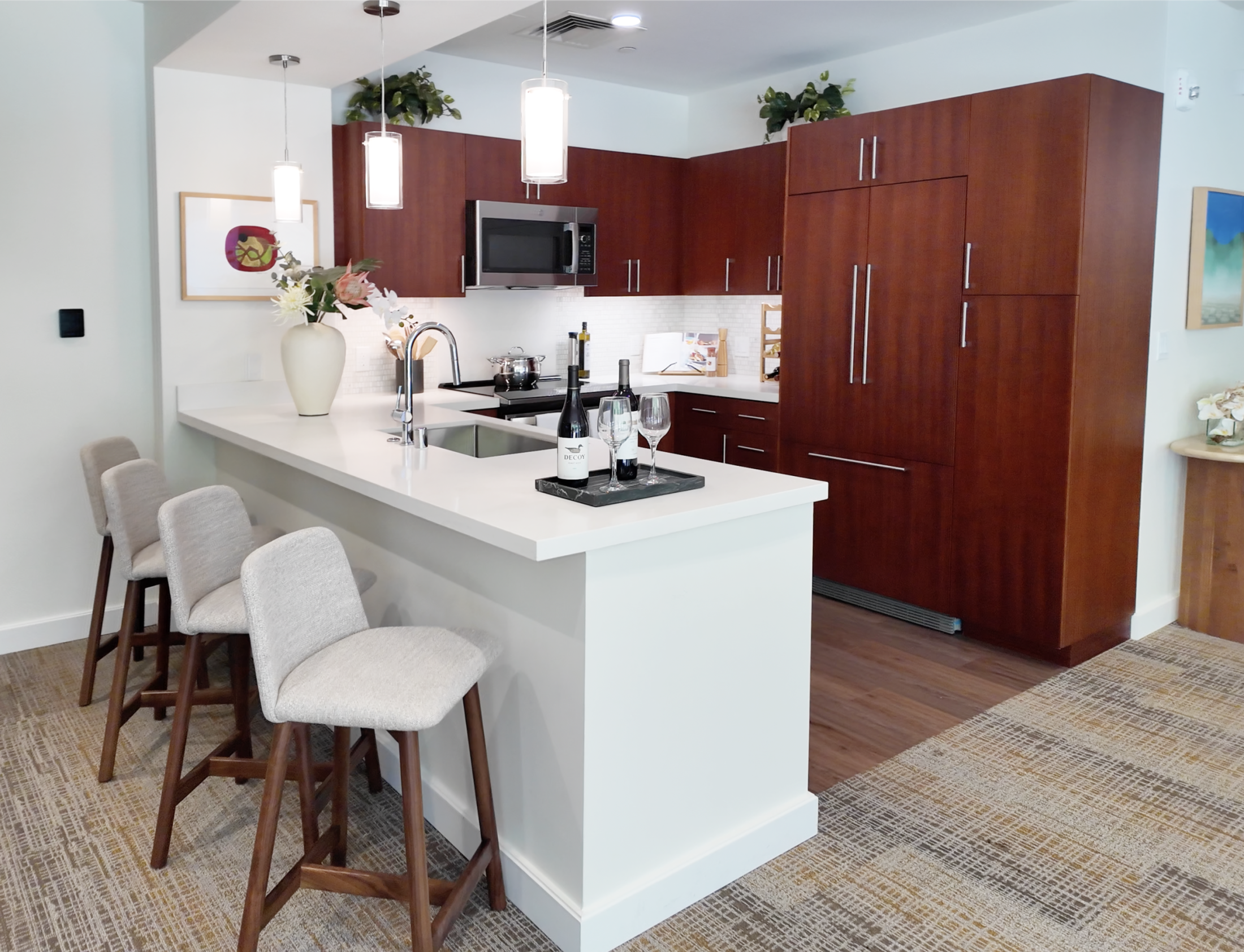
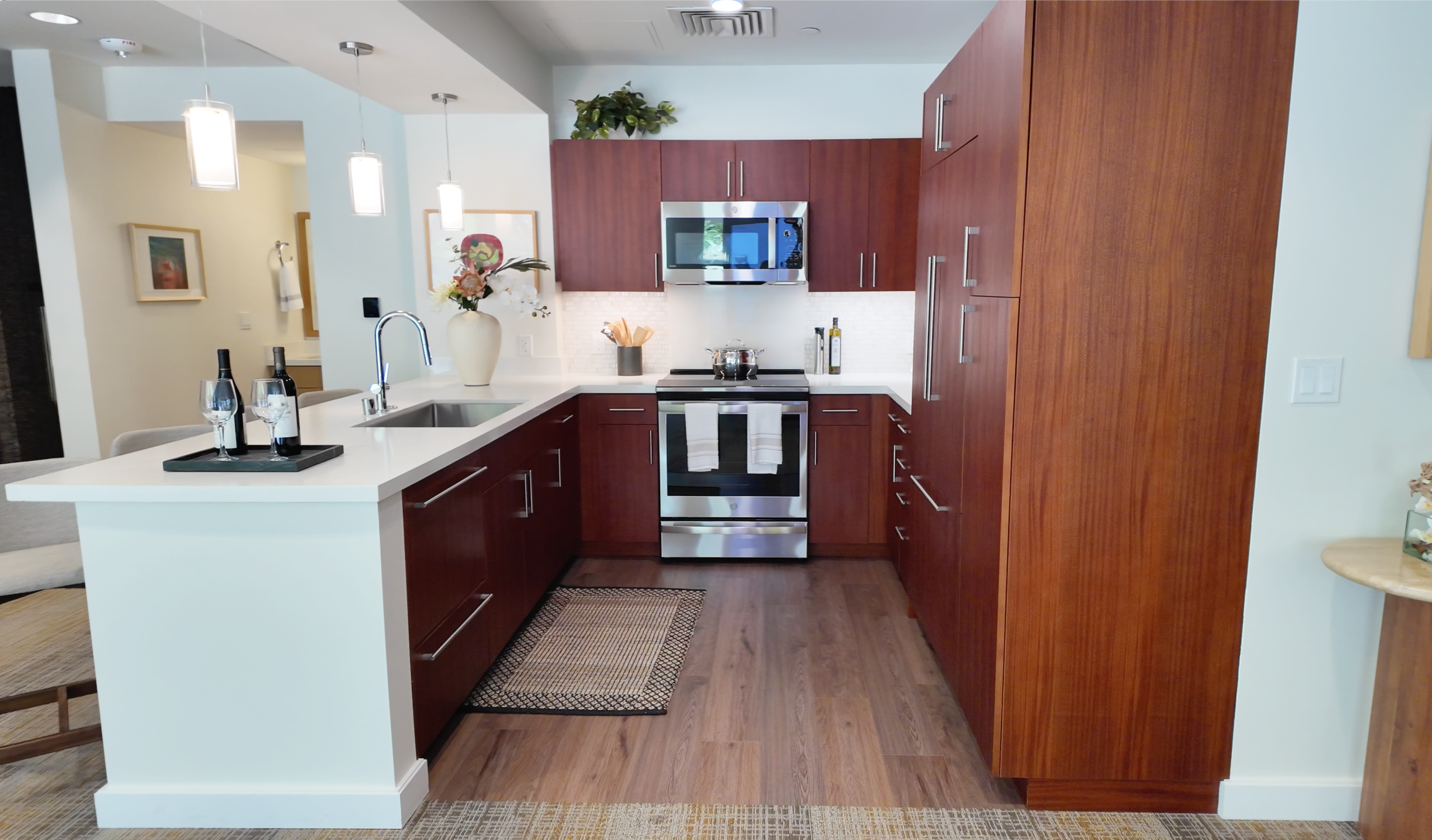
Here is the actual model for Lamakū market for-sale residences. This is a good representation of what Lamakū units will use for the light fixtures, appliances, materials, and ceiling height. Here, the ceiling height is 8 feet 5 inches, which is 2.565 meters tall.
The kitchen includes a Fisher & Paykel cabinet-face refrigerator and a 2-drawer dishwasher which reflect a very thoughtful design. It slides out like a drawer, and it seems energy-efficient since you can run a small load in the top drawer while keeping the bottom one free — or run both at once with different wash cycles so you don’t have to wait until the machine is full.
The range, microwave/hood combo, and washer/dryer combo are all from General Electric. I heard this is a smart oven with a built-in air-fry mode that is WiFi-enabled, so you can preheat the oven while you’re on your way home, control it by voice with Alexa or Google Assistant, and get alerts when your meal is ready.
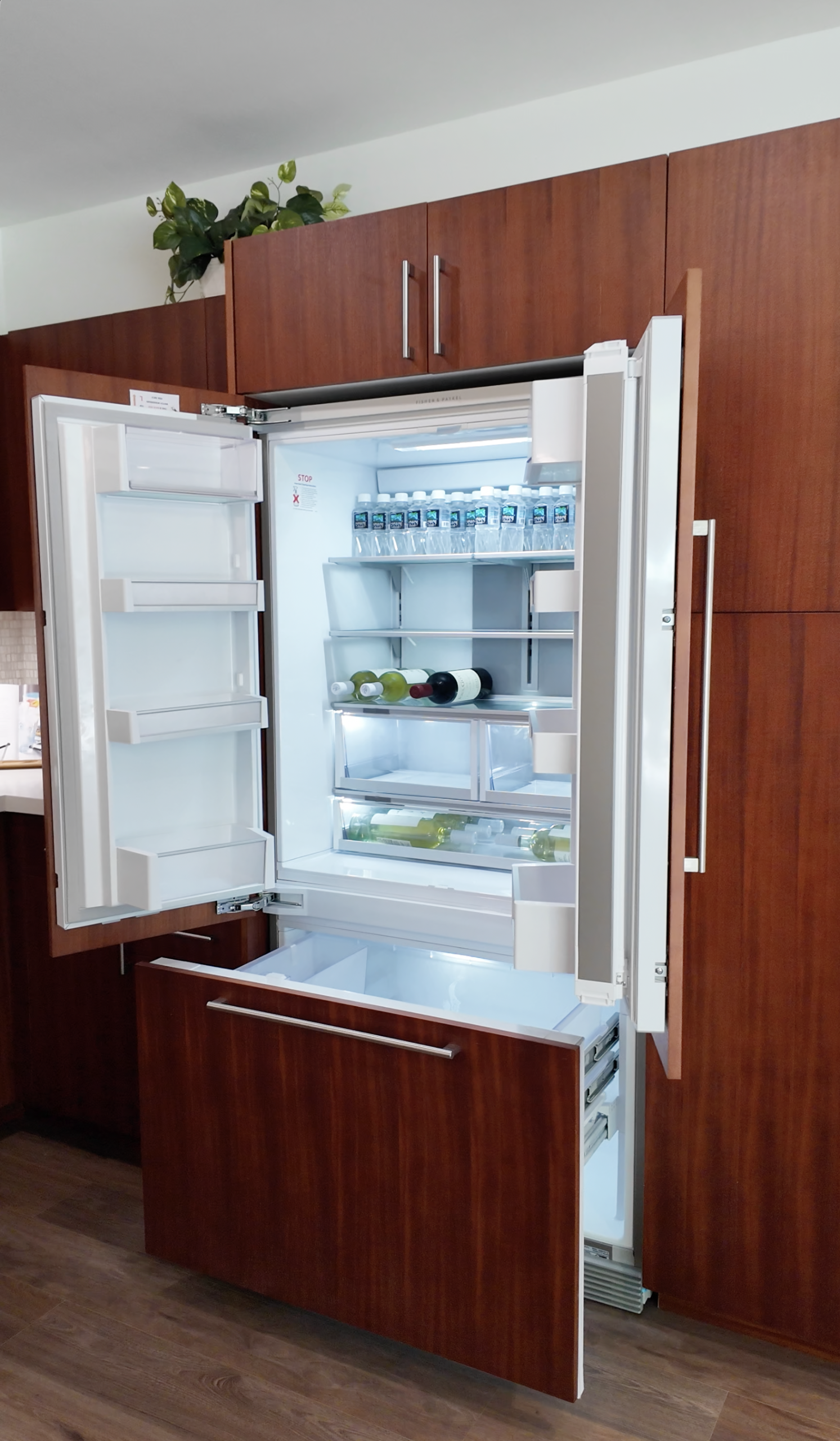
Here is a close-up of the fridge, which comes with ample storage. The freezer is below, divided with two drawers that you can slide out.
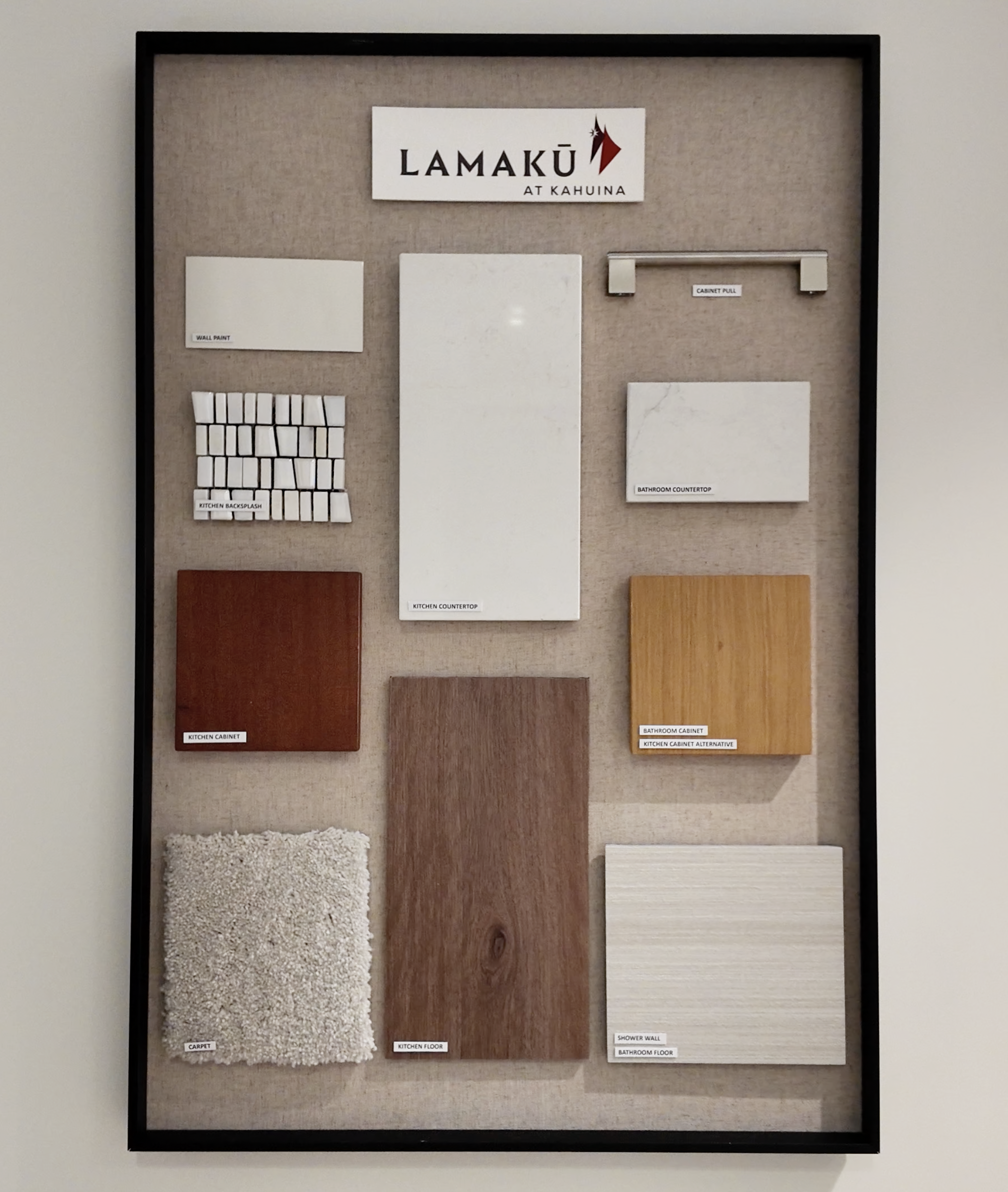
The kitchen comes with matching white-tone quartz countertop and a mosaic tile backsplash, which give a bright, clean, and modern touch.
Then there is African-mahogany cabinetry, which is a dark brown color with cherry undertones, and this can be replaced with another alternative, the same cabinet color used in the bathroom here. It’s a lighter brown color similar to a bamboo color.
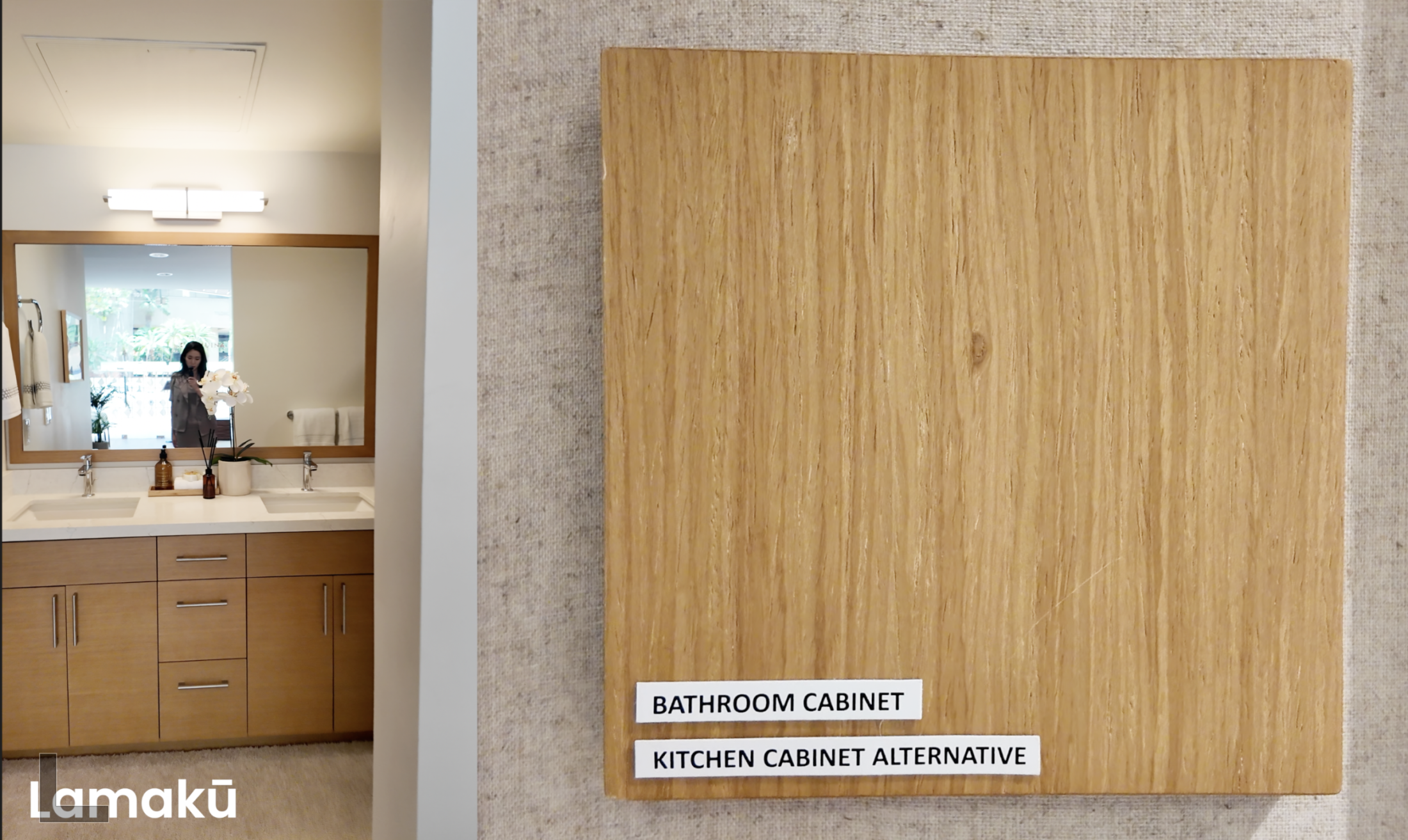
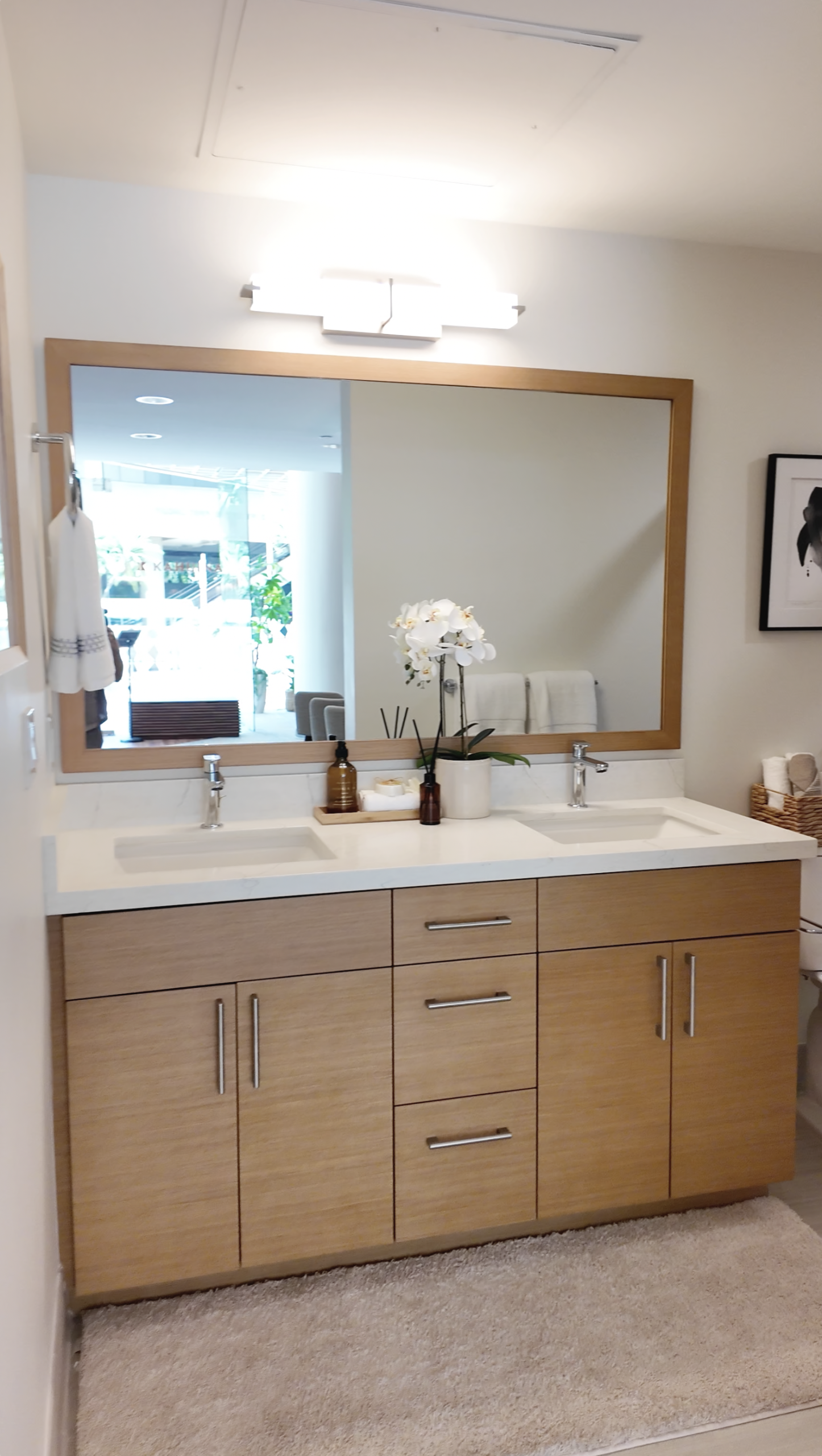
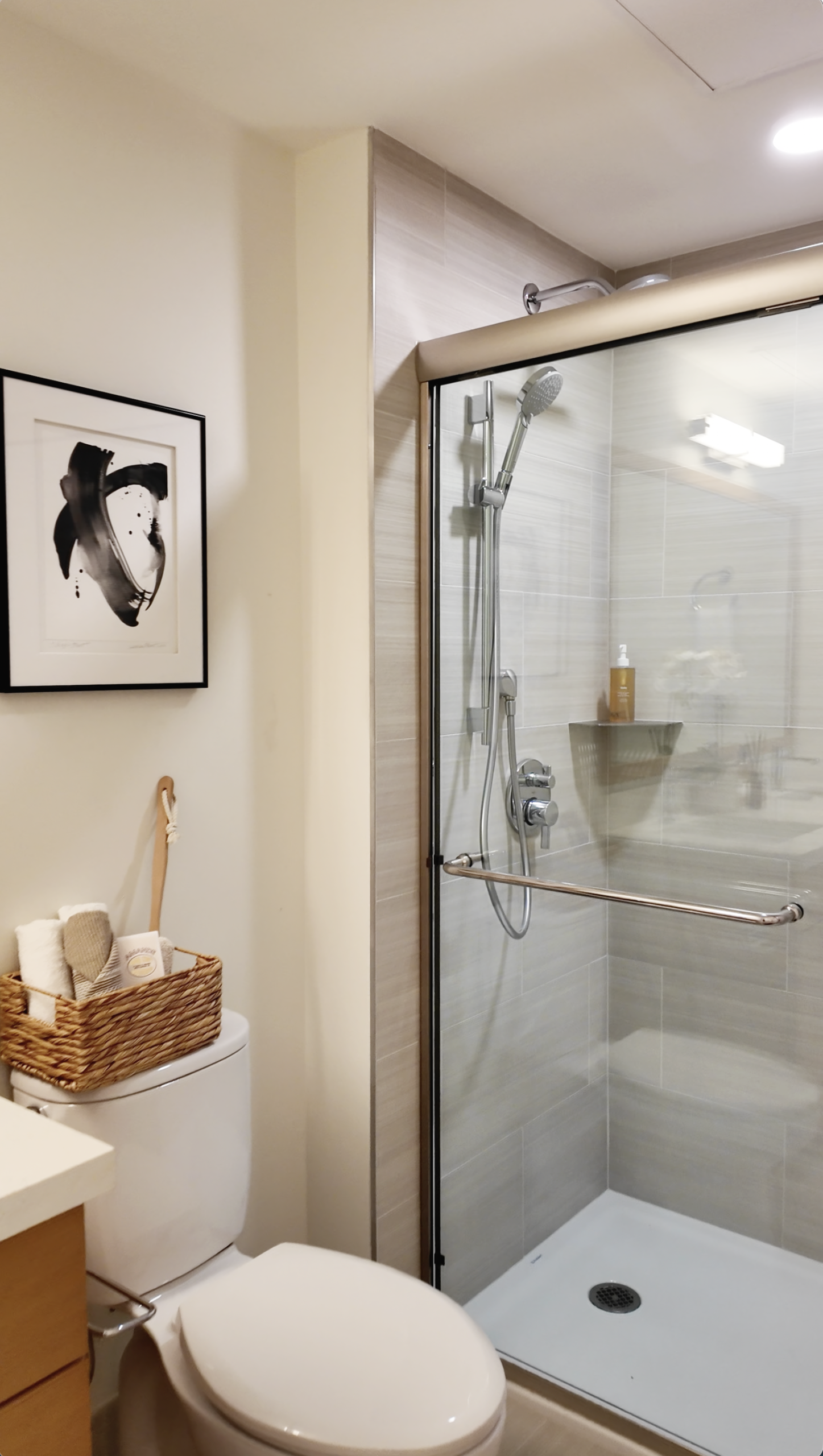
The bathroom features light, modern finishes and a sliding-glass shower with both a rain head and an adjustable handheld shower.
Here are close-up shots of the materials used in Lamakū’s market for-sale residences.
Māmalu Interiors
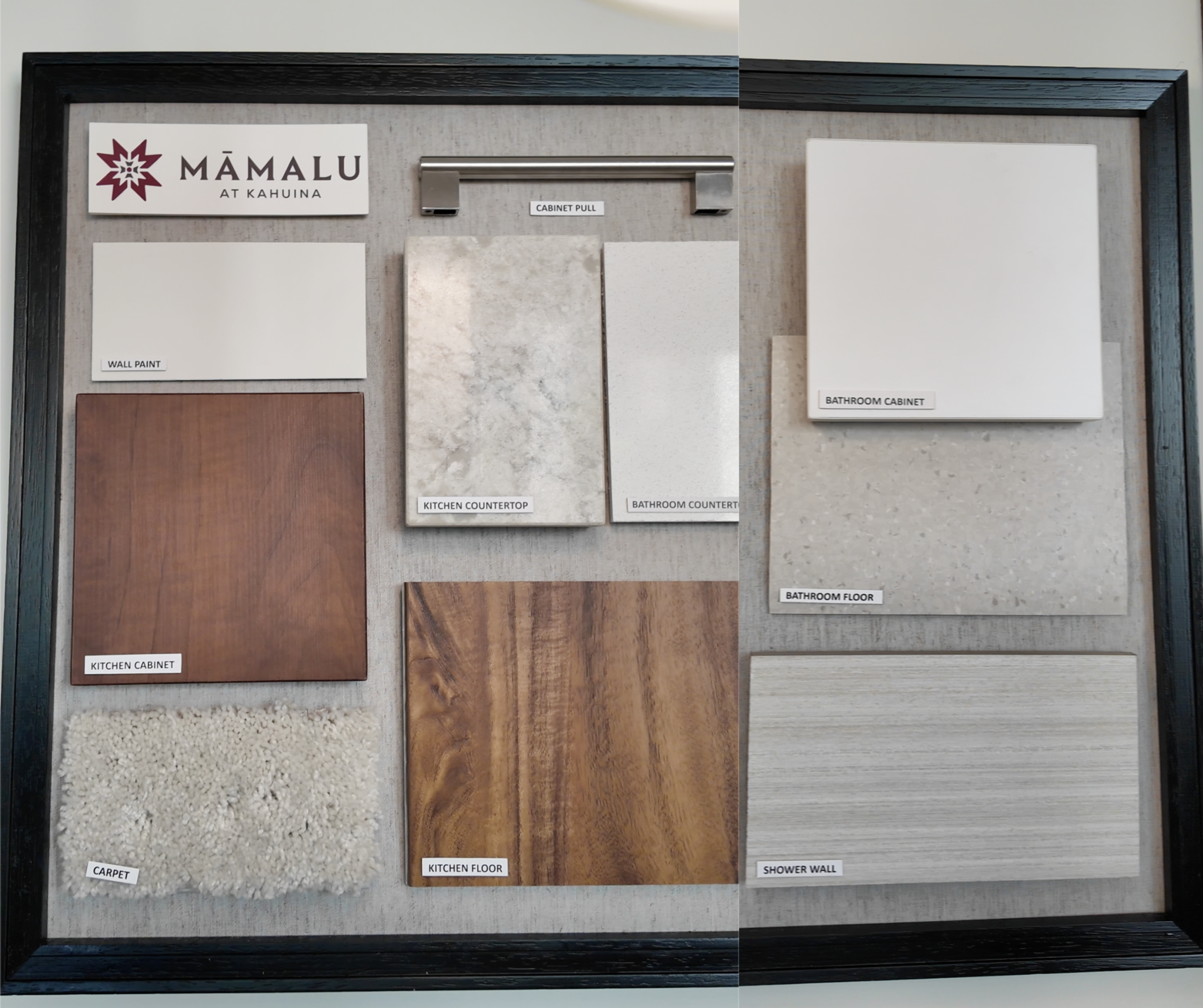
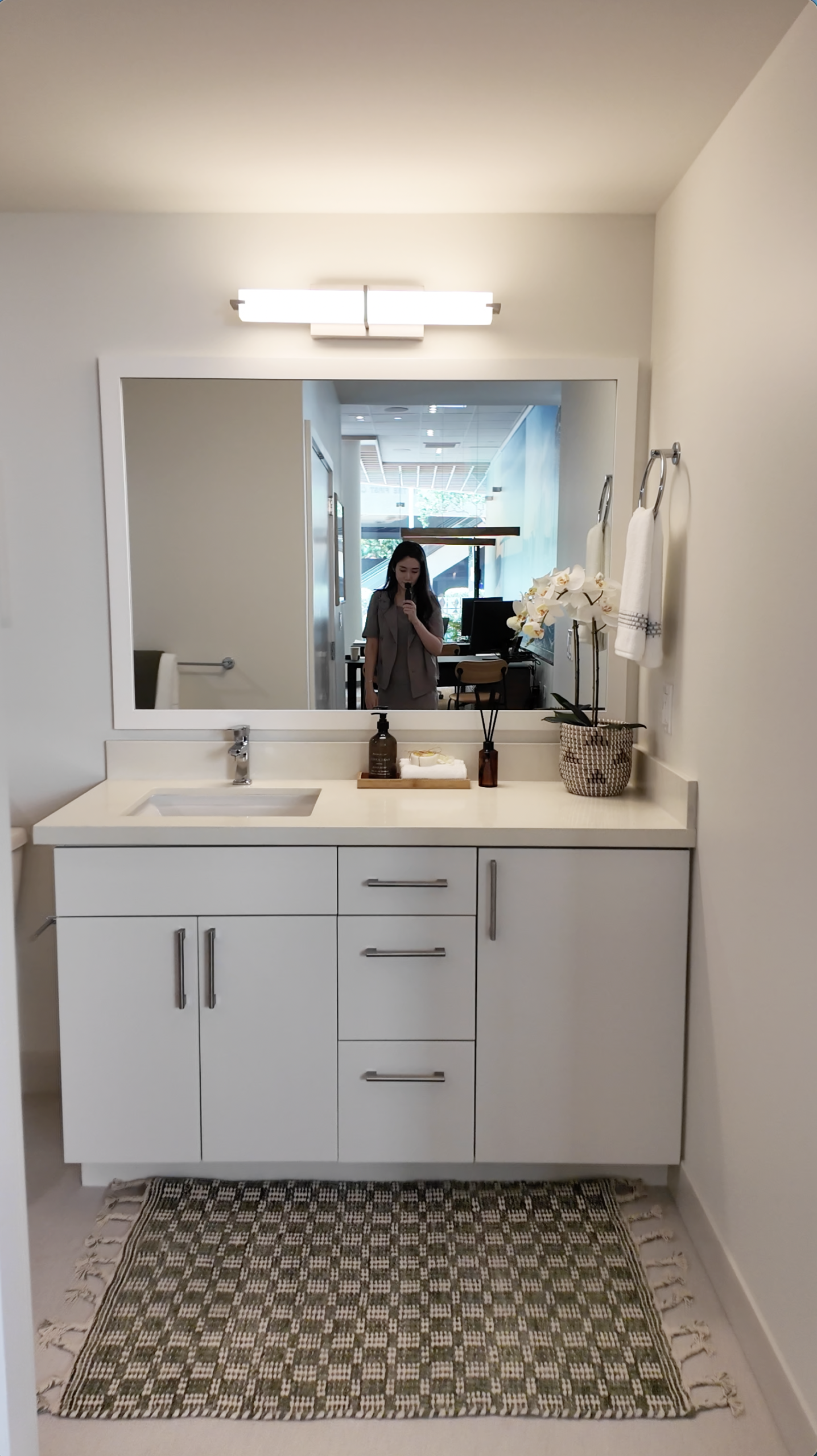
Now let’s compare the materials used in Māmalu’s HHFDC for-sale residences. The differences seem subtle at first sight because they use materials in similar color tones and follow modern aesthetics.
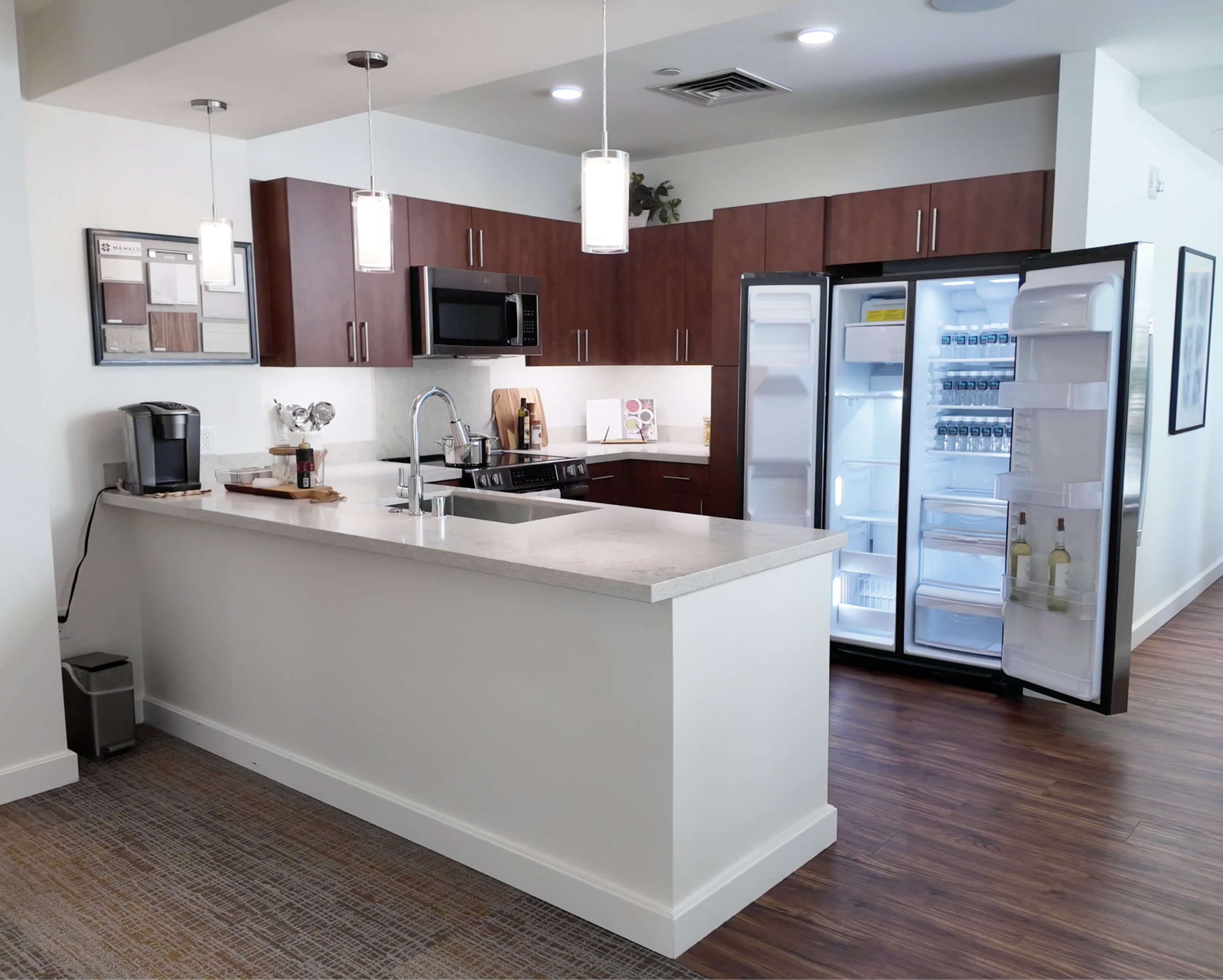
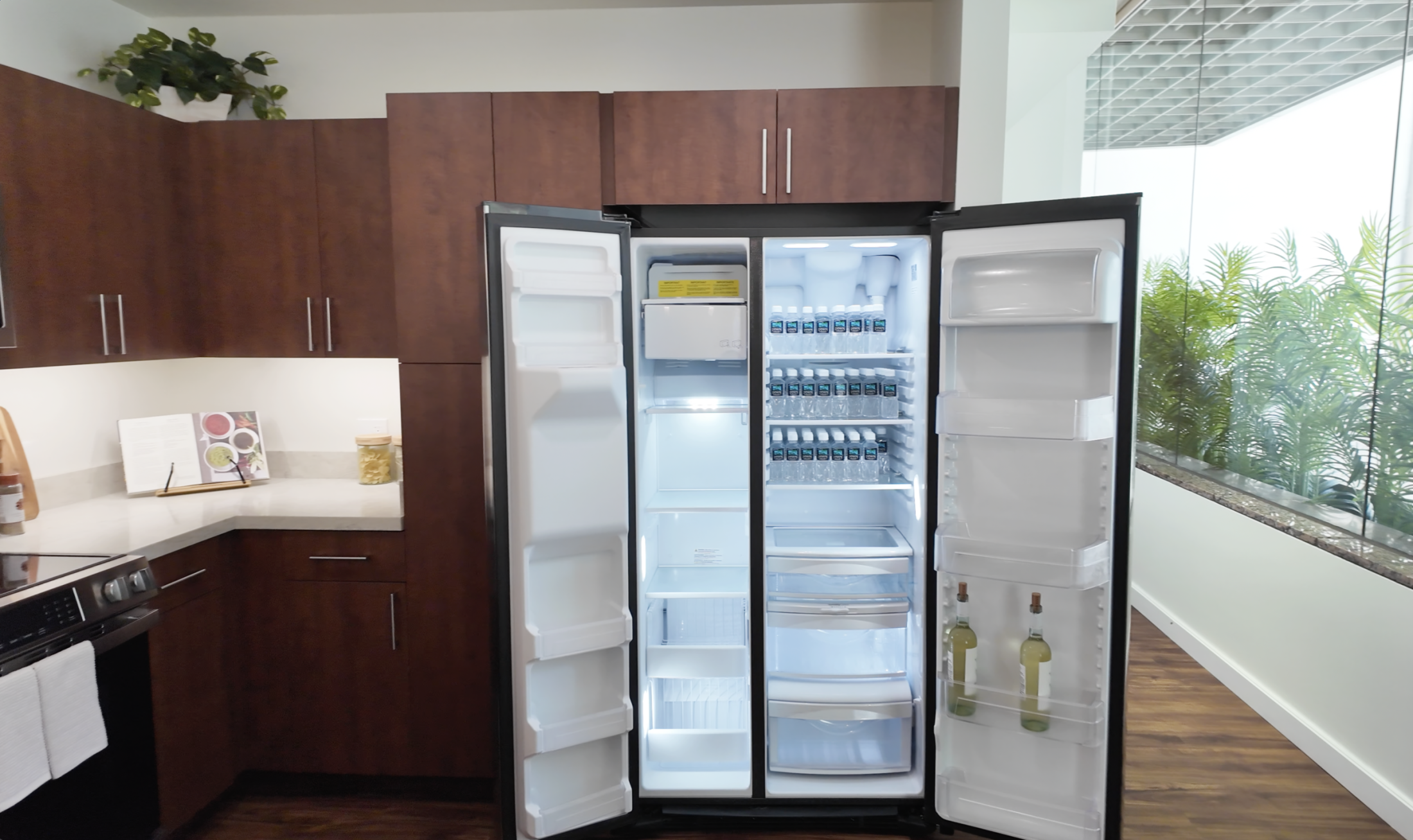
Māmalu also comes with a quartz countertop, but it is slightly more gray than Lamakū’s white quartz countertop. The kitchen uses Wilsonart Zanzibar cabinets that come in one color (the one you’re seeing now), and all appliances are from General Electric, including a washer/dryer combo, refrigerator, range, microwave/hood combo, and dishwasher.
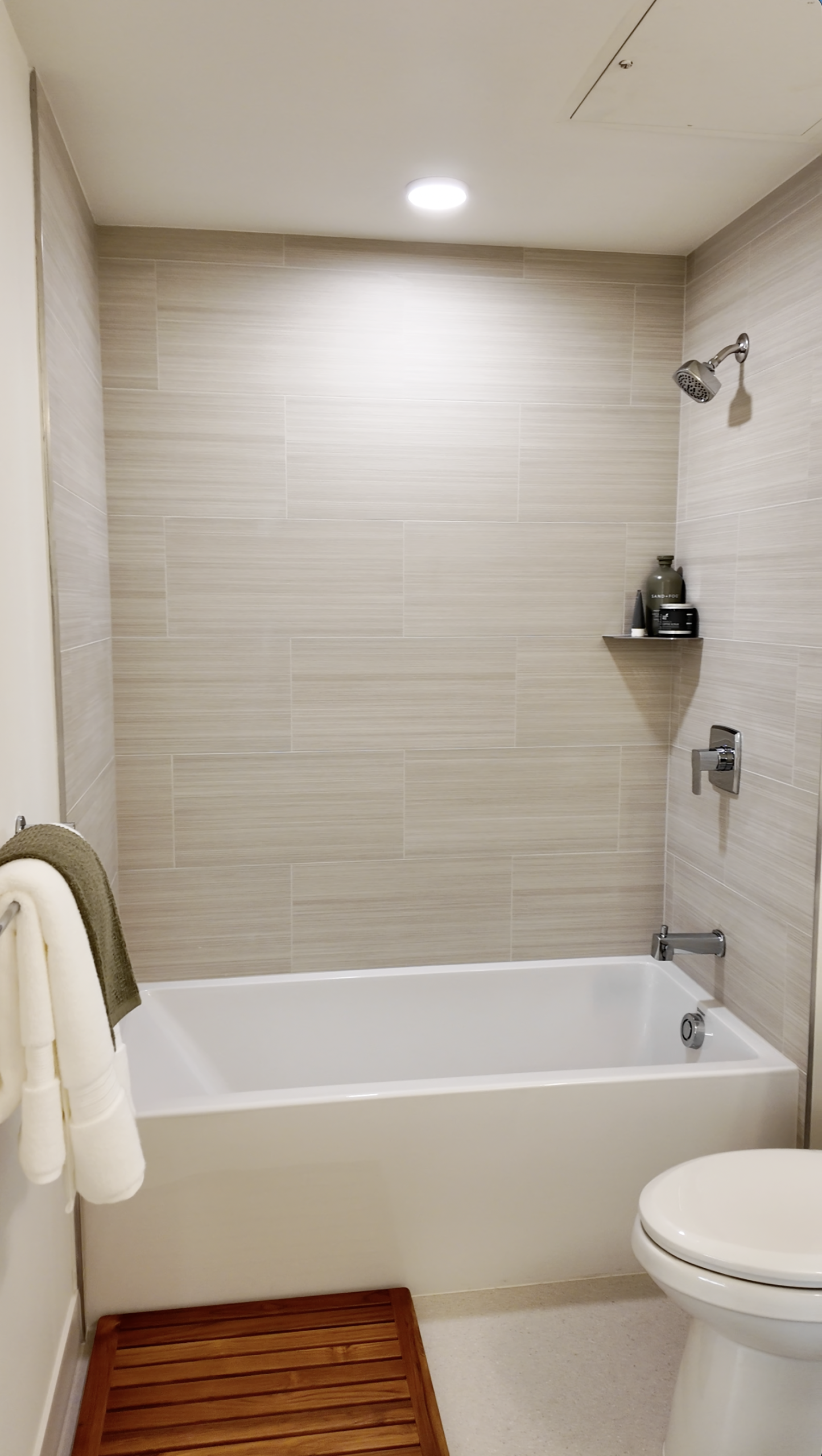
The bathroom comes with a bathtub and a showerhead attached to the wall, and the color palette used here is predominantly white but with an ivory grayscale that gives warm, cozy, and modern vibes.
Māmalu Overview Including Amenities
Let’s talk about the building. Māmalu Tower is three hundred one feet tall, with 32 stories.
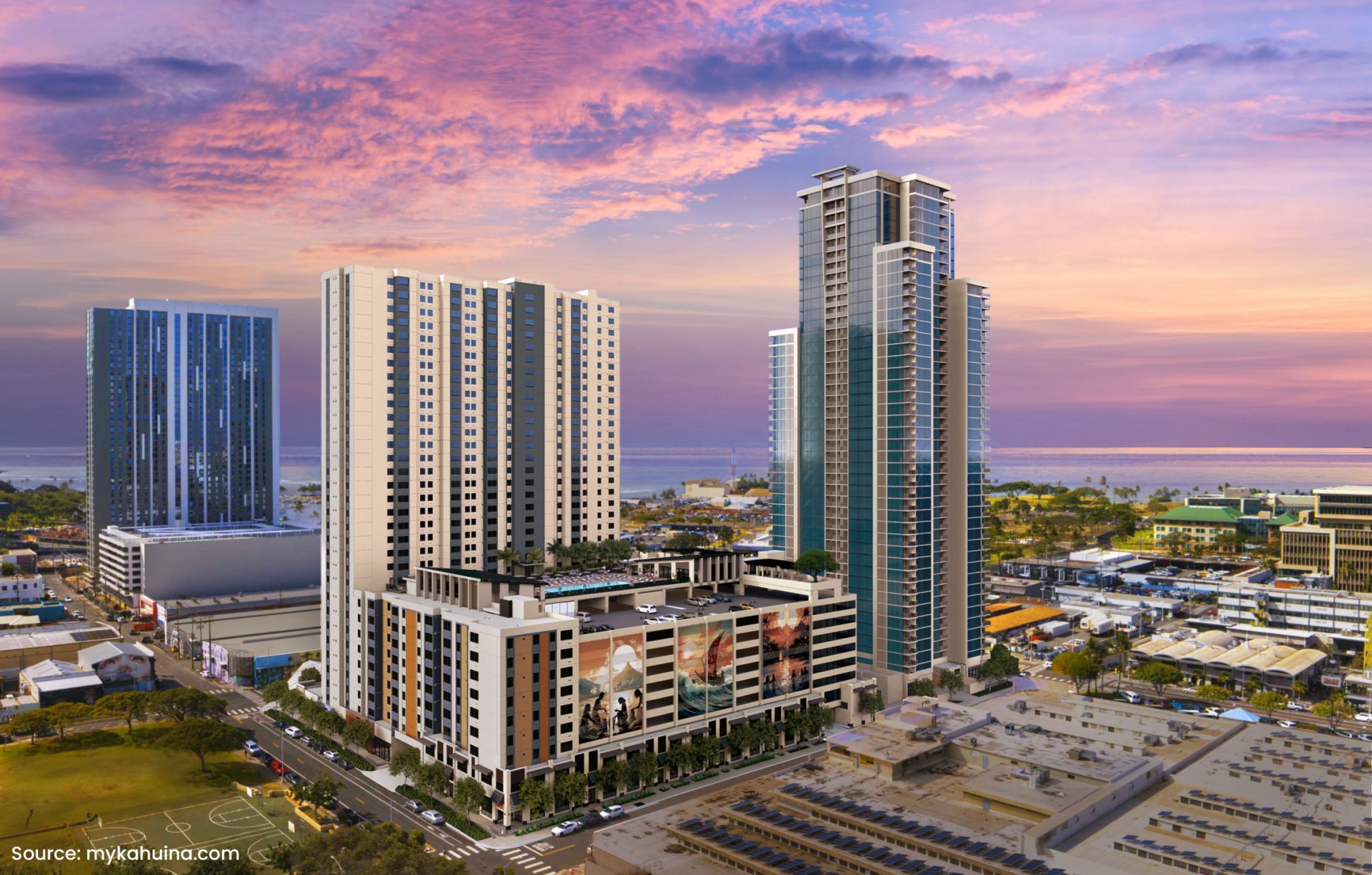
At street level, there will be retail spaces of about 35,000 to 42,000 square feet, bringing local shops, cafés, and restaurants to support a walkable, urban lifestyle, which ties into SALT at Our Kakaʻako just across the street, expanding the neighborhood’s cultural and retail core.
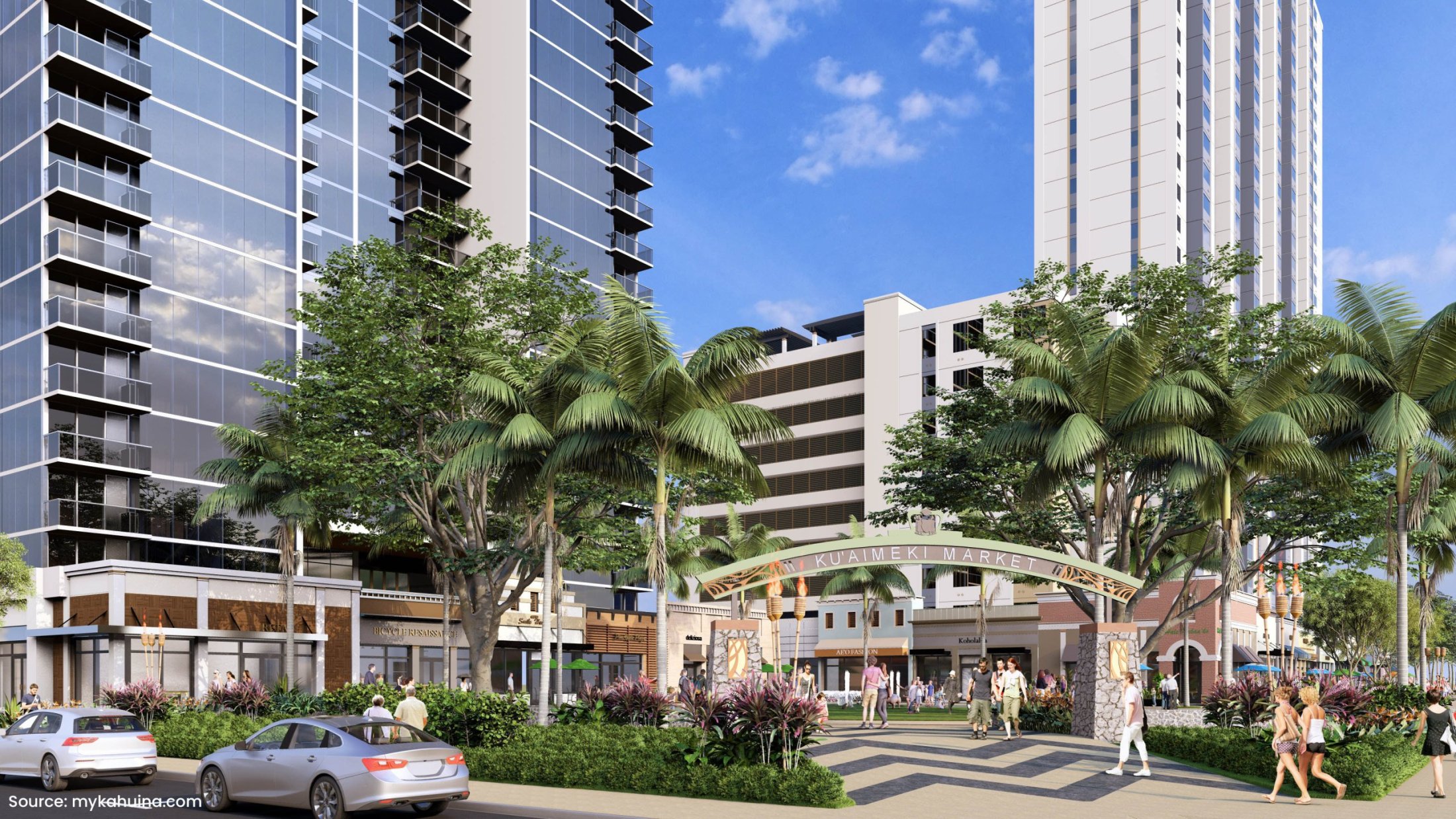
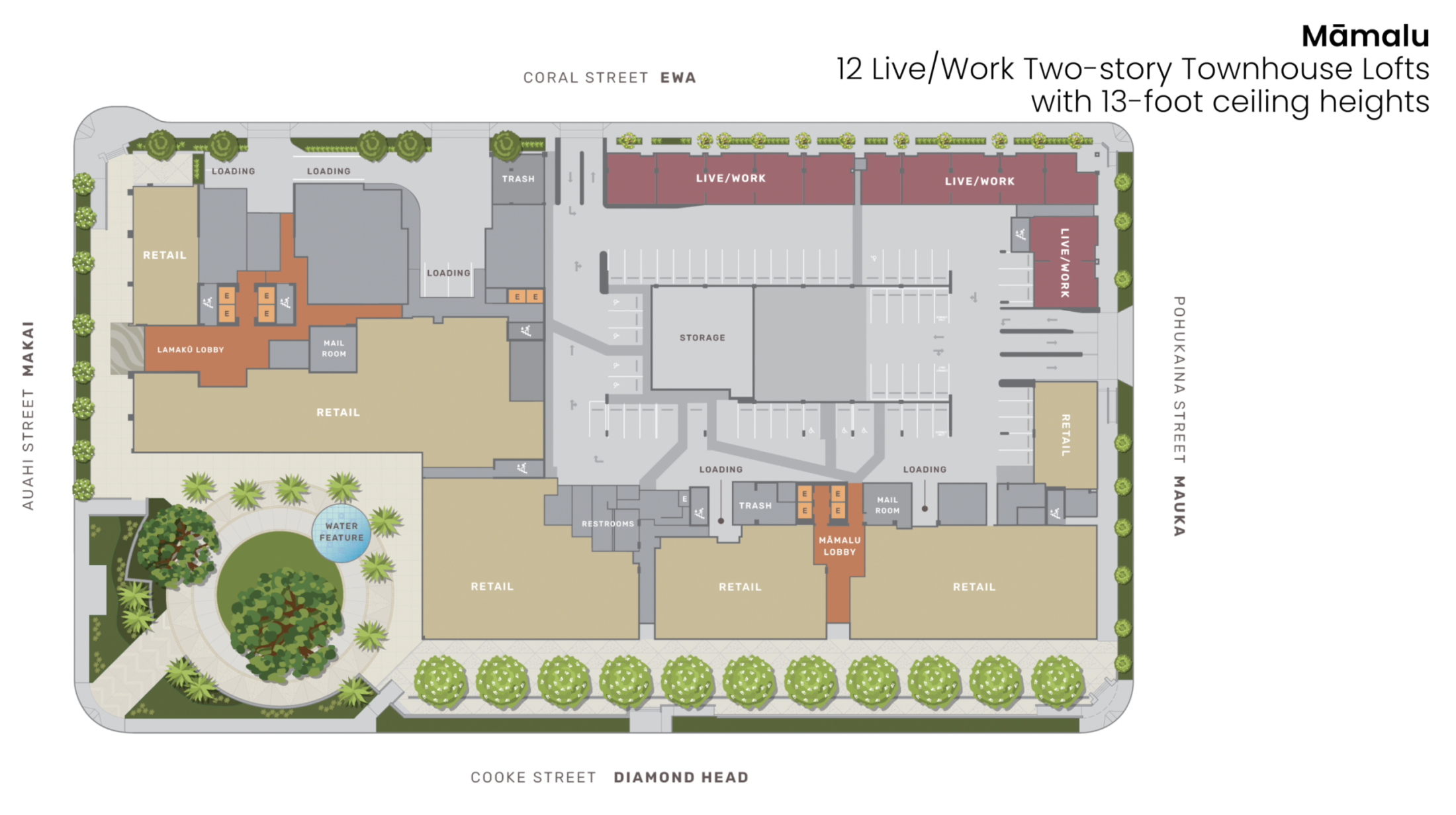
Also, at street level, at the corner of Pohukaina and Coral Street, there are 12 live/work units that are two-story townhouse lofts with 13-foot ceiling heights, which are for people who want to combine residential living with their business operations and leverage the booming traffic in the area.
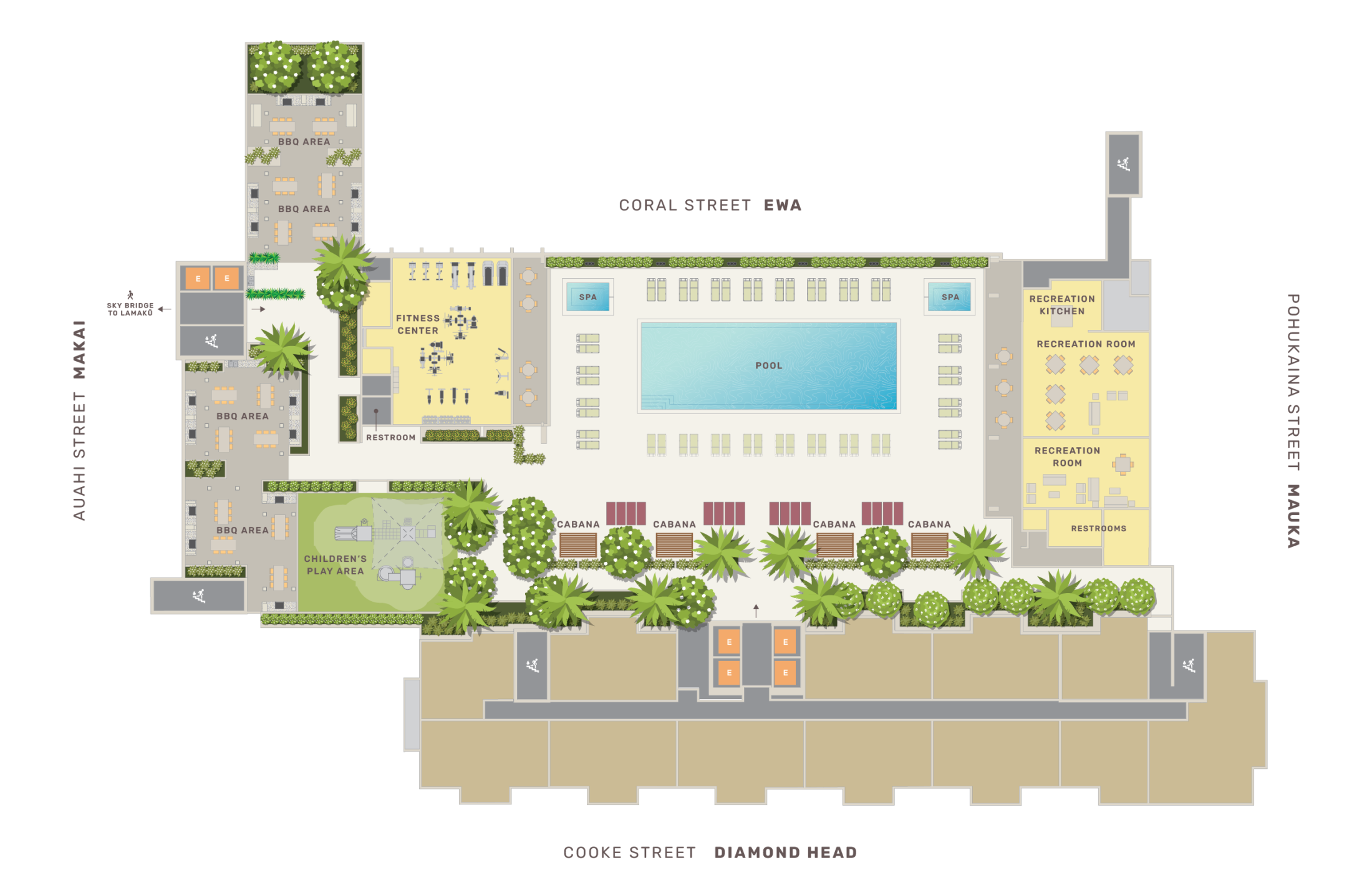
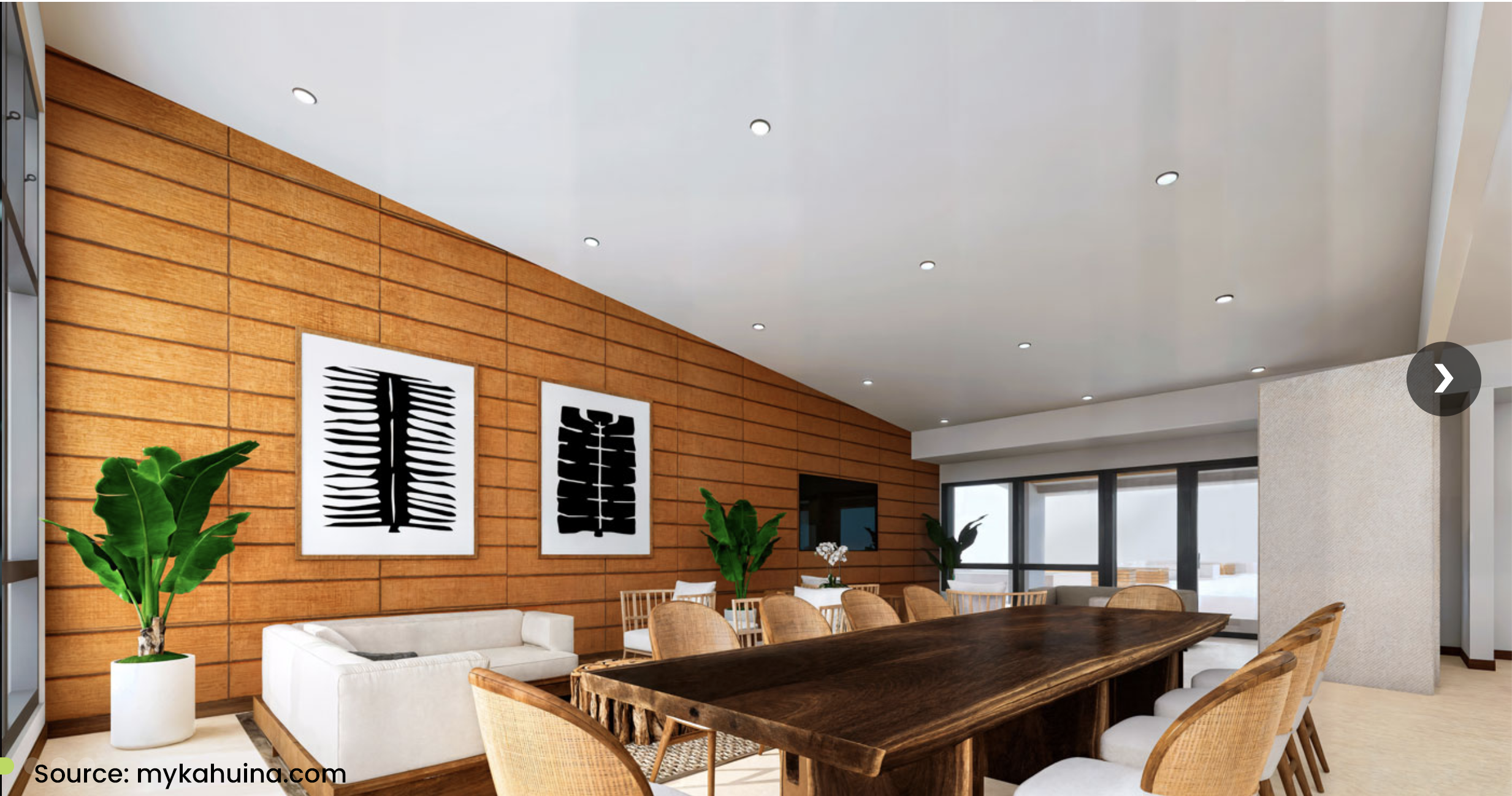
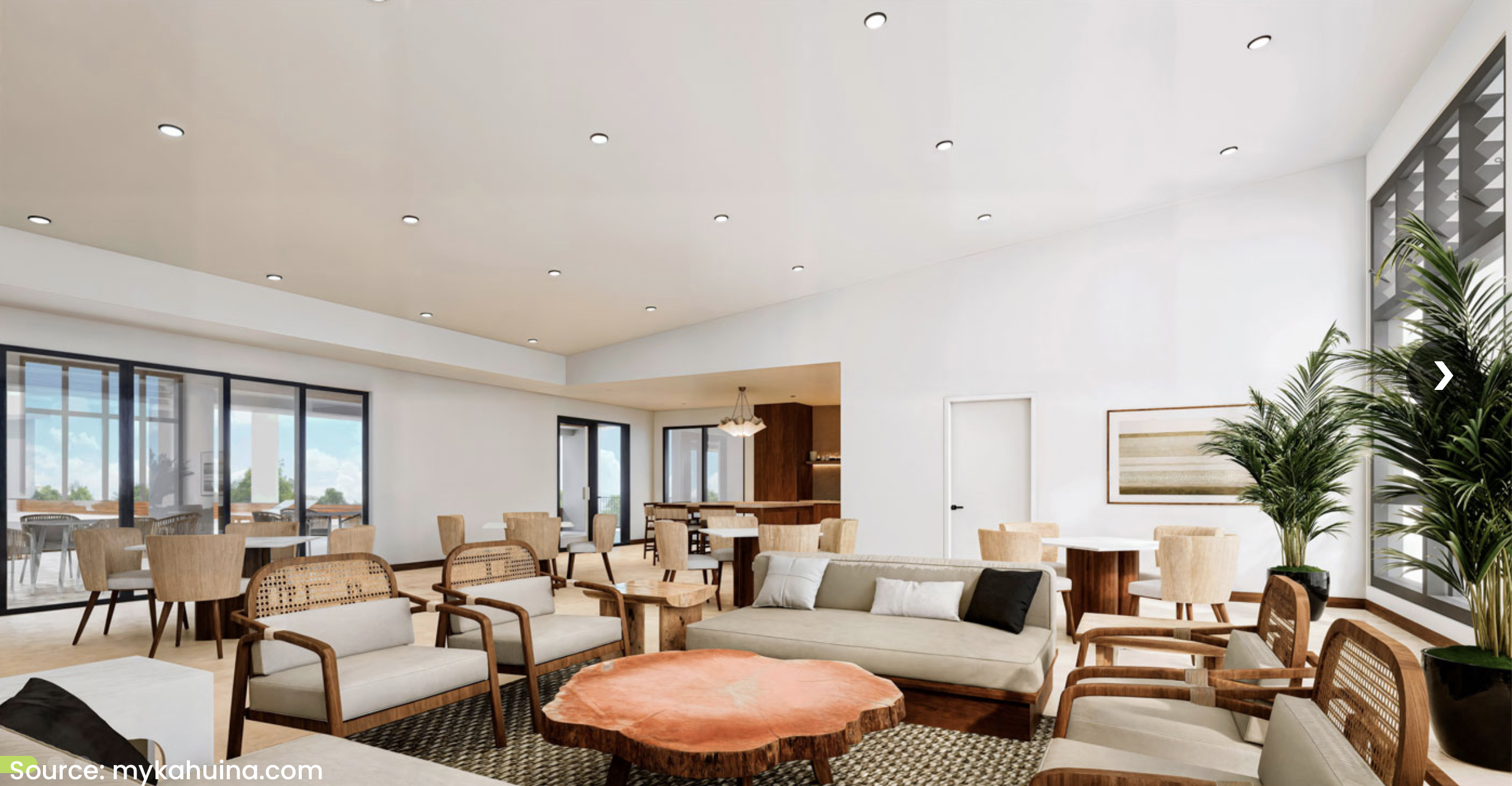
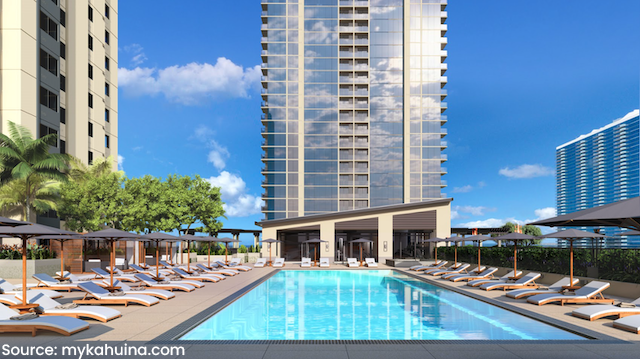
Then there is a nine-level parking garage with over 1,200 parking stalls and 8 EV charging stations to support both residential and commercial uses. On the 10th floor, there is an amenity deck that includes BBQ grills, pools, a fitness center, and social rooms, etc. that both Lamakū and Māmalu residents can enjoy.
Māmalu | Floor Plans, Prices, Interiors
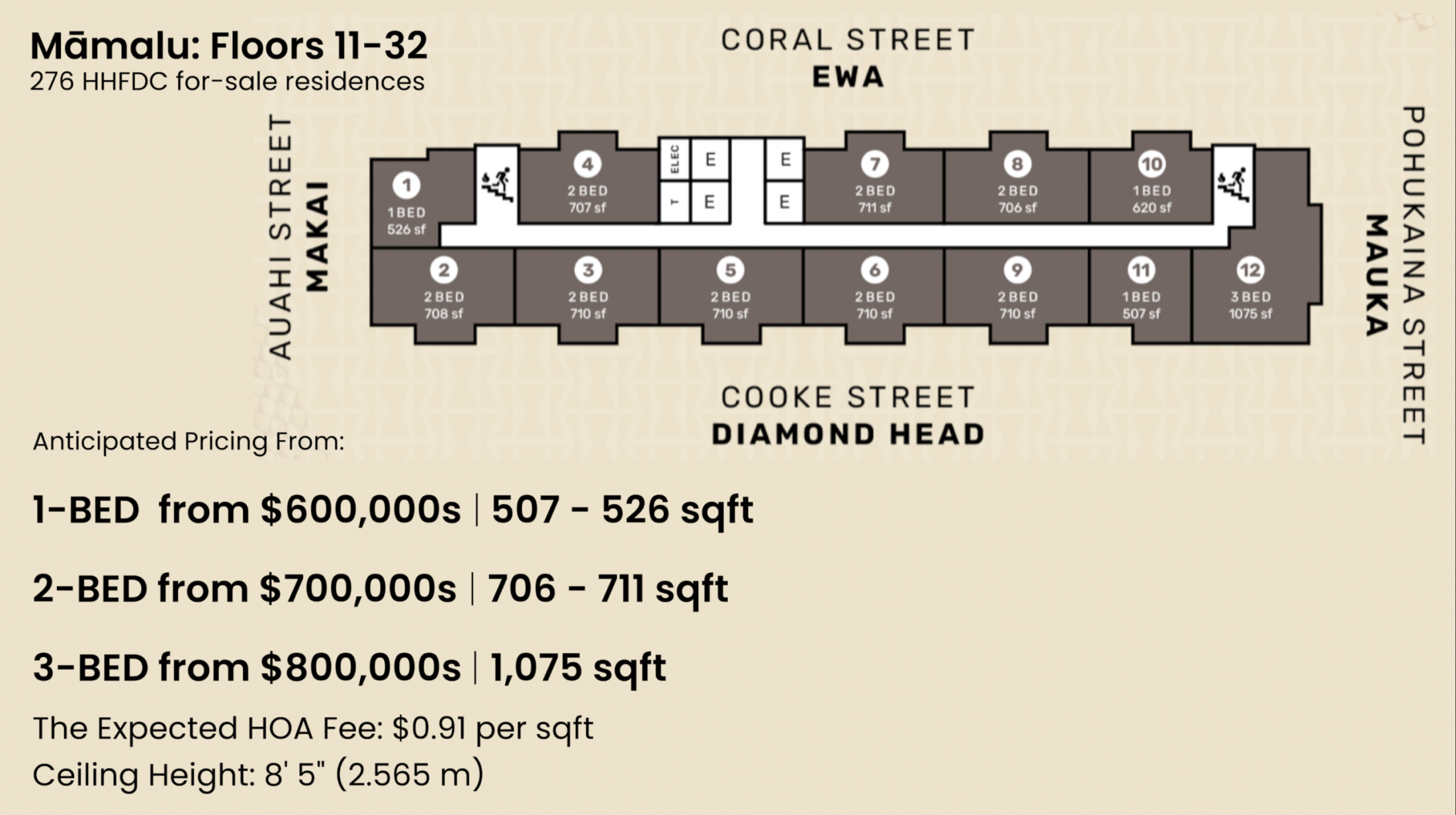
Now let’s look at Māmalu’s 11th- to 32nd-floor plan. There are 276 HHFDC for-sale residences with a ceiling height of 8 feet 6 inches tall.
The 1-bedroom units start from $600,000s, and sizes are from 507 to 526 sqft.
The 2-bedroom units start from $700,000s, and sizes are from 706 to 711 sqft.
The 3-bedroom units start from $800,000s with 1,075 sqft.
The estimated maintenance fee is $0.91 per square foot for Māmalu Tower.
Please note that HHFDC units do not have a balcony, and subsidized 2–3-bedroom units come with only one stall.
Market Residences vs. HHFDC Residences
Let’s juxtapose market residences and HHFDC residences side by side.
On top, there are anticipated prices and maintenance fees.
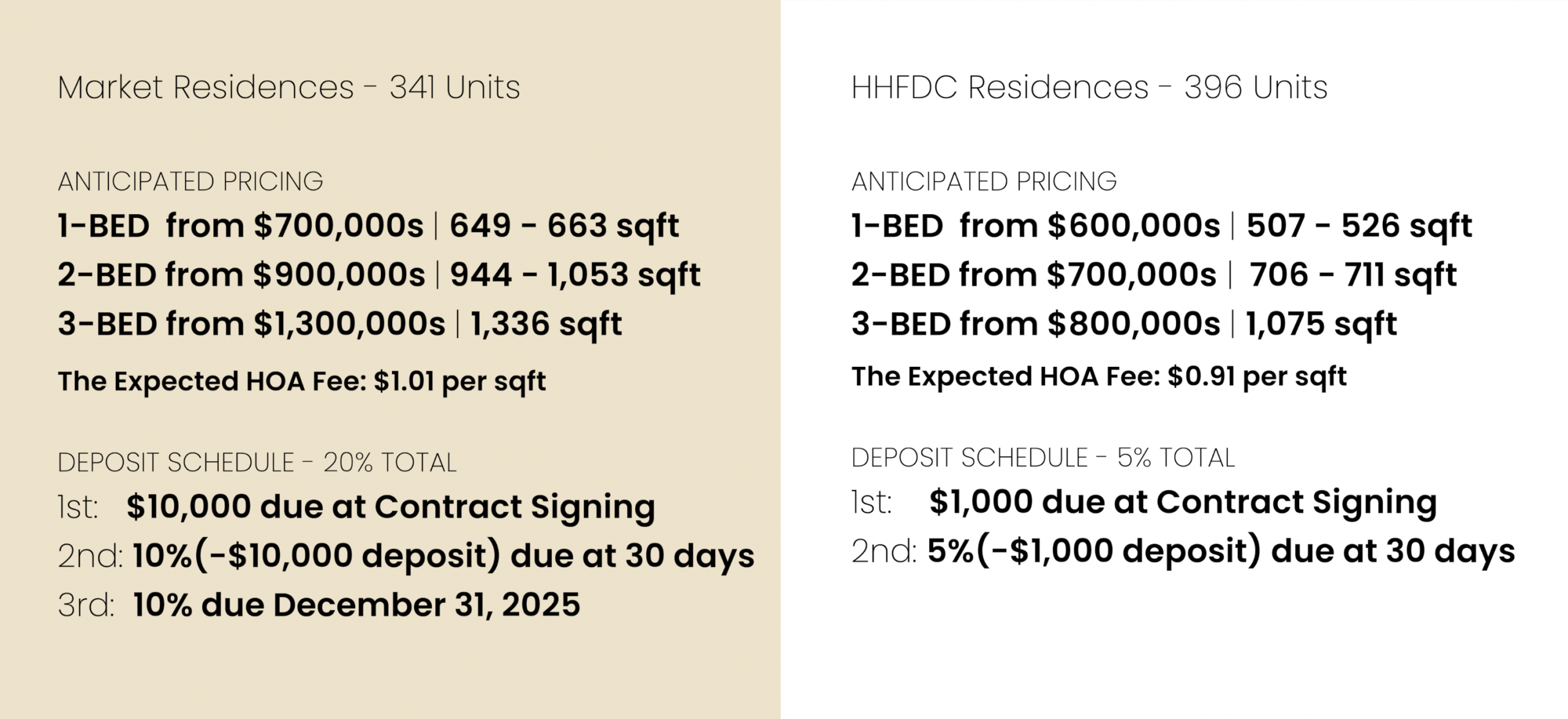
For Market Residences, the deposit schedule is 20% total — that’s $10,000 due at contract signing, another 10% (minus the $10,000 deposit) within 30 days, and the final 10% due by December 31, 2025. The rest is due when it’s built.
For HHFDC residences, the deposit requirement is much lighter, just 5% total — First, there’s $1,000 at contract signing. Then the balance of 5% (minus the $1,000) is due within 30 days.
I understand that 5% is still a lot of cash, but these prices are set based on 2029 market expectations, not today’s 2024 market prices. Also, there are a couple of pieces of good news.
First, Co-signing is allowed to help with qualifying for your mortgage. As long as the co-signer is not living in the home, they are not included in the eligibility requirements.
Second, gift funds are allowed to assist with the down payment. At Kahuina, they may not exceed 35% of the purchase price and must come from a relative.
One tip I learned from a loan officer is that cash used for a down payment should be seasoned in your bank account for at least 60 days — this includes gift money. If gift money or down payment money has been in your account for more than 60 days, lenders usually do not trace it further. If it’s deposited within the past 60 days, they must trace it to verify the source — for gift money, that means a gift letter and sometimes the donor’s bank statements.
Third, there are special programs that can make buying even more affordable. These aren’t loans or grants — instead, HHFDC can actually step in and buy a portion of the home with you. This is called shared equity. What that means is, you pay less upfront, but later, when you sell or refinance, HHFDC gets back their share plus part of the profit.
Details About HHFDC’s Housing Programs (DEP, HELP, Buyback, SAE)
There are two programs and two key rules you should know under HHFDC’s housing framework. Together, they shape both affordability at the time of purchase and how equity is shared later on.
Dwelling Unit Revolving Fund Equity Pilot (DEP)
The first is DEP, short for the Dwelling Unit Revolving Fund Equity Pilot. This is a temporary program running until June 30, 2028, and it’s only for certain jobs Hawai‘i really needs more of, like teachers, nurses, police officers, correctional staff, and agricultural workers. If you qualify, HHFDC buys equity in your home upfront.
For example, if a condo is priced at $700,000 and HHFDC contributes around 20%, your price could drop to about $560,000. That lowers your down payment and your monthly mortgage. Later on, if you sell, you repay HHFDC their share plus appreciation, and that money cycles back into the state housing fund to help the next buyer.
But here’s something important: DEP is scheduled to end in 2028. Since Kahuina isn’t expected to be finished until late 2029, buyers will only be able to use DEP if the Legislature decides to extend the program past its current expiration date. If DEP isn’t renewed, then it won’t be available by the time Kahuina is completed. I suggest keeping an eye on this program if you think you can leverage it, because an extension could make a big difference in affordability. (Source)
Homeowner Equity Lending Program (HELP)
The second program is HELP, which stands for the Homeowner Equity Lending Program. This one is broader — it’s not tied to specific job categories. HELP can apply to both HHFDC affordable units and some market-rate units. Just like DEP, HHFDC buys equity in the beginning, and when you eventually sell, refinance, or transfer, you pay them back their portion plus profit. HELP is still active now. (Source)
Now, whether or not you use DEP or HELP, all HHFDC affordable buyers are subject to two important rules when applying for HHFDC housing: Buyback and SAE.
Buyback Program
Whether or not you use DEP or HELP, all HHFDC affordable buyers are subject to two important rules when applying for HHFDC housing — Buyback and SAE.
The Buyback Program requires that you live in the home for the first 10 years. You can’t rent it out, and if you want to sell or transfer during that time, HHFDC has the first right to buy it back.
After 10 years, this restriction automatically goes away. If you do sell before the 10 years are up, you’ll usually get back your purchase price, plus up to 1% appreciation per year (capped at 10%), along with credit for any improvements you made.
Shared Appreciation Equity (SAE)
Now let’s talk about the SAE program, which stands for Shared Appreciation Equity. This is how HHFDC makes sure affordable housing keeps going for future buyers. Because you get to purchase at below-market prices, you agree to share a portion of the profit with HHFDC when you eventually sell, and the money they receive goes back into funding more affordable housing projects.
Here’s how it works. Before you even close on your home, HHFDC calculates your SAE percentage, and it never changes.
Let’s say the fair market value of the unit is $850,000, but your purchase price is $700,000. The difference is $150,000. When you divide that difference by the fair market value, $150,000 divided by $850,000 comes out to about 17.65 percent.
That 17.65 percent is your SAE percentage, and it stays locked in for as long as you own the home.
Now let’s play this out. Imagine you sell your unit years later for $1.1 million. Your profit is $400,000. Because your SAE percentage was set at 17.65 percent, you’ll owe that same percentage of your $400,000 profit back to HHFDC. That comes out to about $70,588.
Unlike the Buyback rule, which ends after 10 years, SAE does not expire. Even if you live in the unit for decades, the SAE stays until it’s fully paid off and officially released. So Buyback makes sure the home stays owner-occupied and affordable for the first 10 years, and SAE ensures that the program keeps going long-term by recycling funds back into affordable housing.
So here’s the big picture:
- DEP = temporary program, job-specific, ends in June 30th 2028.
- HELP = broader program, still active, used in new projects today.
- Buyback = 10year occupancy rule with HHFDC’s first right to repurchase.
- SAE = long-term shared appreciation percentage, calculated upfront and owed when you sell.
Together, these programs and rules lower your entry price now and keep homes affordable for future generations.
HHFDC Eligibility
“So how do you know if you’re eligible for HHFDC’s housing program?”
The HHFDC will determine eligibility based on the information you provide in your Application Packet, and here are some basic requirements:
- 1. First-time homebuyer or Qualified Resident
- 2. US Citizen or permanent resident alien
- 3. At least 18 years of age
- 4. Is domiciled in the State of Hawaii and will physically reside in the unit purchased
- 5. Does not own a majority interest (more than 50%) in a fee simple or leasehold property suitable for dwelling purposes anywhere in the world
- 6. Does not have income exceeding 140% AMI
- 7. Has sufficient gross income to qualify for the loan to finance the purchase
- 8. Has household assets for initial deposit and down payment
- 9. Demonstrates a need for housing in accordance with state law
When you hear the term first-time homebuyer in this context, it simply means you haven’t owned a home anywhere in the world for at least a year before you apply. There are a few exceptions, but those are things you’d want to confirm directly with HHFDC.
Now, what does it mean to be a qualified resident? You need to be at least 18 years old, a U.S. citizen or a permanent resident, and legally living in Hawai‘i. You also can’t own more than 50% of any residential property — fee simple or leasehold — anywhere in the world that could be used as a dwelling. On top of that, you’ll need to meet the income limits, have enough saved for the deposit and down payment, be able to qualify for the mortgage, and show that you meet the state’s definition of having a real need for affordable housing.
The most important factor is income. HHFDC uses Area Median Income (AMI), which is updated every year by U.S. Department of Housing and Urban Development (HUD).
Area Median Income (AMI)
Here is the chart reflecting 2025 numbers.
(Source: https://dbedt.hawaii.gov/hhfdc/files/2025/05/Honolulu-County-2025.pdf)
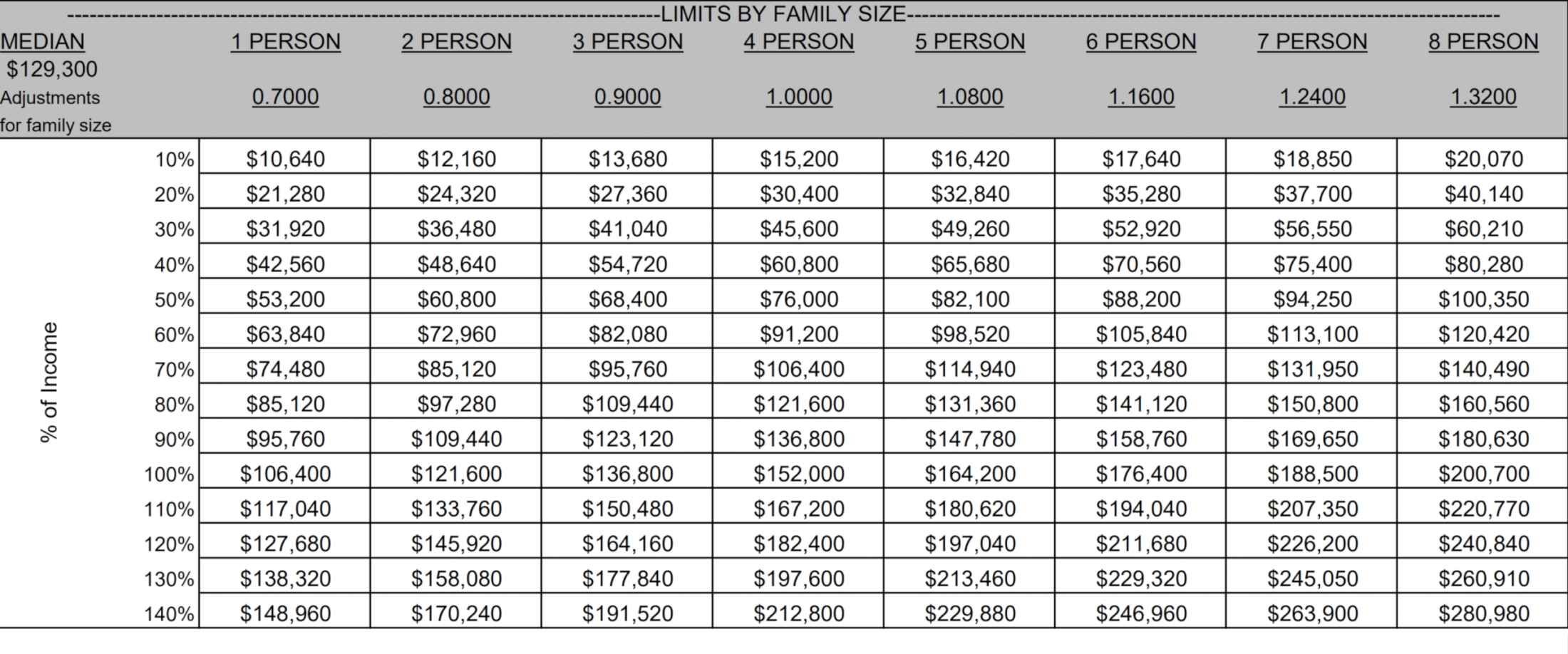
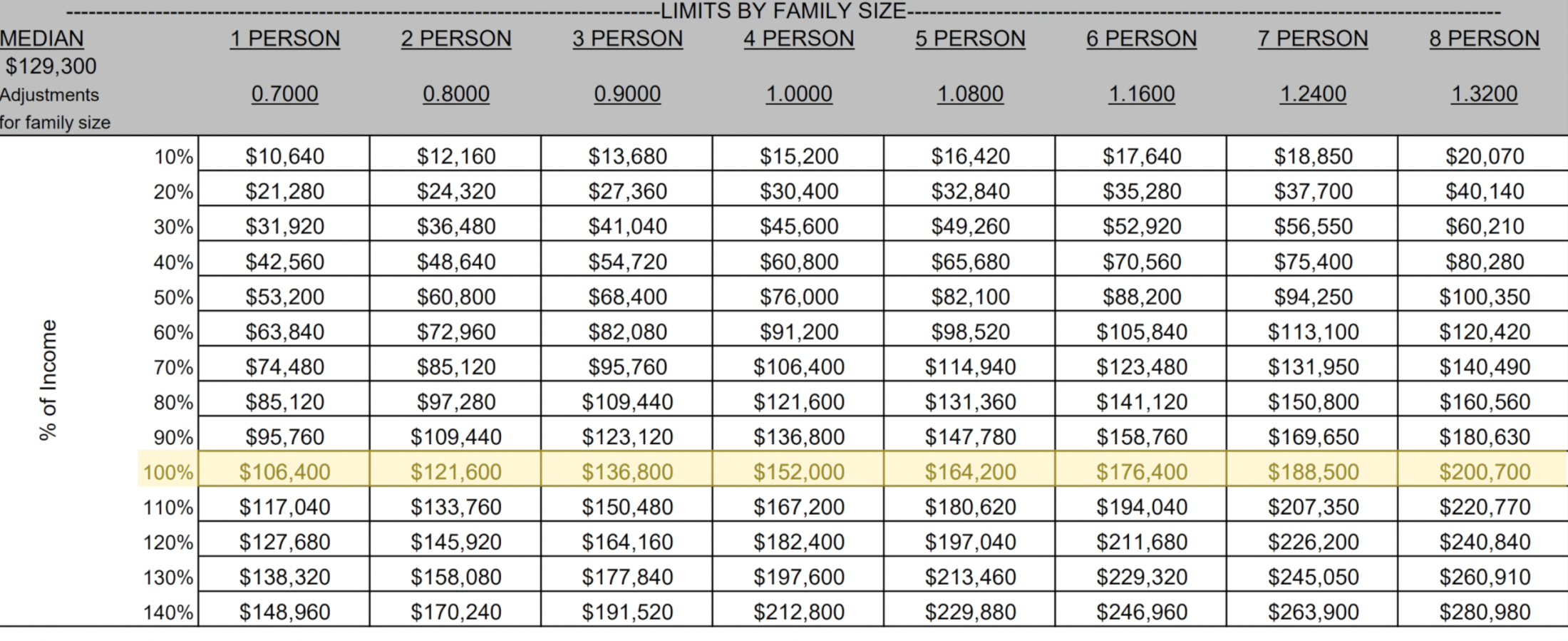
For 2025 in Honolulu County, the median family income for a household of four is about $152,000. The affordable range for projects like Kahuina is between 80% and 140% of AMI. That means if you’re a family of four, your household income needs to fall somewhere between about $121,600 and $212,800. The exact numbers depend on your household size, and you can find your income limit by checking the AMI chart.
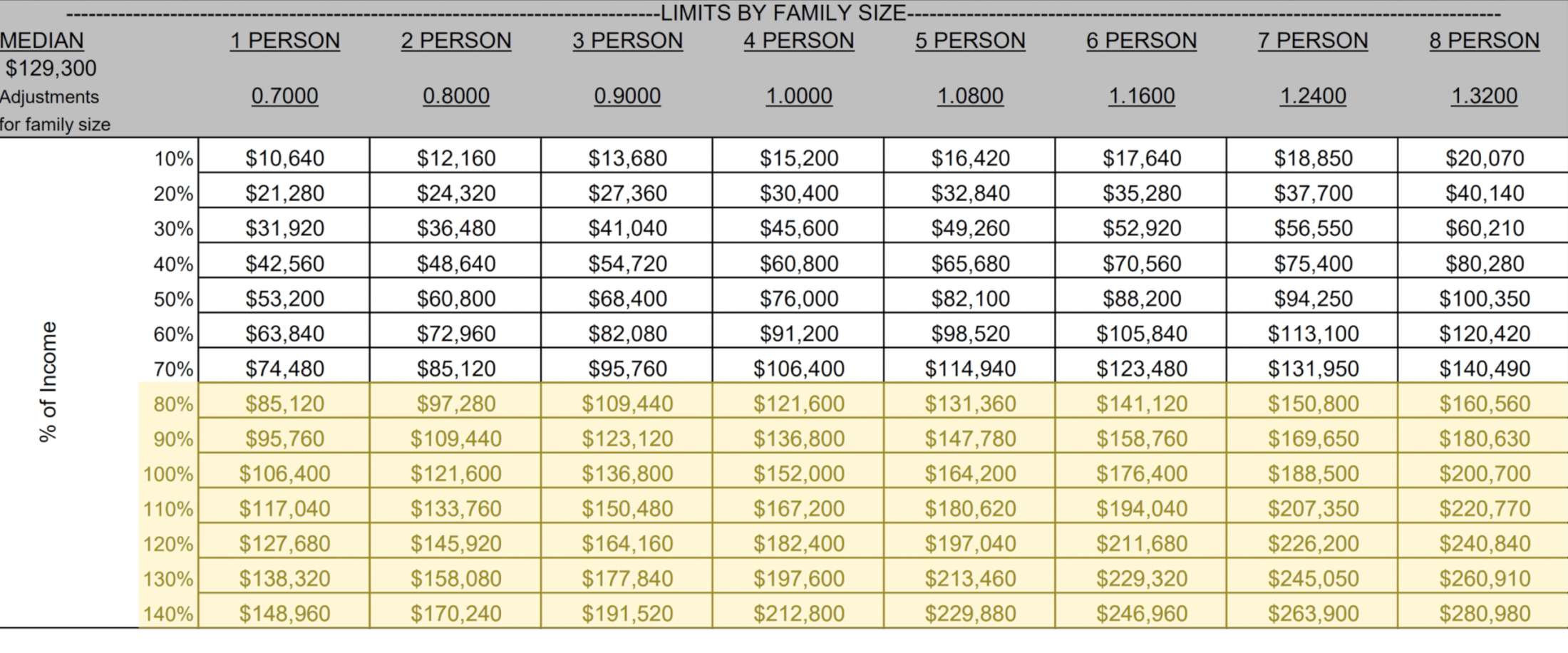
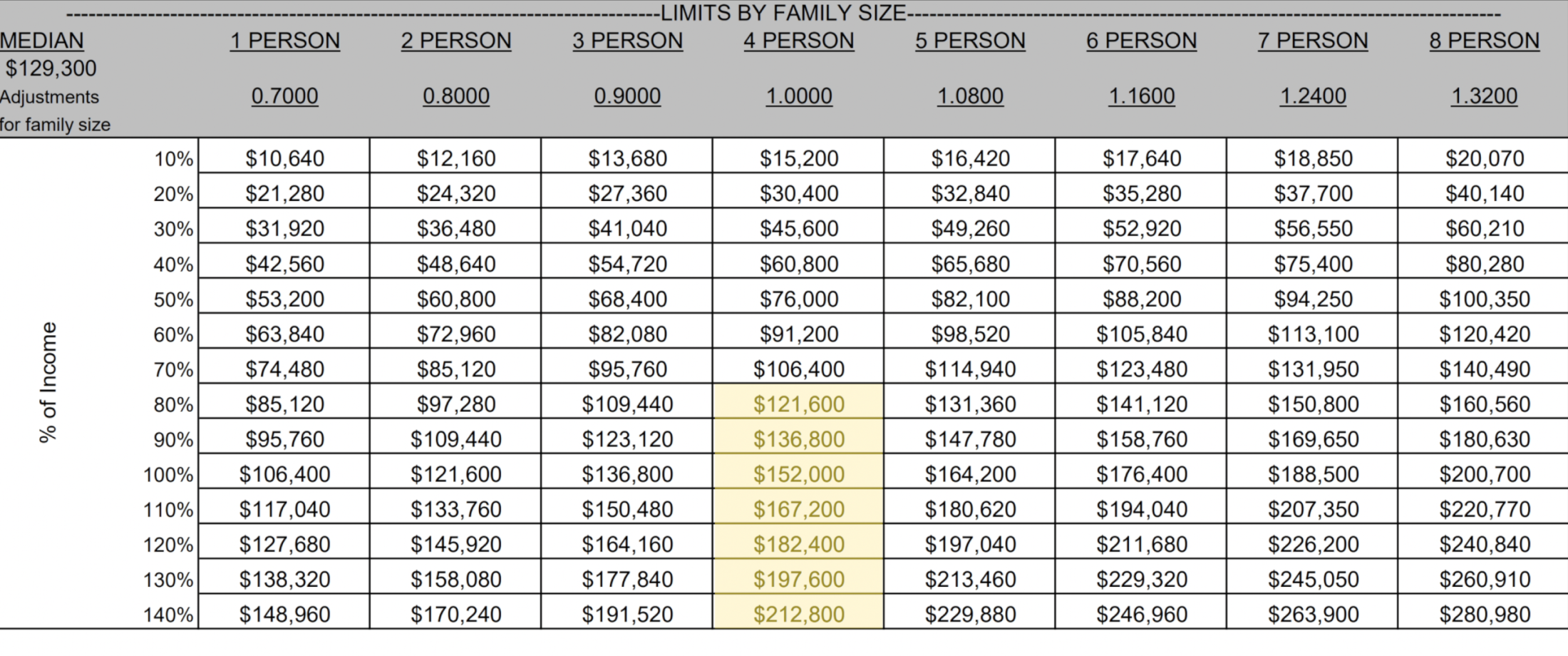
By the way, when there’s a term saying a “4-person household”, it does not mean that all four people are earning income. It simply refers to the total number of people living in the home, regardless of whether they work.
As an example: A single parent with three children is considered a 4-person household, even if only the parent earns income. The income figure HHFDC uses is the combined gross annual income of all household members 18 years or older who are working. Kids and non-working dependents count toward the household size but not the income.
HHFDC Process
So what does the process look like?
First, you’ll need to get pre-qualified by a lender, because you have to show that you can handle the mortgage and the deposit. Next, you’ll attend a required affordable housing seminar. This is an orientation that explains the rules — including Buyback, SAE, and eligibility — and you must attend it before you can enter the lottery. After the seminar, you’ll complete the official HHFDC application, with documents like your tax returns, pay stubs, and proof of residency.
Finally, if there are more applicants than units — which is almost always the case — HHFDC holds a lottery. Your lottery number determines the order you get to pick a unit. When your number comes up, you select your home, sign your purchase contract, and put down your deposit.
Now, let’s talk about lenders, because this part can make or break the buying process. Kahuina, like many new developments, has a preferred lender list. This is a group of banks and mortgage companies that the developer has already vetted. These lenders are familiar with the building, the condo documents, and HHFDC’s affordable housing requirements. They’ve probably already done the underwriting for similar projects, so they know the nuances, like how deposits are handled or how to calculate affordability using the AMI chart.
Why does this matter? Using a preferred lender can make the process much smoother. They’re able to process your pre-qualification faster, and they’re less likely to run into delays because they already understand the project’s restrictions, like the Buyback and SAE requirements. In some cases, developers will even require you to submit at least your initial pre-qualification with one of their preferred lenders just to make sure you’re financially eligible for the lottery.
But here’s the key point: just because you pre-qualify with a preferred lender doesn’t mean you’re locked into them for your final mortgage. And it doesn’t mean they’ll automatically give you the best rate or terms. My recommendation is this: meet with at least one lender from Kahuina’s preferred list and also shop around with outside lenders. Compare things like interest rates, points, closing costs, and fees. Even a small difference in the interest rate can save you thousands of dollars over the life of your loan.
One approach many buyers take is using a preferred lender for pre-qualification to keep the process smooth, while also shopping around with other lenders to make sure they’re getting the most competitive financing. And just to be clear — I’m not a lender, so this isn’t mortgage advice. I just want you to know your options so you can make the best decision for your situation.
Reasons Why You, as a Buyer, Need Representation in New Developments
Another important tip for you as a buyer is to get a real estate agent who will represent you throughout the buying process. You might be wondering—why hire a buyer’s agent for a new condo development when the sales gallery already has staff?
Here’s the difference: the sales gallery staff represent the developer, not you. Their obligation is to serve the seller’s best interest. A buyer’s agent has a fiduciary duty to the buyer—that means acting in your best interest only and helping you to make informed decisions based on pertinent information, not marketing language. Please also note the developer disclaimers: basically everything is subject to change without notice.
That can include providing market comparisons so you see how Kahuina positions against nearby projects in Ward Village, Ala Moana, and surrounding neighborhoods; breaking down timelines, deposits, and restrictions in plain English; and coordinating the process so you’re speaking with lenders about financing questions while I keep the overall transaction milestones on track. For affordable-housing buyers specifically, there is a lot of paperwork—HHFDC applications, AMI calculations, notarized forms, and document deadlines. My role is to help you avoid preventable mistakes that could disqualify your application.
A competent buyer’s agent is also a long-term advocate. This doesn’t end at contract signing. I will stay with you through completion and closing—realistically late 2029 for Kahuina—watching for surprises in escrow, tracking Temporary Certificates of Occupancy, and helping you prepare for punch lists and final walkthroughs. Buying a condo that won’t deliver until 2029 is fundamentally different from moving in next month. Over that period, you will have many questions and a number of time-sensitive items to prepare. Having a professional who can answer those questions and provide support during the wait is a real relief.
Contact – Work with Mirae Yi (Hawai‘i Life)
If you’re looking for representation for your real-estate transaction, I hope you’ll consider me as an option. My name is Mirae Yi, and I’m a real-estate salesperson with Hawai‘i Life.

Here’s my contact information. I spend most of my time driving, attending meetings, and serving clients, so please leave me an email, text message, or voicemail with your name and the properties you’re interested in. I will reply shortly to schedule our meeting—online or in person—and I’ll bring materials you’ll find useful for our first conversation.
One last thing: if you’re not comfortable speaking or writing in English, please feel free to send me a message in your first language. I may not speak ten languages fluently, but I leverage AI tools effectively so I can support clients who prefer to communicate in other languages in writing.
Kakaʻako’s Location and Lifestyle
Kakaʻako and Ala Moana as a whole is Honolulu’s premier urban neighborhood and urban core. It consistently has one of the highest median condo prices in the state, and the big reasons are the location and a convenient lifestyle situated between Downtown Honolulu on the west and Waikīkī on the east.
It takes about 6 minutes to Ala Moana Center, 12 minutes to Waikīkī, and 23 minutes to the Hawaii Kai area when you drive eastbound. It is also close to the west side, where large wholesale stores like Costco, Lowe’s, and Home Depot are located, which is about an 11-minute drive.
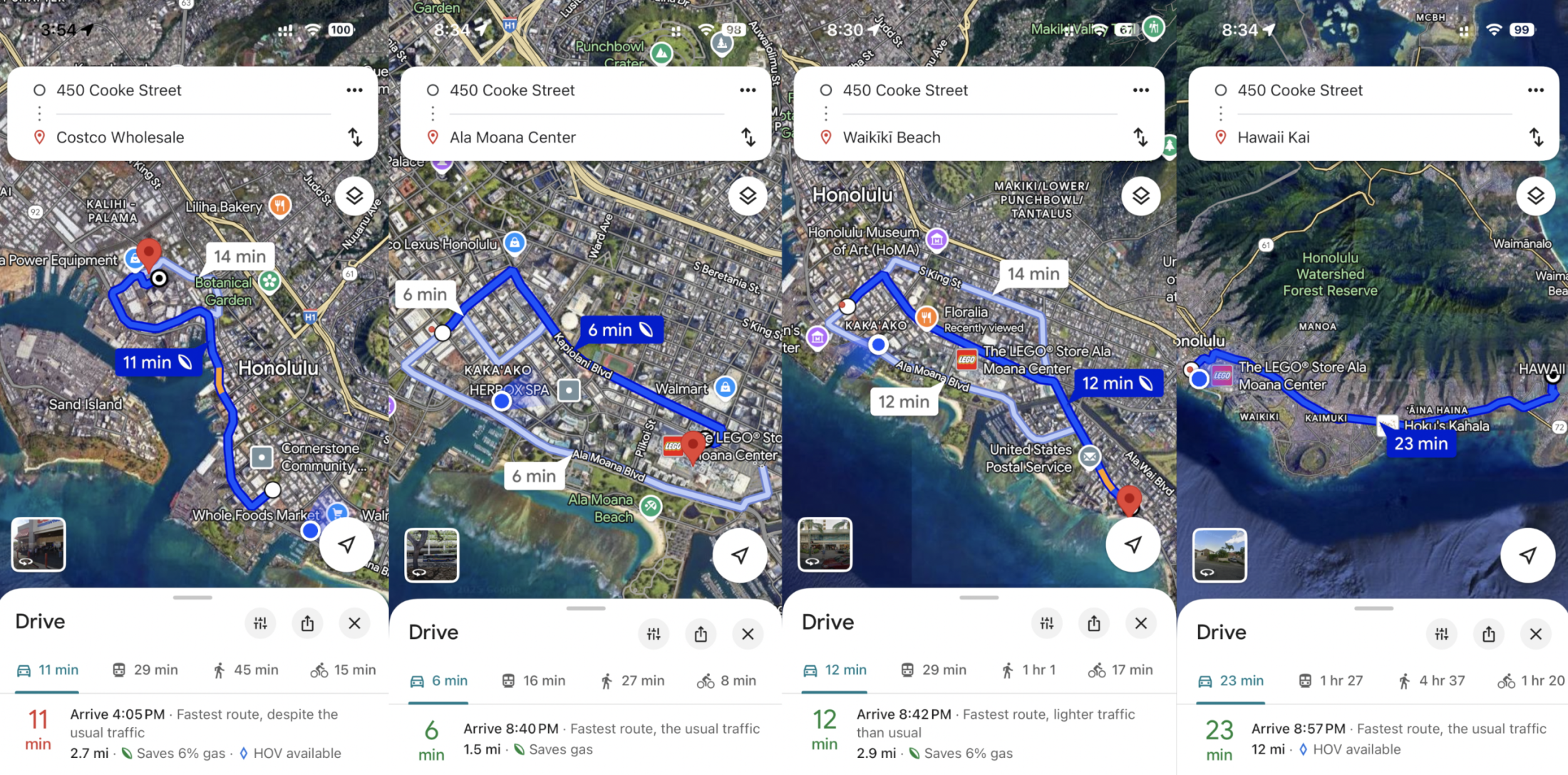
These are screenshots of Google Maps when I put Kahuina’s street address, to show you how easy it is to get around. You can see the time I took the screenshot, the exact distances in miles, and the time it takes depending on how you travel.
Even if you don’t own a car, Kakaʻako is a very safe and convenient location to get around, with so many shops, gyms, cafés, restaurants, and grocery stores like H Mart, Down to Earth, Whole Foods, and the Kakaʻako Farmers Market all close by to Kahuina.
In fact, Kahuina is literally right next to SALT at Our Kakaʻako, the neighborhood’s retail centerpiece. As background, the name SALT comes from Kakaʻako’s history as a place of fishing villages and salt ponds, and today it’s a modern open-air hub for dining, shopping, and events, as it’s part of the city’s planned community.
Kahuina’s Surrounding Views Including the Neighboring Building Blocks
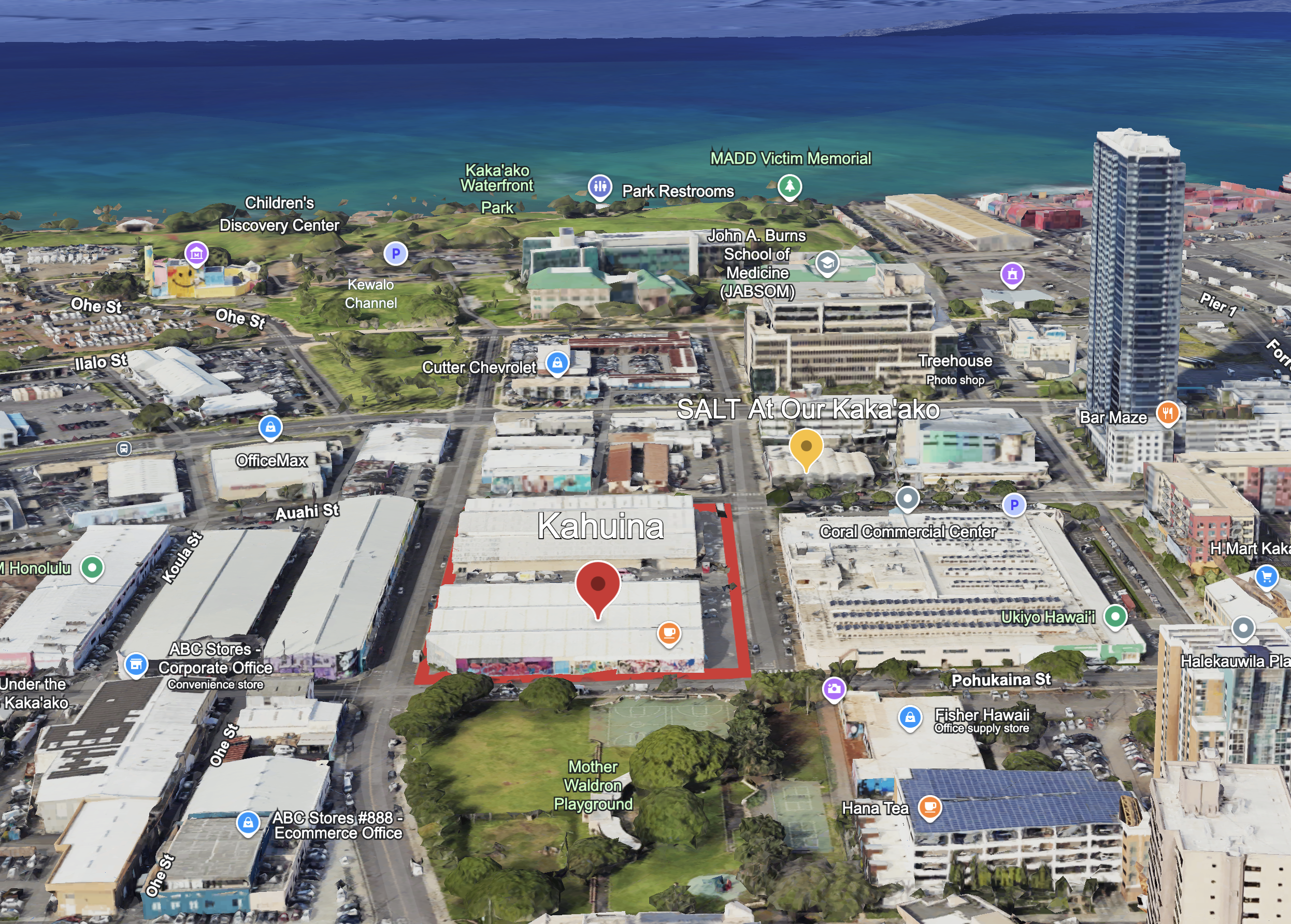
t’s important to note that SALT at Our Kakaʻako is part of the city’s planned community, meaning it is expected to stay here. What that means is huge for the views from Kahuina, especially for some units in Lamakū.
SALT isn’t a tall building — it’s basically a two-story mall with a seven-story parking garage. So if you’re in a high-floor corner unit closest to SALT — like the Lamakū Tower #05 stack — you’re likely to keep your ocean view, even after more condos get built in the oceanfront row which is between Ala Moana Blvd. and Auahi Street. The area between Ala Moana Blvd. and the ocean is not for high-rise buildings, therefore, securing ocean views for many residents working and living in Kakaʻako. Also, look how the shoreline is curved. This will give ocean views to many units in Kahuina.
In Hawai‘i, an ocean view brings huge value and joy. I mean, who wouldn’t appreciate this beautiful blue ocean? This is a drone shot hovering over where Kahuina will be built, featuring its surrounding views.
Please note that this view was taken in 2025, and the view in late 2029 will be very different, as you can see there is a lot of construction happening in the first and second oceanfront rows. In order to gain a better understanding of potential views and the growing community, you will want to know what will stay and what may change around Kahuina.

(Source: https://ourkakaako.com/master-plan/)
In the “Area Development Map,” Kahuina is “Block C.”
The blue blocks on the right-hand side are “to be developed”, meaning they’re not built yet.
The orange blocks on the left are what’s already built.
I talked about Block F that has SALT, which will stay there permanently, and another area that will stay is Mother Waldron Neighborhood Park on Pohukaina Street. It is listed on the Hawaiʻi Register of Historic Places, therefore, the park is expected to remain there permanently. This means that those units facing Pohukaina St. will enjoy extended views of open space, the city, and the mountains with the added level of privacy from having a block of green open space as a permanent neighbor. It is a historic city park.
On the right side of Kahuina is Block D Waiākaoa. It is larger than Kahuina in total homes, with a strong emphasis on affordable housing, retail, and green space. It will consist of two residential towers with a combined total of around 1,032 homes, and 60% of the units will be designated as affordable housing. They’re targeting 2029 for completion.
Block H is a “to be determined” site. It is slated for market-rate residential development with commercial space, but no specific project or developer has been confirmed yet. That means Kahuina’s units facing a corner of Block H will have an ocean view until something new is built, which will still take years.
Block G is Kali’u, a new luxury condo on the oceanfront row.
Let’s see how much Kaliu and our buildings will overlap in terms of views.

(Source: https://dbedt.hawaii.gov/hcda/files/2023/08/1-Exhibit-B-Kaliu-Drawing-Set.pdf)
Here is the sixth-floor amenity deck floor plan of Kali‘u. The red area is the residential tower and it’s located sort of in the center of the block. On Kali‘u’s sixth-floor amenity deck, a pool is on Coral Street and a pickleball court is on Cooke Street highlighted in green.

(Source: https://dbedt.hawaii.gov/hcda/files/2023/08/1-Exhibit-B-Kaliu-Drawing-Set.pdf)
Now let’s look at the map. Lamakū and Māmalu’s residential towers are highlighted in pink with arrows indicating them as “proposed Kahuina”. Then there’s Kali‘u’s residential tower area in red.
Note that both Kali‘u and Lamakū buildings are 400 feet tall, reaching the maximum height allowed for the block.
Based on this image, you can roughly estimate how these three towers, Kali‘u, Lamakū, and Māmalu, are situated and share the ocean views. Also, note that only the high-rise residential towers are highlighted in pink, and the rest of the grey boxes aren’t that tall. For example, SALT at Kakaʻako is a two-story mall with a seven-story parking garage. Considering how SALT is not tall and how the shoreline is curved, I can easily imagine that some units in Kahuina will have views that are exceptionally breathtaking.
If you want to do a 3D virtual tour to see more realistic renderings of the units’ interior and views from the unit, please reach out to me so that I can schedule one for you as your buyer’s agent. My job is to serve your best interests and educate you to make the most informed decision. I hope you can see that in this video.
For example, did you notice a block surrounded by Blocks B, F, and C? That block is currently owned by a private LLC and leased to HMSA in five-year increments. What that means is HMSA rents the property for five years at a time, with the option to renew, but it’s not a permanent setup. So the future of that site really depends on whether the owner continues leasing it out or decides to redevelop later.

Two Potential Rail Stations Nearby – Civic Center & Kakaʻako
The last thing I want to cover in this video is two potential rail stations planned near Kahuina. This project by the city is called “TOD Neighborhoods,” which stands for Transit-Oriented Development neighborhoods. Basically, there will be rail stations connecting East Kapolei to Ala Moana, and each station’s one- to one-and-a-half-mile radius is a TOD neighborhood. The plan is to develop rail stations and the neighborhoods where the stations are.
(Source: https://www.honolulu.gov/tod/tod-neighborhoods/)
You can see details about this on the official government website, but note that the most recent updates are from almost 10 years ago. For the Kakaʻako area, the most recent deck is from 2016, with 260 pages. The city has never rescinded the TOD plan, and we do not know when this project will be delivered, but it’s still positive news for Kahuina, especially when you look at page 17.

(Source: https://dbedt.hawaii.gov/hcda/files/2016/05/Final-TOD-Overlay-Plan-Draft-31816.pdf)
The two stations that are planned are Civic Center and Kakaʻako. Kahuina is a block right next to Mother Waldron Playground, and you can see that’s roughly in the midpoint of these two rail stations.
Having two stations positioned so close to Kahuina means better accessibility to the rest of Honolulu and greater convenience for daily life. It places Kahuina in a central hub directly tied to future growth and city planning, which many buyers see as a positive factor for the neighborhood’s long-term appeal.
Before I close, I want to share the meaning of the project names. Kahuina means “the intersection” or “the crossroads,” which ties perfectly with the city’s transit-oriented development vision and the future rail stations nearby. Lamakū means “torch” or “light,” symbolizing guidance and illumination, while Māmalu means “protection, shelter, and prestige.” These names carry depth and intention, just like the community being built here.
Do you see yourself choosing a unit at the crossroads of Honolulu’s future growth?
Disclaimer
This video and blog post summarize information primarily from Kahuina’s official sales materials. Please note that all details are subject to change. Below is Kahuina’s disclaimer reproduced verbatim for your reference. For clarity, I am not affiliated with or representing the developer of Kahuina.
Kahuina (“Project”) is a proposed condominium project that does not yet exist, and the development concepts therefore continue to evolve and are subject to change without notice. All figures, facts, information, and prices are approximate and may change at any time. All renderings, maps, site plans, photos, views, floor plans, graphic images, drawings, and other information depicted are illustrative only, are provided to assist the purchaser in visualizing the units and the Project, may not be accurately depicted, and are subject to change at any time. Visual depictions of the Project and units contained in this brochure are artists’ renderings and should not be relied upon in deciding to purchase a unit, and the developer makes no guarantee, representation, or warranty whatsoever that the Project and units depicted will ultimately appear as shown. All amenities are proposed only and access to any amenities may be subject to the payment of fees, membership requirements, and other restrictions. The developer does not own or control the land outside of the Project and does not guarantee the current or future use thereof. To the extent permitted by law, the developer, Compass, and Pacific Island Realty, LLC disclaim all liability that may arise out of errors or omissions in the content of this brochure, including claims for actual or consequential damages. This is not intended to be an offering or solicitation of sale in any jurisdiction where the Project is not registered in accordance with applicable law or where such offering or solicitation would otherwise be prohibited by law, nor is this intended to solicit property already listed. Compass, RB-23206, and Pacific Island Realty, LLC, RB-17549 are licensed real estate brokers and abide by Equal Housing Opportunity laws.

Leave your opinion here. Please be nice. Your Email address will be kept private, this form is secure and we never spam you.