A home can work beautifully for 30 years. Then one day, carrying groceries up the stairs becomes a project. A spouse gives up driving. An adult child starts flying in more often to help. The family begins asking a question that once felt years away. Can we keep living here, and what would it take to make that possible?
By 2030, even the youngest baby boomers will be at least 65. By 2035, Americans 65 and older are projected to outnumber children under 18. The U.S. Census Bureau’s main projection puts that crossover as early as 2029. And with U.S. life expectancy at birth reaching a record 79 years in 2024, it’s worth asking how well our homes and communities will serve us in those later years. The answers will shape where we build, how we get around and how we care for one another. U.S. Census Bureau projections · CDC life expectancy data
Baby Boomers Are Already Shaping the Housing Market
According to the National Association of REALTORS®’ 2026 generational trends report, baby boomers accounted for 42% of recent home buyers and 55% of recent sellers nationwide. Older boomers had typically lived in the home they sold for 15 years. Some moved to be closer to family and friends. Others wanted a smaller home or a community that better fit the way they wanted to live. NAR 2026 Generational Trends · NAR analysis of boomer buyers
Here on Oʻahu, I think about the homeowner who would gladly trade her big house and yard for a smaller, single-level home if she could find one she could afford in the neighborhood she knows. Or the couple who could stay in their home with a step-free shower, reliable rides and someone to help a few hours a week. Sometimes the best housing solution starts with making the home someone already has work better.
We need more accessible homes and rentals at a range of prices, including smaller homes near family, shops and medical care. We also need the services that make living there possible. In-home help, adult day programs and respite care can ease the pressure on family caregivers and help kūpuna stay connected to their communities. On Oʻahu, Honolulu’s Elderly Affairs Division can help families find local services. Honolulu Elderly Affairs Division
Housing and Care Belong in the Same Conversation
In writing about her book Dust to Dust: Aging Wisely in an Anti-Aging World, Jen Wilkin reminds us that “life is a gift from God in all of its stages.” She also writes that “remembering is for our good.” I think about those words when I consider what our kūpuna bring to our communities. They mentor younger people, care for grandchildren, volunteer and carry the stories of our families and neighborhoods. The choices we make about housing and care can help people keep doing the things that give their days meaning. Jen Wilkin on valuing every stage of life
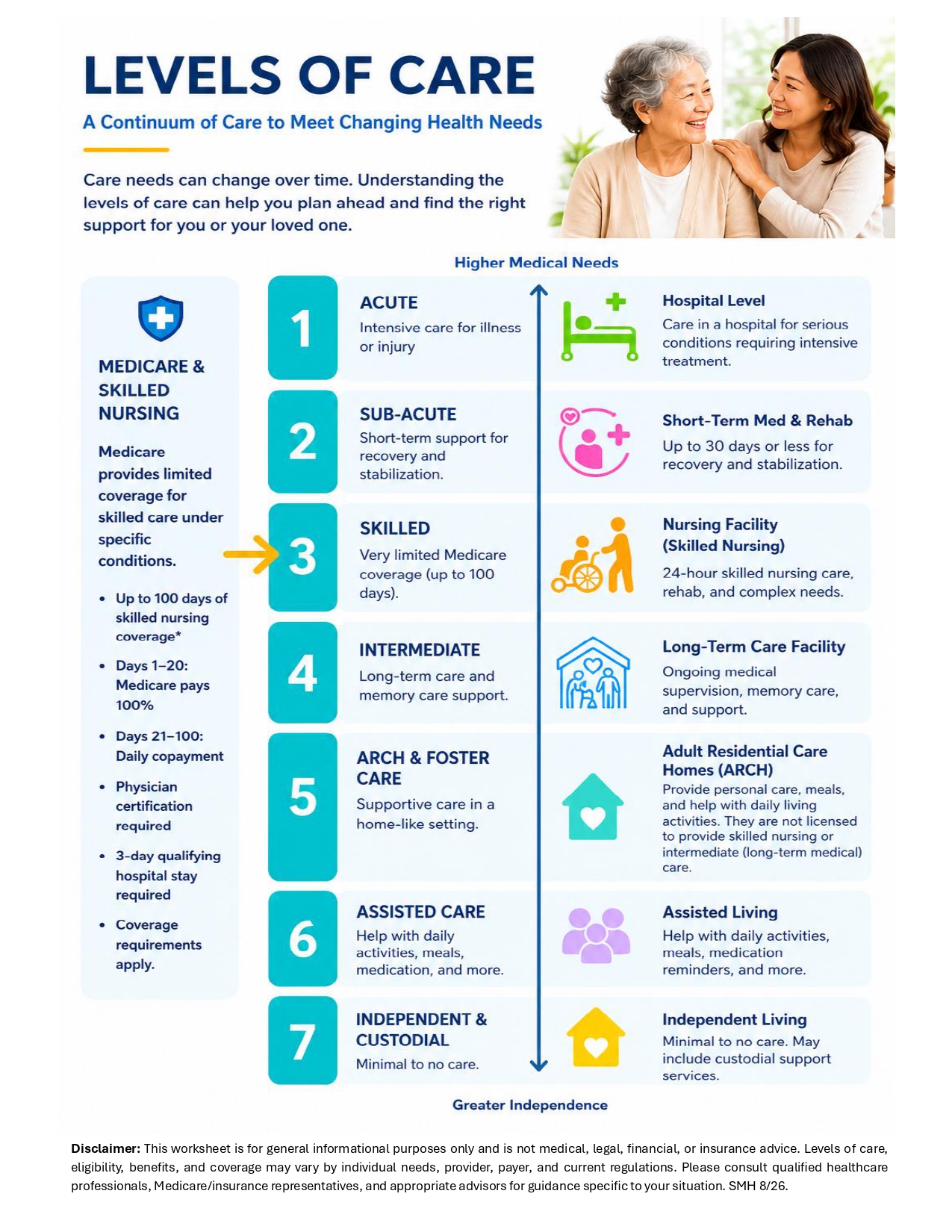
Levels of Care
The following guide explains how support can range from independent living and help with daily activities to residential care and skilled nursing. It gives families a way to talk about what would help today and what they may want to plan for later.
Oʻahu Senior Communities
This August 2026 guide compares housing arrangements, fees and services at Oʻahu communities including The Ivy at Hawaiʻi Kai, One Kalakaua, Arcadia and Kahala Nui. It’s a starting point for deciding which communities to call or visit. Check directly with each community for current pricing, availability and care options.
Open the Oʻahu Senior Communities comparison
We All Have a Part to Play
We all have a part to play in making Hawaiʻi a place where people can grow older and stay connected to the communities they call home. For some of us, that means checking in on a neighbor or giving a family caregiver an afternoon off. For those of us in real estate, it means listening to what older clients need and speaking up for more homes they can afford and live in comfortably. And as a community, it means including our kūpuna in the decisions about what we build and what services we provide. They know firsthand what would make daily life easier.
Whatever part we play, I hope we carry Jen Wilkin’s words with us: “You are a person to love, not a problem to solve.”
Work With Someone Who Understands the Transition
As a Seniors Real Estate Specialist®, I like to start with a simple question. What matters most to you about where you live? The answer might be staying close to grandchildren, keeping a familiar routine or knowing more help will be available if you need it. The SRES® designation prepares real estate professionals to help adults 50 and older navigate the housing, financial and lifestyle considerations that come with these decisions. Open the Oʻahu Senior Communities comparison
If you’re weighing whether to stay in your home, downsize or move closer to family or care, work with someone who understands those choices and takes the time to hear what you want. Starting the conversation while you have time to explore gives you more room to decide on your own terms.
A special mahalo to Shari Motooka-Higa, Realtor an invaluable colleague who generously shared the two guides. I’m grateful for her willingness to share what she knows and help Oʻahu families find their footing as they weigh these decisions. When we share what we know, we can make the next step a little easier for another Hawaii family.
Leave your opinion here. Please be nice. Your Email address will be kept private, this form is secure and we never spam you.