On Kauaʻi, choosing a home is also choosing a climate.
Drive from Poʻipū toward Hanalei and the change is easy to see. Dry, sun-exposed landscapes gradually give way to deeper greens, heavier vegetation, mountain clouds, and more frequent rain. Even within the same side of the island, rainfall and wind can change noticeably over a relatively short distance.
The University of Hawaiʻi’s Rainfall Atlas explains why: Kauaʻi’s mountainous terrain, trade winds, elevation, and topography create sharp differences in rainfall over short distances. Hawaii Climate Change Portal
For a buyer, those microclimates affect far more than whether to keep an umbrella in the car. They can influence how you use your property, what you maintain, which plants thrive, how often you run cooling equipment, and whether the outdoor lifestyle you imagined matches everyday reality.
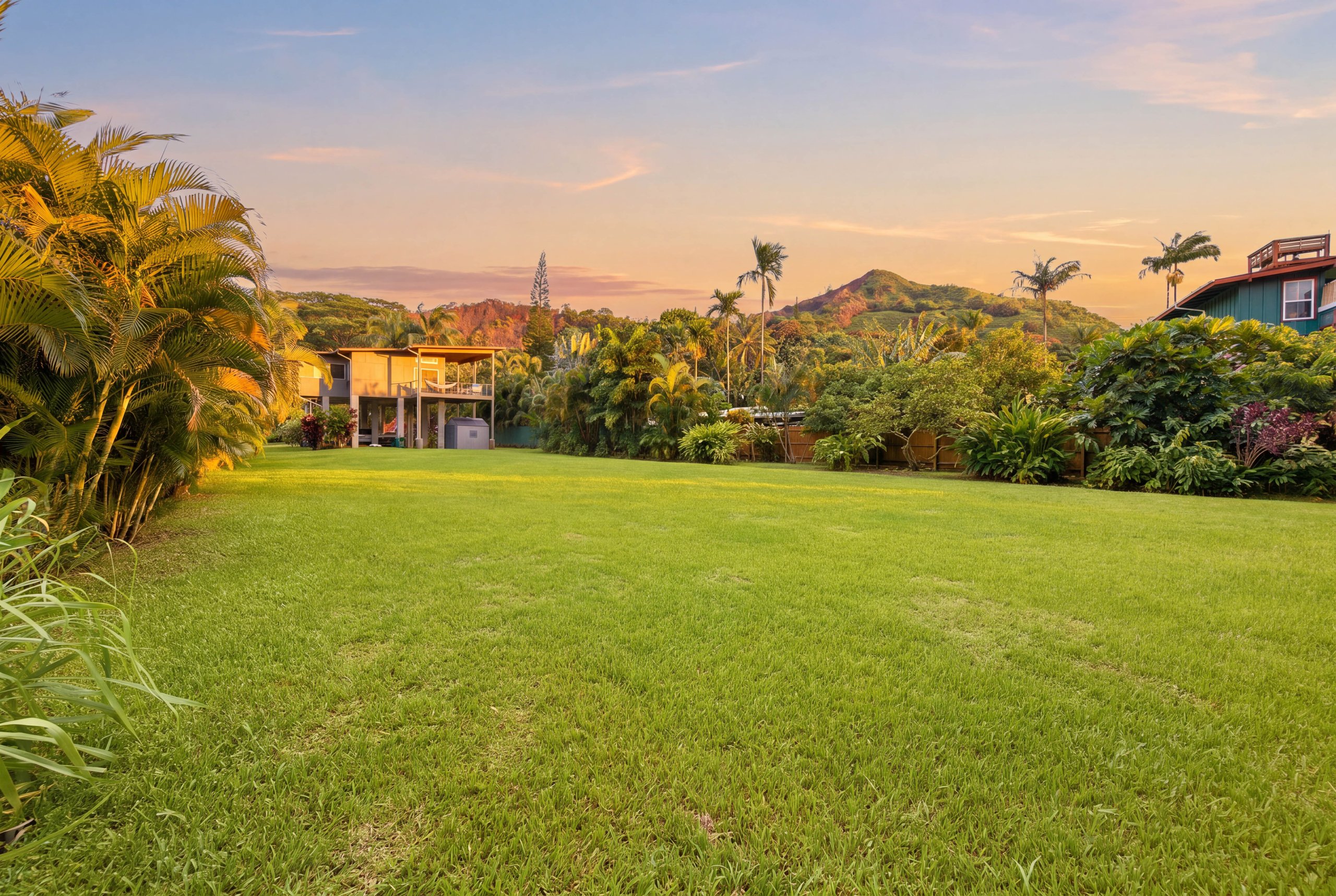
Kauaʻi Does Not Have One Climate
It is easy to talk about “Kauaʻi weather,” but that description is too broad to be useful when choosing a property.
In general, the North and East sides receive more moisture from the prevailing trade winds, while southern and western areas tend to be drier. But even that distinction is only a starting point.
Elevation and proximity to the mountains matter too.
On the North Shore, for example, long-term rainfall patterns can vary substantially between areas around Kīlauea, Princeville, Hanalei, and locations farther inland or closer to the mountains. An older analysis of North Shore microclimates found considerably lower rainfall around Waipake than in wetter areas such as Kalihiwai Ridge, Hanalei, and Hāʻena.
That is why buyers should think beyond broad labels such as “North Shore” or “South Shore.” A property’s exact location can change the experience.
On the North Shore, Rain Is Part of the Landscape
The North Shore’s rainfall helps create the scenery that attracts many buyers in the first place: green mountains, waterfalls, tropical vegetation, rivers, and dense landscaping.
But living in that environment also means understanding what moisture does to a home.
When looking at property around Hanalei, Princeville, Kīlauea, or Hāʻena, pay close attention to roof condition, drainage, ventilation, exterior materials, vegetation around the structure, and signs of persistent moisture.
A shaded home surrounded by mature tropical landscaping can feel wonderfully private, but it may dry more slowly after rain than a home with greater sun exposure. That can translate into more attention to mildew, exterior cleaning, landscaping, and general maintenance.
Flood exposure is a separate issue from annual rainfall and should be investigated at the parcel level. Hawaiʻi’s mountainous terrain, streams, wetlands, and localized rainfall patterns can create meaningful differences in flood risk even within the same community.
For buyers considering Hanalei and Princeville specifically, our recent guide to North Kauaʻi explains how flood conditions, access, wastewater, insurance, and property type can change the buying decision from one community to the next.
The South Shore Offers a Drier Version of Island Living
Poʻipū and surrounding South Shore communities generally experience less rainfall and more consistent sunshine than the North Shore.
That difference can influence how often owners use lanais, pools, outdoor dining areas, golf courses, and nearby beaches. It can also appeal to second-home buyers who expect to spend much of their time outdoors during shorter visits.
The drier environment does not eliminate maintenance.
Strong sun, heat, wind, and salt exposure can be hard on paint, roofing, metal fixtures, outdoor furniture, landscaping, and homes close to the coast. A property that sees less rain may simply have a different maintenance profile.
Our comparison of the North Shore and South Shore of Kauaʻi looks more closely at how rainfall, road access, property types, and daily routines differ between the two areas. Long-term climate patterns show why these differences are noticeable: the North Shore generally receives substantially more rainfall than Poʻipū and the South Shore.
The East Side Sits Somewhere in Between
Kapaʻa, Wailua, and surrounding East Side communities give buyers another climate profile.
The windward location keeps the landscape green, and passing showers are common, but conditions vary depending on how close a property sits to the coast, how far it extends inland, and its elevation.
That makes neighborhood-level comparison particularly useful.
A property near the coast may receive stronger trade winds and salt exposure. A home farther inland may feel greener and wetter. Homes with good airflow can feel very different from properties protected from prevailing breezes, even when they are geographically close.
This is one reason a listing’s air-conditioning system should not be viewed in isolation. Orientation, shade, elevation, windows, trade-wind exposure, and afternoon sun can all affect how comfortable a house feels.
The West Side Shows the Other Extreme
Travel toward Waimea or Kekaha and Kauaʻi becomes noticeably drier.
For buyers who prefer abundant sunshine and less frequent rainfall, the West Side can provide an appealing alternative to the island’s wetter regions.
But again, there is a trade-off.
Drier conditions may mean more attention to irrigation and landscaping. Homes with strong afternoon sun exposure can become warmer, and buyers should look at shading, ventilation, window placement, insulation, and cooling.
The right microclimate is therefore not simply the driest or wettest one. It is the environment that matches how you want to live and the amount of property maintenance you are comfortable managing.
Microclimate Can Change the Property You Should Buy
Climate should influence more than your choice of neighborhood.
It should also affect what you look for in the house itself.
In a wetter setting, good drainage, roof condition, ventilation, covered outdoor areas, and moisture management may move higher on the inspection list.
In a hotter, sunnier location, buyers may care more about airflow, shading, solar exposure, air conditioning, irrigation, and how the home handles afternoon heat.
Land matters too. A large tropical yard can be appealing, but rainfall can accelerate plant growth and increase landscaping demands. A drier property may require more irrigation to maintain the same appearance.
Kauaʻi ownership already comes with some climate-specific costs because salt air, tropical vegetation, humidity, and the island environment affect ongoing maintenance. Our guide to the costs of owning a home on Kauaʻi covers some of those expenses in greater detail.
Visit the Property in the Conditions You Are Buying
One of the most useful things a buyer can do is experience a neighborhood more than once.
A sunny afternoon showing does not tell you how the property feels after several hours of rain. A calm morning may not reveal the afternoon wind. A shaded yard that feels comfortable at noon may remain damp longer than expected after wet weather.
If possible, visit at different times of day and pay attention to the property itself.
Where does water move after rain? Which parts of the lot stay wet? Does the home receive useful trade winds? How much direct afternoon sun reaches the main living areas? Are outdoor spaces protected from rain and wind? How quickly does the landscaping become difficult to manage?
Those observations can be more valuable than a general weather forecast.
Buy for the Climate You Want to Live In
Kauaʻi’s microclimates are part of what makes a relatively small island feel so varied.
A buyer can choose the greener, wetter character of the North Shore, the sunnier South Shore, the trade-wind exposure of the East Side, or the drier conditions farther west. Within each of those regions are smaller variations created by elevation, mountains, wind, and local topography.
There is no universally “best” Kauaʻi climate.
The important question is whether the climate surrounding a particular property supports the life you expect to live there.
Before making an offer, look beyond the view and the floor plan. Understand the sun, rain, wind, drainage, vegetation, and elevation that come with the address. On Kauaʻi, those details are not background scenery. They are part of the property.
Frequently Asked Questions
Which part of Kauaʻi gets the most rain?
The windward and mountainous portions of Kauaʻi generally receive the most rainfall, with particularly wet conditions in the island’s interior and parts of the North Shore. Rainfall can vary sharply over short distances.
Is the South Shore drier than the North Shore?
Generally, yes. Poʻipū and much of the South Shore have a sunnier, drier climate than Hanalei and many North Shore locations.
Can two nearby Kauaʻi properties have different climates?
Yes. Elevation, proximity to mountains, wind exposure, and topography can produce meaningful differences in rainfall and temperature even over short distances.
Does rainfall affect home maintenance?
It can. Wetter properties may require greater attention to drainage, vegetation, ventilation, roofs, and moisture, while sunnier and drier locations can experience greater heat, UV, irrigation, and salt-exposure concerns.

Leave your opinion here. Please be nice. Your Email address will be kept private, this form is secure and we never spam you.