After sharing my Discovery Bay #3401 listing with a prospective buyer, I received a good follow-up question:
Could a buyer potentially earn a 5% cash-on-cash return on this unit?
That led to the next question:
What are the short-term rental possibilities at Discovery Bay?
The answer is important, because the word “short-term” can mean different things to different people. At Discovery Bay, the rental discussion is not about nightly or weekly vacation rentals. The compliant conversation is about 30-day-or-longer furnished rentals, subject to the condominium documents, Discovery Bay House Rules, City and County of Honolulu rules, and applicable Hawaii tax requirements.
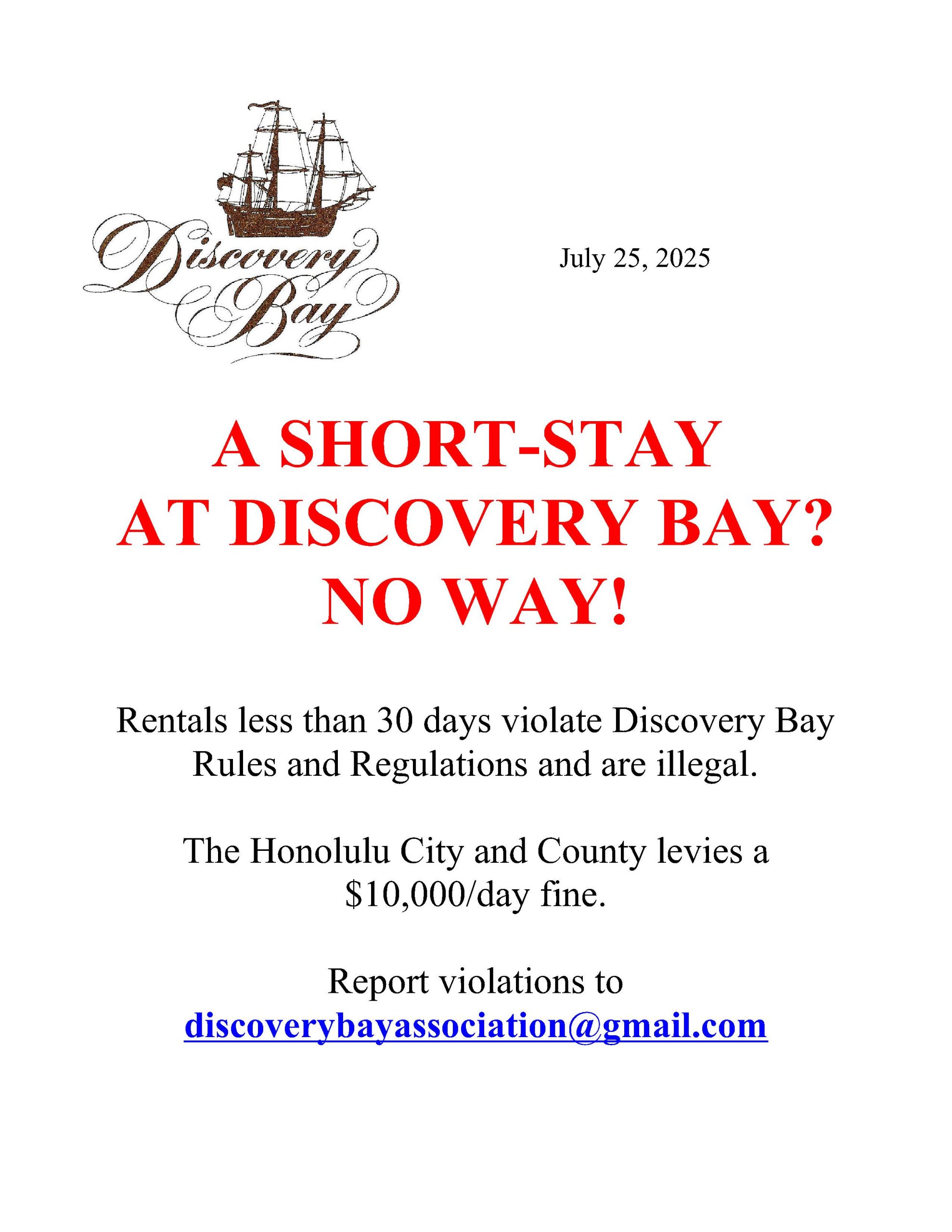
The above Discovery Bay notice dated July 25, 2025 is very direct: rentals of less than 30 days violate Discovery Bay Rules and Regulations, are illegal, and may expose an owner to significant City and County fines. The Discovery Bay House Rules, January 13, 2015 Revision, also state in Section 3, Occupancy, that Discovery Bay By-Laws mandate a minimum rental period of 30 days.
So the simple answer is:
Discovery Bay #3401 can potentially be rented on 30-day-or-longer furnished terms. Rental periods of less than 30 days are not allowed.
A Good Property Still Requires Homework
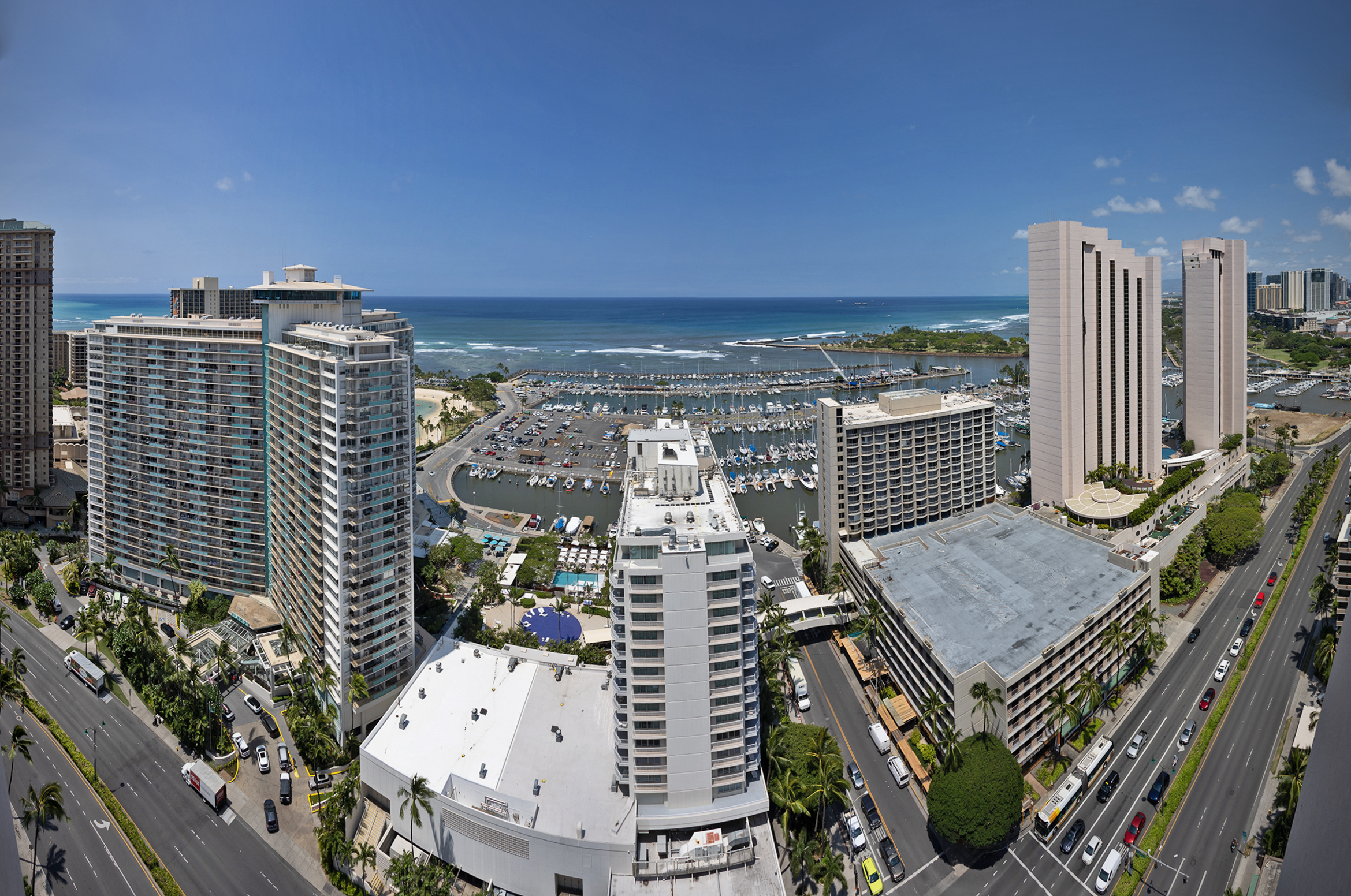
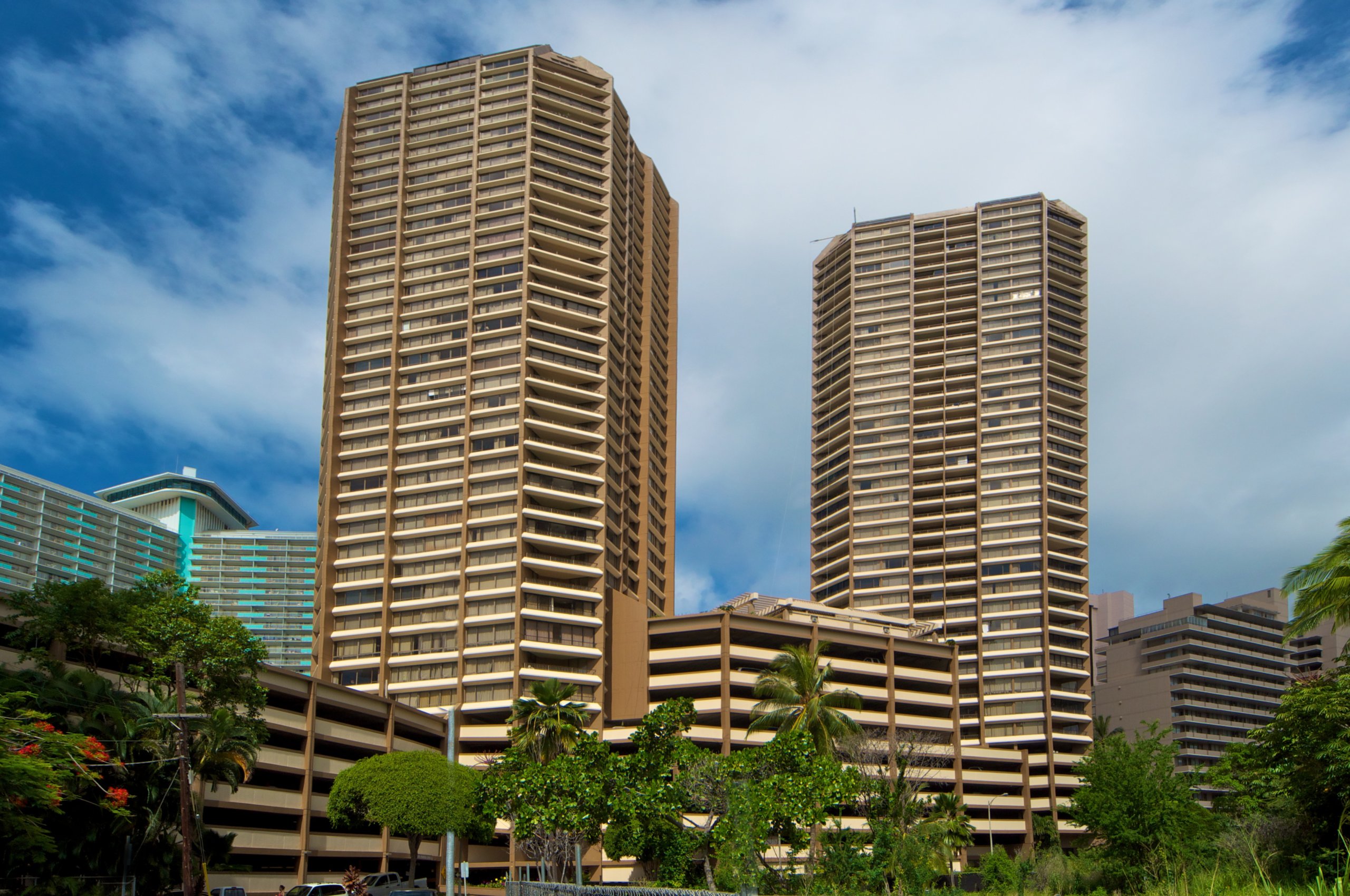
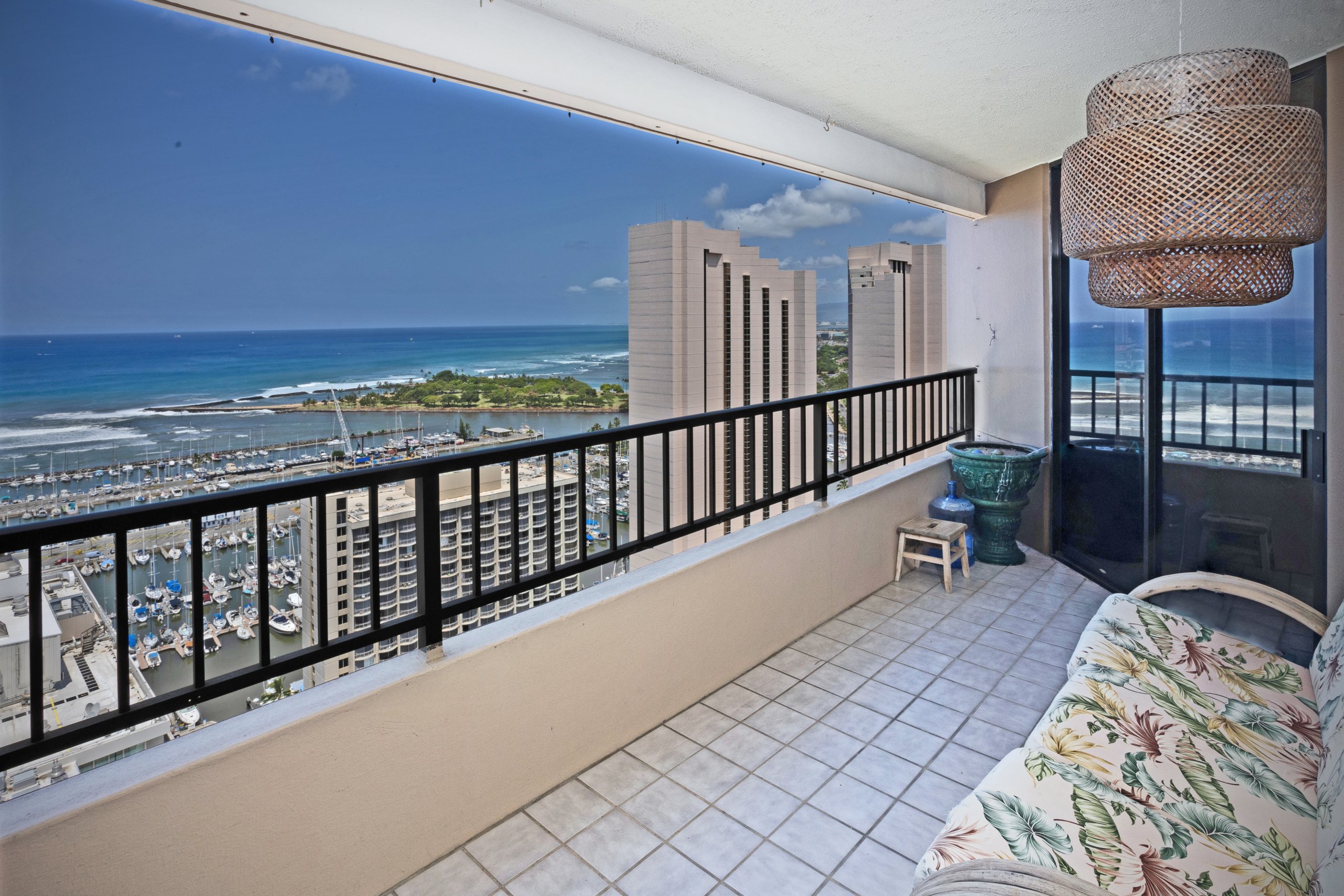
Discovery Bay #3401 has a lot going for it: a high-floor “01” stack location in the Endeavor Tower, 2 bedrooms, 2 baths, approximately 1,003 square feet of interior living area, a 128-square-foot lanai, 2 parking stalls, and strong ocean, harbor, marina, city, coastline, and sunset views. The MLS Link (Insert Link Here) shows an asking price of $579,000, leasehold tenure, lease rent of about $597/month, maintenance fees of $1,580/month, property taxes of about $246/month, and a lease expiration of December 31, 2039.
But this is not a simple “buy it, put it online, rent it nightly” investment. Discovery Bay’s own rules and the City’s short-term rental rules make that very clear.
The City and County of Honolulu Department of Planning and Permitting currently defines short-term rentals as lodging that provides guest accommodations for less than 30 consecutive days, and DPP states that it continues to enforce short-term rentals as less than 30 consecutive days across the board. Discovery Bay’s own House Rules go further for this building: leases must be for at least 30 consecutive days to one party, with no rotation of tenants.
That means a buyer should think in terms of monthly furnished rental demand, not hotel-style turnover.
Important Discovery Bay Rental Compliance Points
Based on the House Rules, a buyer considering rental income at Discovery Bay should understand several practical requirements before underwriting the investment:
Leases are required and must specify a minimum of 30 consecutive days to one party. Rotating occupants through the unit to get around the 30-day requirement is not permitted. A tenant who signs for more than 30 days but terminates within 30 days may be presumed to be renting for less than 30 days, which the rules identify as a violation. Businesses or employers that rent or own a unit and allow occupants to stay less than 30 days may also be treated as violating the 30-day rule.
Owners, agents, representatives, guests, and renters must follow the building registration process. The House Rules require owners to register themselves when occupying their unit, and agents, representatives, or owners must register guests or renters with the Manager’s Office before occupancy. For rentals, the rules call for the standard Hawaii Association of Realtors rental agreement and a Discovery Bay Registration Form to be submitted before occupancy, unless another rental form is approved by the Manager’s Office.
The “personal guest” exception cannot be used as a back door for less-than-30-day rentals. The House Rules distinguish a no-charge personal guest from a renter, but they also state that the personal guest exception may not be used to rent units for less than the 30-day minimum.
Owners remain responsible for the conduct of their renters, guests, agents, family members, and service providers. Violations must be resolved immediately with the agent or owner, and owners may be liable for fines, legal costs, and violations caused by their guests, renters, agents, or outsourced service personnel.
For an absentee owner, the House Rules also require a Board-approved Discovery Bay Condominium Agent Authorization Form if the owner lives outside Hawaii or will be absent from the apartment for more than 30 days. That is important for any Mainland or neighbor-island buyer considering a furnished rental strategy.
Advertising Should Be Clear
Any marketing around this unit should be careful. The City’s DPP FAQ says it is unlawful to advertise a dwelling for less than 30 days unless it is registered or designated as a hotel, and it also addresses required language for properties that are not registered or allowed for less-than-30-day rentals.
For Discovery Bay #3401, I would keep the rental language simple and clear:
This property may not be rented for less than 30 consecutive days. Rental pricing should not be reduced or adjusted based on shorter actual use or occupancy.
That keeps the conversation aligned with both the City’s less-than-30-day framework and Discovery Bay’s building rules.
The Tax Piece: 30 Days Is Not the Same as 180 Days
Another point buyers sometimes miss: a 30-day minimum rental rule does not automatically make the rental a standard long-term residential lease for Hawaii tax purposes.
Hawaii’s Transient Accommodations Tax rules define a transient accommodation, in part, as a room, apartment, house, condominium, or similar accommodation rented to a transient person for less than 180 consecutive days. The State of Hawaii Department of Taxation also announced that Act 96 increased the State TAT rate from 10.25% to 11.00% for transient accommodations, effective January 1, 2026. On Oahu, the City and County of Honolulu also imposes a 3% Oahu Transient Accommodations Tax on gross rental proceeds or fair market rental value attributable to Oahu when a taxpayer lets a transient accommodation for less than 180 days.
So, a 30-day furnished rental can still raise GET, TAT, OTAT, reporting, invoicing, and pass-through questions. A buyer should review the plan with a qualified Hawaii CPA before advertising, collecting rent, or assuming the tax treatment.
For the return model below, I am assuming applicable rental taxes are handled separately and correctly, rather than absorbed as an owner expense.
The Carrying Costs Are the Key
Here are the basic numbers I reviewed for Discovery Bay #3401:
Item
Amount
Asking price
$579,000
Maintenance fee
$1,580/month
Lease rent
$596.84/month
Property taxes
Approximately $246/month
Estimated fixed carrying cost
Approximately $2,423/month
Estimated fixed carrying cost per year
Approximately $29,074/year
Leasehold expiration
12/31/2039
Fee interest
Not currently available
The leasehold detail matters. The public listing notes that the property is leasehold, the lease expires December 31, 2039, and the fee interest is currently not available. It also notes the broader Discovery Bay fee-interest structure, including the Association’s ownership of approximately 96.893% of the beneficial fee interest and another co-owner interest of approximately 3.107% that has agreed to make its fee available by 2039.
That does not make this unit fee simple today. It simply means a buyer should understand the leasehold structure, read the documents, and evaluate the long-term upside and limitations with eyes wide open.
The public listing also identifies the property as a distressed property, but not a short sale, and notes that the sale is subject to an existing AOAO lien and foreclosure-related conditions. That makes this a property for a sophisticated buyer who is comfortable doing careful due diligence.
Can It Produce a 5% Cash-on-Cash Return?
The honest answer is:
Yes, it is mathematically possible. But I would not call it conservative.
If a buyer pays cash and has approximately $600,000 to $609,000 invested after closing costs, setup, furnishings, and reserves, a 5% cash-on-cash return means the property needs to produce roughly:
$30,000 per year, or about $2,500 per month, in net cash flow after expenses.
That phrase “after expenses” is the key.
Discovery Bay #3401 already carries approximately $29,074 per year in fixed carrying costs before utilities, repairs, insurance, cleaning, accounting, furnishings, vacancy, management, and reserves. So the gross rent needs to be strong.
Approximate Gross Rent Needed
Using a cash-buyer model, and budgeting approximately $600/month for utilities, insurance/admin, repairs, and reserves, the approximate rent targets look like this:
Scenario
Gross rent needed to approach 5% cash-on-cash
Self-managed, near full occupancy
Approximately $5,500–$6,000/month
Professionally managed at approximately 20%
Approximately $7,000/month year-round
Professionally managed with approximately 85% occupancy
Approximately $8,200+/occupied 30-day term
So the simple version is this:
Discovery Bay #3401 becomes a credible 5% cash-on-cash story only if the unit can consistently produce strong 30-day-or-longer furnished rental income.
For a professionally managed rental, I would want to see a realistic path toward approximately $7,000/month gross on a consistent basis. For a self-managing owner with low vacancy and tight expense control, the number could be closer to $5,500–$6,000/month, but that assumes the owner is doing more of the work and keeping costs lean.
Simple Cash-Buyer Return Model
Here is a simplified model using approximately $609,000 all-in cash invested and professional management at approximately 20%:
Monthly gross rent
Estimated annual net cash flow
Approximate cash-on-cash return
$5,000/month
Approximately $11,700
Approximately 1.9%
$6,000/month
Approximately $21,300
Approximately 3.5%
$6,500/month
Approximately $26,100
Approximately 4.3%
$7,000/month
Approximately $30,900
Approximately 5.1%
This is why the $7,000/month number matters. Below that level, the property may still be attractive for the right buyer, especially someone who values the location, view, parking, personal use, and potential future upside, but the pure income return starts to compress.
Other House Rule Items an Investor Should Not Ignore
The rental rules are the main issue, but they are not the only building rules that matter to an investor.
The House Rules state that parking stalls are to be rented only to residents of Discovery Bay residential apartments, and parking passes are issued to properly registered residents by the Manager’s Office. That means the two parking stalls are a real benefit for the occupant, but a buyer should not assume they can simply rent parking separately to non-residents.
The House Rules also include occupancy limits, guest registration requirements, residential-use rules, noise rules, pet rules, insurance expectations, move-in and delivery procedures, modification approval requirements, and enforcement provisions. For example, the rules discuss owner insurance, renter insurance, required registration of pets, restrictions on dogs except as exempted, approval requirements for apartment modifications, service elevator reservations for moving large items, and mandatory access for pest control and air-conditioning fan coil service.
In plain English: this should be operated like a compliant residential furnished rental, not like a hotel.
What If the Buyer Pays Less?
This is where the opportunity side comes in.
If a buyer negotiates a lower purchase price, the cash-on-cash return improves for every dollar saved. A lower basis means the same net income produces a higher return on invested cash.
That said, a lower purchase price does not change the monthly maintenance fee, lease rent, property taxes, utilities, insurance, repairs, management costs, vacancy risk, leasehold structure, or building rules. Price matters, but the operating numbers still need to work.
What Kind of Buyer Should Look at This?
Discovery Bay #3401 may be a fit for a buyer who says:
“I like the Waikiki/Ala Moana location.”
“I understand this is a 30-day-or-longer furnished rental model, not a nightly vacation rental model.”
“I am comfortable reviewing leasehold documents.”
“I understand the lease expires on December 31, 2039.”
“I will verify the building rules, rental forms, registration process, tax treatment, and insurance requirements before relying on rental income.”
“I am not buying based on guaranteed income.”
“I see value in the view, the two parking stalls, the location, and the potential long-term Discovery Bay story.”
That is the right mindset for this property.
Bottom Line
Discovery Bay #3401 can potentially be rented on 30-day-or-longer furnished terms, subject to the condominium documents, House Rules, City and County rules, Hawaii tax rules, and proper registration with the building.
Rentals of less than 30 days are not the model here.
A 5% cash-on-cash return is possible on paper, but it depends on strong rent assumptions, disciplined expense control, low vacancy, correct tax handling, and strict compliance with the Discovery Bay rules. With professional management, I would want to see a realistic path toward approximately $7,000/month gross before calling the 5% return story credible.
So my answer is:
Possible? Yes.
Conservative? No.
Worth exploring for the right cash buyer? Absolutely — as long as the buyer reads the documents, understands the leasehold structure, verifies the 30-day rental rules, registers occupants properly, follows the House Rules, and runs the numbers before falling in love with the view.
Contact me today if you would be interested in seeing the unit in person…..Mahalo, Jon.
About the Author
Jon Mann
Jon Mann is a REALTOR Broker, Broker-In-Charge with Hawai'i Life.
With a passion for Hawai‘i real estate that spans over two decades, I bring a wealth of expertise and a track record of success to my position as Broker-in-Charge of Hawaii Life's East O‘ahu office. As a seasoned real estate professional since 2003, I have dedicated my career to helping individuals achieve their Hawai‘i real estate goals and aspirations. You can email me at jon.mann@hawaiilife.com or via phone at (808) 728-1230.

Leave your opinion here. Please be nice. Your Email address will be kept private, this form is secure and we never spam you.